
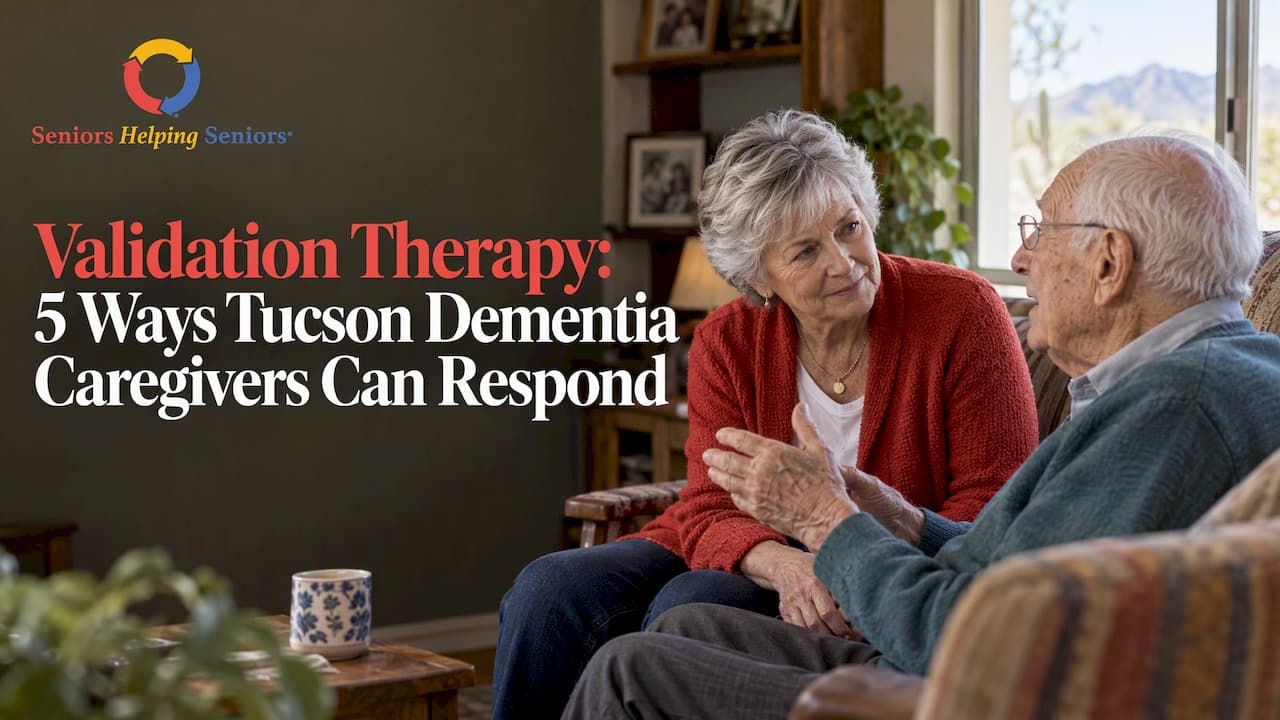
Validation therapy is a communication approach that meets a person with dementia in their own emotional reality instead of correcting their facts. When someone is confused, distressed, or asking for a person who passed years ago, this method responds to the feeling behind the words, which often eases agitation and builds connection. Use it for confusion or emotional upset, but seek medical guidance for new or dangerous behaviors.
TL;DR:
- Approach from the front, get to eye level, use the person's preferred name, reflect the feeling, then offer a familiar comfort.
- Three trials involving 116 patients found no statistically significant benefit over usual care; validation is worth trying, but it is not a proven treatment.
- Before responding, check for pain, hunger, fatigue, or overstimulation; address physical needs first, then pair a reflective phrase with a soothing object or activity.
- Contact the person's doctor about new or worsening hallucinations, paranoia, sudden aggression, or rapid changes in alertness, speech, or movement, which may signal medical problems.
Table of Contents
- What validation therapy is and how it fits person-centered dementia care
- Practical validation techniques: scripts and simple moves
- Research snapshot: what studies and reviews say about validation therapy
- How to use validation therapy at home: a brief checklist and routine
- How Seniors Helping Seniors® Tucson applies validation-style, person-centered care
- A caregiver's honest take on what validation can and can't do
- How to get in-home help that uses person-centered, validation-style support
- FAQ
- Sources
What validation therapy is and how it fits person-centered dementia care
Validation therapy was developed by Naomi Feil in the 1960s and 1970s as a way to communicate with older adults experiencing cognitive decline. The core idea is simple: instead of pulling someone back to our version of reality, we step into theirs and respond to the emotion underneath their words. If a person asks for a parent who died decades ago, correcting them rarely helps and often triggers fresh grief or frustration.

This differs from reality orientation, an older approach that repeatedly corrects facts (the date, the location, who is alive). Validation fits within the broader framework of person-centered care, which asks caregivers to know the person, accept their experience, and create a supportive environment rather than a correctional one.
A few stance shifts help caregivers adopt this approach:
- Treat emotion as the message, not the stated facts.
- Drop the instinct to correct or argue a point.
- Match the person's pace, tone, and energy level.
- Accept that their reality is real to them right now.
Practical validation techniques: scripts and simple moves
Validation works best as a sequence of small, deliberate moves rather than one clever phrase.
- Approach from the front so you do not startle the person, and lower yourself to eye level.
- Use the name they respond to best, whether that is a formal name or a nickname from earlier in life.
- Reflect the emotion out loud with short phrases like "You seem worried" or "That sounds like it was hard."
- Avoid factual corrections entirely. Skip "that's not true" or "remember, we already discussed this."
- Offer a sensory anchor such as a warm drink, a familiar photo, soft music, or a gentle hand-hold.
For a person insisting they need to "go home" from a facility they've lived in for years, try: "It sounds like you miss feeling settled. Tell me about your home." For someone anxious about being late for work they retired from decades ago, try: "You always took your job seriously. What was a typical day like?"
Pro Tip: Keep your voice slow and low in pitch. A rushed or high-pitched tone reads as urgency or alarm, even when your words are calm.
Research snapshot: what studies and reviews say about validation therapy
The evidence on validation therapy is mixed, and caregivers deserve an honest picture rather than a sales pitch. A systematic review of randomized controlled trials covering 116 patients found no statistically significant difference between validation and usual care, even though some smaller studies reported improvements in agitation or depression.
Several factors limit what the research can tell us:
- Trials are often small and combine validation with other interventions, making it hard to isolate its effect.
- Outcome measures vary widely across studies, from agitation scales to mood reports.
- Few trials track results over long periods, so lasting benefit is unclear.
A review of three randomized controlled trials with 116 total patients found no statistically significant benefit over usual care, though caregivers and some smaller studies reported real moments of relief. The practical takeaway from reviews of psychosocial interventions is that validation is low-risk and worth trying, but it works best paired with a soothing action and should not replace medical evaluation when behaviors are new, severe, or dangerous.
How to use validation therapy at home: a brief checklist and routine
A simple routine turns validation from an idea into a habit you can rely on during a hard moment.
- Check the environment first: is the person in pain, hungry, tired, or overstimulated?
- Approach calmly, get to eye level, and use their preferred name.
- Reflect the feeling with a short phrase rather than a factual correction.
- Offer a soothing option, such as a familiar object, a short walk, or a comforting activity.
- Note what worked afterward so you can repeat it next time.
National guidance on dementia behavior recommends this same order: detect triggers, join the person's reality, address physical needs first, then emotional needs, and plan for next time. Pairing a reflective phrase with a comforting object or a short reminiscence activity often works better than words alone.
Some signs call for more than a validation script:
- New hallucinations, delusions, or paranoia that weren't present before.
- Sudden aggression or behavior that puts the person or others at risk.
- Rapid changes in alertness, speech, or physical function.
Guidance on hallucinations and paranoia recommends contacting the person's doctor when these symptoms are new or getting worse, since they can signal infection, medication side effects, or other medical issues.
How Seniors Helping Seniors® Tucson applies validation-style, person-centered care
We have caregivers matched with clients to foster connection based on shared life experience. That shared background makes it easier to connect emotionally during a visit, which is the foundation validation therapy depends on. We apply evidence-based approaches during memory support and companion visits, from calming a confused moment to guiding a gentle reminiscence conversation or supporting a favorite activity.
Meaningful connection, not correction, is what makes a visit feel safe for someone living with dementia.
We always encourage families to keep a physician involved when behaviors shift or escalate.
A caregiver's honest take on what validation can and can't do
Validation therapy rarely produces a dramatic turnaround. What it offers are small, real wins: a calmer afternoon, a moment of connection instead of conflict. It's a relationship skill that improves with repetition, not a script you master overnight. Pair it with steady routines and professional support when needed, and give yourself the same patience you're offering them.
— Cameron
How to get in-home help that uses person-centered, validation-style support
Learning validation techniques helps in the moment, but sustaining them day after day is exhausting for one person to carry alone. We offer Companion Care, Personal Care, and other in-home services built around the same person-centered principles covered here, delivered by mature caregivers who bring patience and shared life experience to every visit.
- Companion Care for regular social connection and emotional support.
- Dementia & Alzheimer's support for memory-related communication needs.
- Return Home Transitional Care for short-term help after a hospital stay.
Our caregivers reinforce these techniques consistently, which also gives family caregivers real respite. If families are hiring their own support, strong interview questions can help identify candidates with the right communication instincts. Reach out through our service page to schedule an assessment and talk through what your loved one needs.
This article is general information, not a substitute for advice from a qualified doctor. Consult a qualified healthcare professional about your own circumstances before acting on anything here.
FAQ
How can caregivers improve daily life for someone with dementia?
Consistent routines, calm communication, and addressing physical needs like pain, hunger, or fatigue before assuming a behavior is purely emotional all help. National guidance recommends checking the environment first, then joining the person's emotional reality rather than correcting them. Simple activities and daily emotional support habits also reduce distress over time.
How does vascular dementia change over time?
Vascular dementia often progresses in a stepwise pattern, with noticeable drops following small strokes or vascular events rather than a smooth decline. The pace and pattern vary widely depending on the person's vascular health and whether new events occur. A physician can track progression and adjust care plans as symptoms shift.
How can I help someone with dementia who lives alone?
Regular check-ins, either in person or by phone, help catch safety concerns like missed medications, unsafe cooking, or wandering risk early. Simple environmental changes, such as labeling rooms or removing trip hazards, support independence longer. Many families bring in part-time in-home support, like companion or personal care services, to fill the gaps safely.
Can someone live well after a dementia diagnosis?
Yes, many people maintain meaningful routines, relationships, and activities for years after diagnosis, especially with consistent support and person-centered care. Quality of life depends heavily on emotional connection, physical health management, and a stable environment. Approaches like validation therapy and reminiscence activities support emotional well-being throughout the condition's course.
Sources
- Validation Therapy research review (PubMed)
- National Institute on Aging: Alzheimer's behavior and communication guidance
- Review article on psychosocial interventions for dementia (PMC7754132)