
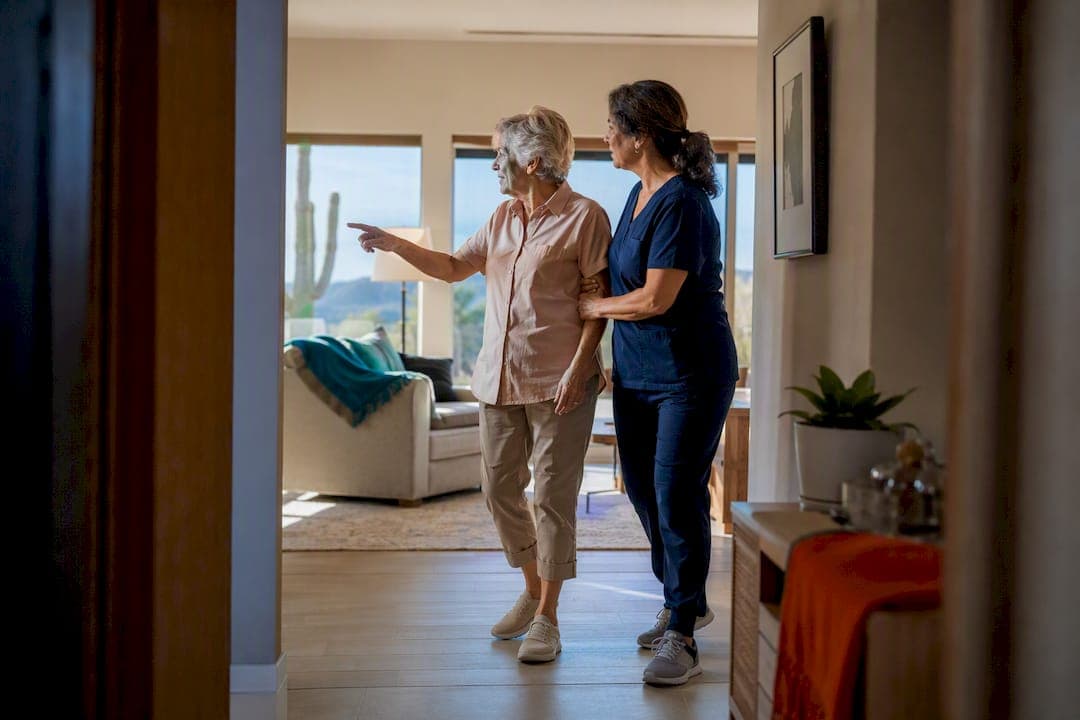
Person-centered care means treating someone as a full partner in their own health decisions, built around their preferences, values, and life history rather than a diagnosis alone. Research links this approach to better agreement between patients and providers on care plans and higher satisfaction with care overall, according to a comparative review from the NCBI Bookshelf. The World Health Organization frames it as a system-level shift toward dignity and participation, not a single technique you add during a visit.
TL;DR:
- Person-centered care emphasizes respecting individual preferences and building a care plan around a person's unique life story and social context.
- Effective implementation requires organizational support, staff training, consistent caregivers, and ongoing measurement of relationship quality and agreement with care plans.
- In home and dementia care, routines based on personal history and meaningful activities reduce agitation and improve psychosocial well-being, but safety trade-offs must be carefully managed.
- Matching caregivers with clients based on shared life experiences fosters trust and genuine communication, especially in senior and family-driven home care.
- Maintaining a culture of ongoing staff engagement and individualized documentation is essential for sustaining person-centered practices over time.
Table of Contents
- What Are the Core Principles of Person-Centered Care?
- Does Person-Centered Care Actually Improve Outcomes?
- How Do You Implement Person-Centered Care in Practice?
- How Does Person-Centered Care Work in Home and Dementia Care?
- How Does Seniors Helping Seniors® Tucson Apply This Approach?
- Why Culture Matters More Than Any Single Intervention
- Getting Person-Centered In-Home Care in Southern Arizona
- Sources
- FAQ
What Are the Core Principles of Person-Centered Care?
Person-centered care and patient-centered care get used interchangeably, but they aren't quite the same thing. Patient-centered care usually describes a clinical encounter: a doctor listening well during an appointment. Person-centered care is broader. It follows someone across their whole life and social context, including family, home environment, and personal history, not just the fifteen minutes in an exam room.
Five elements show up consistently in the research on how this actually works:
- Respect for individual preferences. Care plans start from what the person wants, not a standard protocol applied to everyone with the same condition.
- Shared decision-making. The person and their care team decide together, weighing trade-offs instead of the provider simply issuing instructions.
- Effective communication. This means real dialogue, not a checklist read aloud. A review on implementation pillars found this requires staff to have both the skill and the time to engage meaningfully.
- Relational continuity. The same caregiver or clinician sees the person over time, building the kind of trust that makes honest conversations possible.
- Holistic, contextual assessment. Care accounts for someone's home situation, family dynamics, and life story, not just their chart.
A clinical visit built this way might open with "what matters to you today" instead of a symptom checklist. A home visit built this way looks like a caregiver who knows a client hates mornings and plans bathing for the afternoon instead.
Does Person-Centered Care Actually Improve Outcomes?
The evidence leans positive, but it's not uniform. Studies consistently show gains in satisfaction and in how well care plans match what patients actually want, a pattern documented across primary care settings in the NCBI Bookshelf review.
A systematic review of person-centered interventions in aged-care facilities found reduced boredom, helplessness, and agitation among residents, along with improved staff confidence in delivering care, according to research published on PMC. That same review flagged mixed results on physical outcomes like falls, since more autonomy sometimes means more risk-taking.
That trade-off matters because the interventions studied vary enormously. One program's "person-centered care" might mean structured life-story interviews; another's might mean flexible meal timing. This heterogeneity makes it hard to point to one universal number and say "this is what PCC delivers." What the evidence supports is a direction, not a guarantee: engaging people as partners tends to improve psychosocial well-being and plan adherence, while safety outcomes need separate, deliberate attention.
How Do You Implement Person-Centered Care in Practice?
Implementation fails most often when it's treated as a training module instead of a structural change. A narrative review proposing a conceptual framework organizes this into three layers: structure, process, and outcome, borrowed loosely from the Donabedian model used in quality-of-care research.
Structural prerequisites come first. Leadership has to back the shift, staffing has to allow time for real conversations, and documentation systems need a place to record preferences, not just diagnoses.
Process steps follow. These are the visible, repeatable actions:
- Hold a genuine "what matters to you" conversation before writing any care plan.
- Co-create the plan with the person and their family, not for them.
- Assign consistent caregivers or clinicians whenever staffing allows.
- Build in follow-through: someone checks whether the plan is actually being used.
- Track a small set of metrics, like plan-agreement rates or caregiver consistency, and revisit them monthly.
Roles matter as much as steps. Home care workers often have the most frequent, unfiltered contact with a senior. A qualitative study on home care workers found they emphasize personhood well but face communication barriers that keep them out of formal care team discussions. Fixing that integration gap is one of the highest-leverage moves a family or agency can make.
Pro Tip: Ask any home care agency how they document a client's preferences beyond medical needs. If the answer is vague, that's a sign the "care plan" is really just a task list wearing a nicer name.
How Does Person-Centered Care Work in Home and Dementia Care?
Dementia and home-based care are where person-centered principles get tested hardest, because routine and history matter more when memory doesn't hold steady. Life-history work, familiar routines, and meaningful activity, not just supervised safety, are the building blocks. Memory care activities built around someone's past hobbies or work tend to land better than generic games.
The psychosocial gains cited earlier for aged-care settings apply directly here: less agitation, less reliance on redirection or medication when a routine actually reflects the person's history. But the same review that found those benefits also flagged the limits of the evidence, so results vary by facility and by how well staff are trained to sustain the approach, not just launch it.
A few pitfalls show up again and again in home and dementia care:
- Task-driven schedules that leave no room for conversation. A visit that's all bathing, medication, and meal prep, with zero unstructured time, erodes the relationship fast.
- Excluding home care workers from care planning, even though they often notice changes in mood or cognition before anyone else does.
- Overcorrecting on safety. Locking down every risk can strip away the autonomy that made the person-centered approach worth doing in the first place.
Balancing autonomy and safety isn't a one-time decision, and many families use a family communication tool to document preferences and life history that help guide care consistently. It's a conversation revisited as needs change, ideally documented somewhere the whole care team can see it. Families managing in-home memory care often find that written preferences prevent this from becoming guesswork every time a new caregiver steps in.
How Does Seniors Helping Seniors® Tucson Apply This Approach?
Matching caregivers to clients by shared life experience is the clearest expression of person-centered thinking Tucsonshs practices. A retired teacher paired with a caregiver who also spent decades in a classroom doesn't need a lengthy explanation of what her days used to look like. That shared context shapes the conversation before the first visit even starts.
"How was your day, really?" opens most visits, not a checklist. That single habit, asking a genuine question before starting any task, is what separates a companionship visit built around a person from one built around a schedule.
Flexible scheduling gives families room to adjust as needs shift instead of locking into a plan that stops fitting after a few months. Families curious about how this looks in practice can request an assessment to see how caregiver matching works for their specific situation.
Why Culture Matters More Than Any Single Intervention
Organizations that treat person-centered care as one program to launch, rather than a culture to sustain, tend to see gains fade once the initial training wears off. The research on paternalistic practice styles backs this up: change requires ongoing investment in staff confidence and skill, not a one-time policy memo.
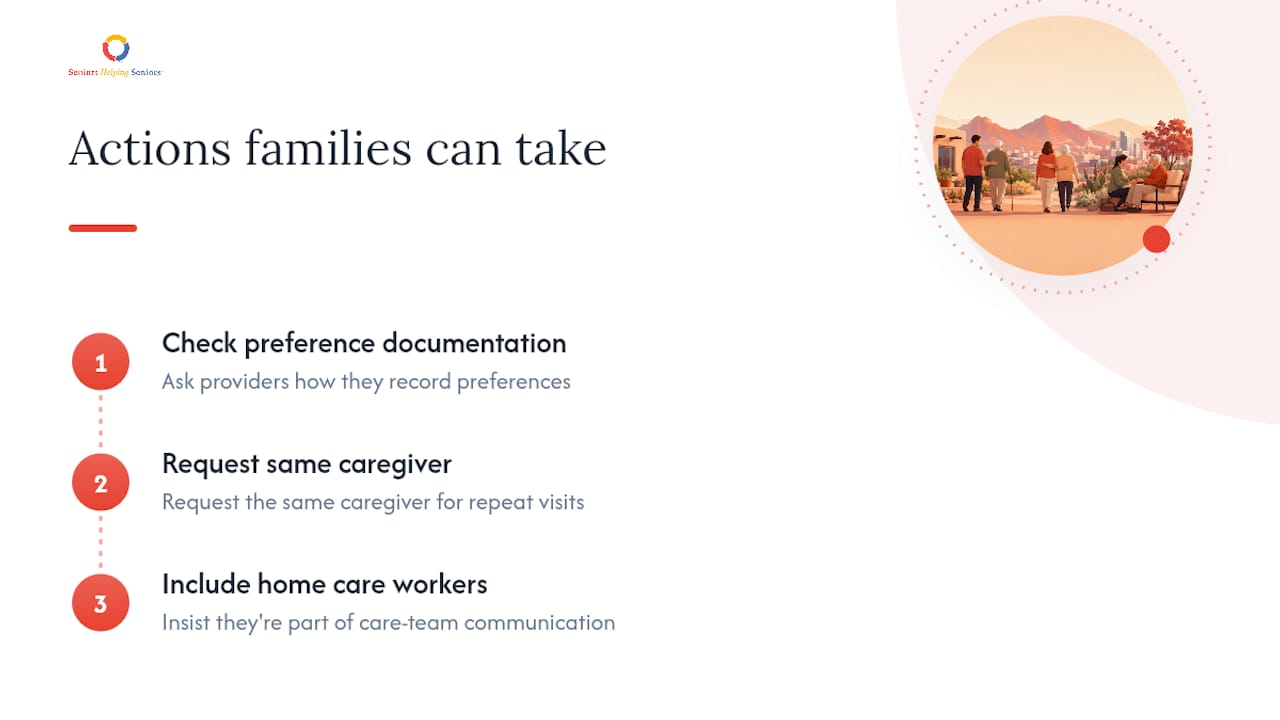
Three things families can do today: ask providers exactly how they document personal preferences, request the same caregiver for repeat visits whenever possible, and insist that home care workers get included in any care team communication, not sidelined from it.
— Cameron
Getting Person-Centered In-Home Care in Southern Arizona
Every core element of person-centered care described above, shared decision-making, relational continuity, holistic assessment, shows up in how Tucsonshs structures its services. Companion Care and Personal Care both start from a conversation about what the client actually wants their days to look like, not a generic task list. Dementia & Alzheimer's support draws on the same life-history approach covered earlier, and flexible scheduling means a family isn't locked into a plan that no longer fits after a few months.
What sets this apart from a standard home care agency is the caregiver pool itself: mature adults, often seniors themselves, matched to clients for shared life experience rather than assigned at random. That's a meaningfully different starting point for building the trust that person-centered care depends on. Families in Tucson, Sierra Vista, Green Valley, and Corona de Tucson can review the full range of in-home services and request an initial assessment to see how caregiver matching would work for their specific situation. For families managing a hospital discharge or care transition, the Return Home Transitional Care program applies the same principles to that specific handoff period.
Sources
- Person-Centered, Family-Centered, and Community-Oriented Primary Care - NCBI Bookshelf
- Implementation pillars and practical elements for person-centered care - PMC
This article is general information, not a substitute for advice from a qualified doctor. Consult a qualified healthcare professional about your own circumstances before acting on anything here.
FAQ
What Is the Meaning of Person-Centered Care?
Person-centered care means organizing someone's care around their own preferences, values, and life history, treating them as a partner rather than a passive recipient. It's associated with better agreement on care plans and higher satisfaction compared with disease-focused approaches alone.
What Are the Five Key Elements of Person-Centered Care?
The five elements that appear consistently across the research are respect for individual preferences, shared decision-making, effective communication, relational continuity, and holistic assessment that accounts for someone's home and family context. A review on implementation pillars ties all five to staff having enough time and skill to engage meaningfully, not just goodwill.
What Are Real Examples of Person-Centered Care?
Examples include a caregiver adjusting bathing time to match someone's natural energy patterns, a care team building a plan around a person's actual daily goals instead of a standard protocol, and matching a home care worker to a client with a similar background. Tucsonshs applies this directly by pairing caregivers and clients based on shared life experience.
What Are the Four Principles of Person-Centered Care?
Definitions vary slightly by source, but a common version includes treating people with dignity and respect, sharing information openly, encouraging participation in decisions, and building collaboration between the person, their family, and the care team. These trace back to the same foundations covered in the WHO's people-centered health care framework.
How Much Does In-Home Person-Centered Care Cost?
Pricing for Tucsonshs services depends on the type and frequency of care needed, so current rates are available directly through the services page or by requesting an assessment.