
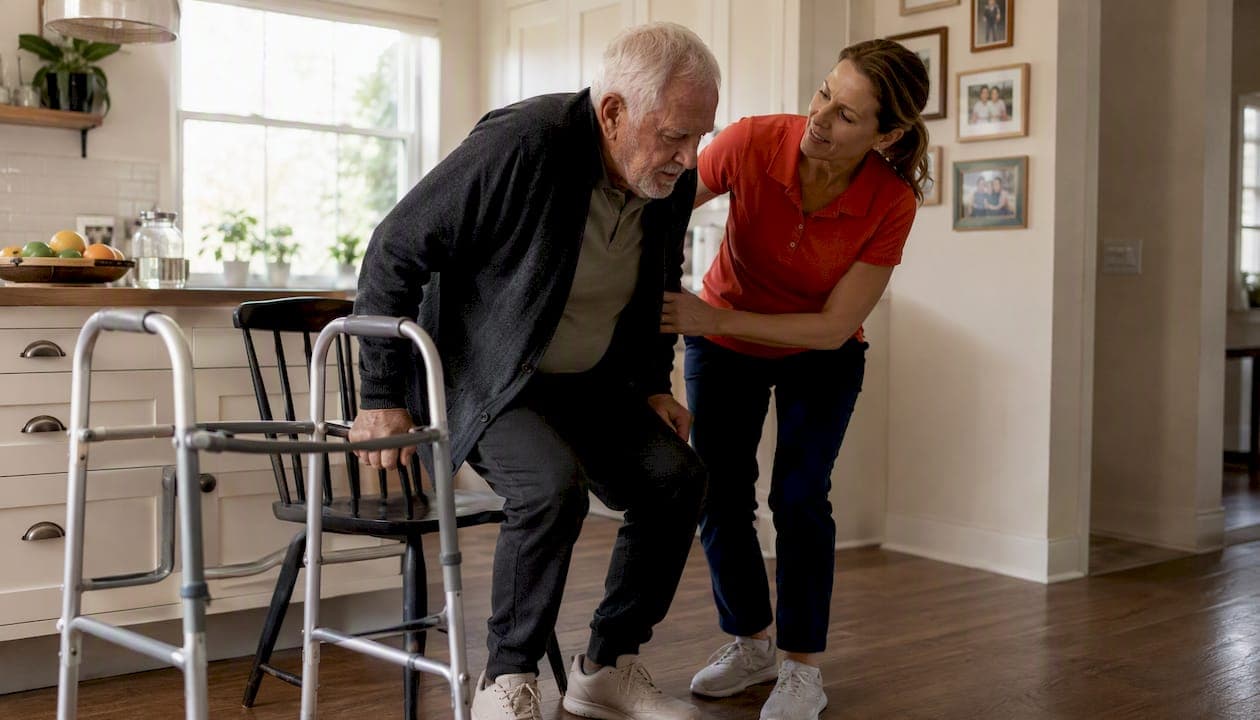
Short term home care is temporary, time-limited in-home support designed to help someone recover from surgery or illness, transition home after a hospital stay, or give a family caregiver a planned break. Your single most useful next step: decide whether the person needs skilled care (wound care, physical therapy, medication management by a licensed clinician) or non-skilled care (bathing, meals, companionship, light housekeeping). That one distinction determines your payer options, your provider type, and your timeline.
Here is what to have ready before you make your first call:
- Skilled or non-skilled? Skilled services may qualify for Medicare home health coverage if a physician certifies medical necessity. Non-skilled services are almost always private pay.
- Documents to gather: recent discharge summary or doctor's note, a current medication list, mobility and transfer notes, emergency contacts, and a durable power of attorney if applicable.
- Urgency level: private-pay caregivers can often start within a few days; Medicare-covered home health typically takes several days to authorize and begin.
Table of Contents
- What is short term home care and how long does it last?
- Who typically needs short term home care?
- What services does short term home care include?
- How much does short term home care cost in the U.S.?
- How do you find and choose a short term home care provider?
- How do you arrange short term care quickly?
- How does respite care work as a short-term option?
- How Seniors Helping Seniors® Tucson structures short-term care
- Key Takeaways
- What short term home care actually looks like on day one
- Seniors Helping Seniors® Tucson: short-term and respite care in Tucson
- Useful sources for verifying coverage and next steps
What is short term home care and how long does it last?
Short term home care covers any temporary, in-home service arrangement with a defined end point, usually tied to a recovery milestone or a caregiver's scheduled absence. The goal is not to replace a person's independence permanently; it is to fill a specific gap, whether that is the six weeks after a hip replacement or the weekend a family caregiver needs to travel.
"Home health care is usually less expensive, more convenient, and can be just as effective as care you get in a hospital or skilled nursing facility." — Medicare's Home Health Benefit guide
Duration varies widely. A post-surgical patient might need daily visits for several weeks. Someone recovering from pneumonia might need help for just a few days. Respite arrangements can range from a few hours per week to multi-day periods while a caregiver travels. The AgingCare.com comparison of short- and long-term home care puts it plainly: short-term services end when the medical issue resolves; long-term care is ongoing for chronic or progressive conditions that are not expected to improve.
The practical difference between short-term and long-term care shows up in expectations, not just duration. Short-term clients and families are usually working toward an exit: a follow-up appointment that clears the patient for independence, a family caregiver returning from a trip, or a permanent placement being arranged. Long-term care is built around maintenance and gradual adaptation. Mixing up the two leads to either under-planning (assuming a few days will be enough) or over-spending (paying for ongoing services when a short block would have covered the need).
Skilled vs. custodial care: Medicare's home health benefit covers skilled nursing, physical therapy, occupational therapy, and speech-language therapy when a physician orders them and the patient is homebound. Custodial care, which includes bathing, dressing, and meal preparation, is not covered by Medicare and is typically billed privately. Knowing which category applies to your situation is the fastest way to avoid a surprise bill.
Who typically needs short term home care?
Most people who arrange temporary home assistance fall into one of four situations, and recognizing yours early saves time.
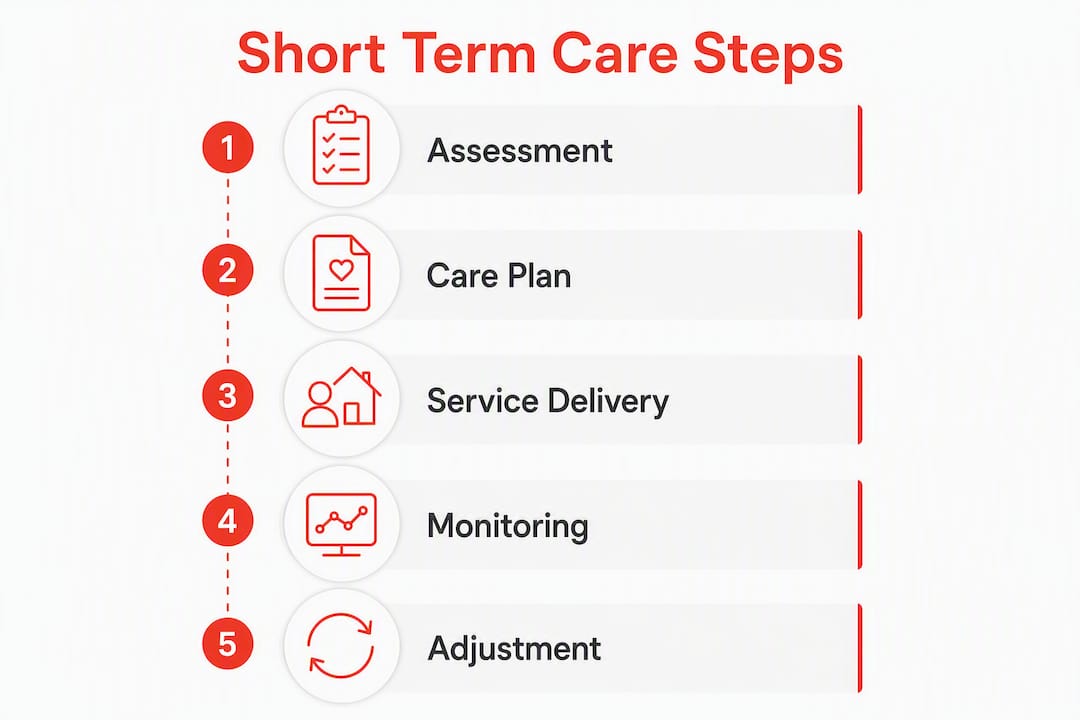
Clarifying whether a need is recovery-focused (requires skilled services) or respite-focused (non-skilled assistance) helps families select the correct provider type and avoid surprise costs.
Post-hospital or post-surgical patients are the most common users. A person discharged after a knee replacement, cardiac procedure, or stroke often cannot safely manage alone for the first two to six weeks. The discharge planner at the hospital may initiate a Medicare home health referral, but that covers only skilled services. If the patient also needs help with meals or bathing, a separate private-pay caregiver arrangement is usually required alongside it.
People recovering from illness or injury who were never hospitalized but still need temporary help with activities of daily living (ADLs) make up another large group. A bad fall, a respiratory illness, or a flare-up of a chronic condition can temporarily reduce someone's ability to cook, bathe, or manage medications safely.
Family caregivers who need respite represent a third, often underserved group. A spouse or adult child who provides daily care needs periodic relief, not because the care situation has changed, but because sustained caregiving without breaks leads to burnout. Short stay care services, even just a few hours per week, can extend a family caregiver's ability to continue providing care long-term.
Transitional or emergency coverage rounds out the picture: a primary caregiver traveling unexpectedly, a long-term arrangement being set up that won't start for two weeks, or a sudden change in a senior's condition that requires immediate support while the family figures out next steps.
What services does short term home care include?
The service menu breaks into two broad categories: non-skilled (personal and companion care) and skilled (clinical home health). Most short-term arrangements draw from both, depending on the person's needs.
Non-skilled services are provided by trained caregivers and do not require a clinical license:
- Companion and social support: conversation, activities, supervision, and emotional presence, especially valuable for clients with dementia or those prone to isolation.
- Personal care (ADLs): bathing, dressing, grooming, toileting, and mobility assistance.
- Homemaking: meal preparation, grocery shopping, light housekeeping, and laundry.
- Transportation: medical appointments, pharmacy runs, and errands.
- Medication reminders: prompting the client to take prescribed medications on schedule (not administering or managing them, which requires a licensed clinician).
Skilled home health services require licensed professionals and are ordered by a physician:
- Skilled nursing: wound care, IV therapy, catheter management, post-surgical monitoring.
- Physical therapy (PT) and occupational therapy (OT): rebuilding strength, balance, and the ability to perform ADLs safely.
- Speech-language therapy: swallowing, communication, and cognitive rehabilitation after stroke or neurological events.
- Medical social services: care coordination, community resource referrals, and discharge planning support.
Matching the right mix to the situation matters. A post-surgical patient typically needs skilled nursing plus homemaking support. A caregiver taking a planned break usually needs companion care plus personal care ADL assistance. Requesting a licensed clinician when a trained caregiver would suffice adds cost without benefit; requesting only a companion caregiver when wound care is needed creates a safety risk.
Pro Tip: When a provider offers both skilled and non-skilled services, ask whether the same agency coordinates both. A single point of contact reduces handoff errors and makes it easier to adjust the service mix as recovery progresses.
How much does short term home care cost in the U.S.?
Cost depends on several variables: the type of caregiver (companion vs. licensed nurse), the hours or days needed, and your geographic market. In general, in-home care rates typically range from $20 to $80 per hour, and daily or overnight rates run $120 to $450, with urban and coastal areas tending toward higher costs. Regional variation is significant.
Most agencies charge a minimum shift of two to four hours. Block-booking (purchasing a set number of hours per week) often reduces the effective hourly rate. Ask about that discount upfront.
Who pays for short term home care?
Medicare covers skilled home health services when a physician certifies that skilled nursing or therapy is medically necessary, the patient is homebound, and services are intermittent or part-time. Medicare does not cover custodial or companion care. There is no copay for Medicare-covered home health under Original Medicare, but you must use a Medicare-certified agency.
Medicaid coverage for home-based services varies by state. Many states offer home and community-based services (HCBS) waivers that cover personal care and homemaking for eligible low-income individuals. Check your state's Medicaid agency or Medicaid.gov for current waiver programs and eligibility criteria.
VA benefits for veterans can include the Aid and Attendance benefit, the Homemaker and Home Health Aide program, and the Program of Comprehensive Assistance for Family Caregivers (PCAFC). Eligibility depends on service history, disability rating, and clinical need. Contact your local VA medical center for a needs assessment.
Private pay covers everything Medicare and Medicaid do not: companion care, homemaking, transportation, and any skilled services for patients who do not meet Medicare's homebound or medical-necessity criteria. Long-term care insurance policies may reimburse some private-pay home care; review your policy's benefit trigger language carefully.
AARP's Paid4Care hub connects family caregivers to state programs, Medicaid pathways, and VA benefits that may provide compensation or reimbursement. AARP does not directly pay for caregivers, but its resource navigation is genuinely useful when you are sorting out which payer applies.
Documentation you will need to pursue Medicare or VA coverage: a physician's order or referral, a recent discharge summary, a homebound status certification, and, for VA benefits, a copy of the veteran's DD-214 discharge papers.
How do you find and choose a short term home care provider?
Speed matters when care is urgent, but a five-minute screening call can prevent a much larger problem later. Use this checklist.
- Verify licensing and registration. In most states, home care agencies must be licensed or registered. Ask for the agency's license number and confirm it with your state's health department. Private-hire caregivers are not subject to agency licensing, which shifts background-check responsibility to you.
- Confirm background checks. Any reputable agency runs criminal background checks on every caregiver. Ask specifically whether checks include sex offender registry and abuse registry searches, not just criminal history.
- Ask about caregiver training and supervision. What orientation do caregivers receive? Is there a supervising nurse or care coordinator who conducts periodic check-ins? For short-term placements, consistent oversight matters more than it might seem.
- Check insurance. The agency should carry general liability and workers' compensation insurance. If a caregiver is injured in your home and the agency lacks workers' comp, you may be liable.
- Request references. A good agency will offer client references without hesitation. If they deflect, that is a red flag.
- Ask about emergency protocols. What happens if the assigned caregiver calls in sick? Is there a backup caregiver system? For short-term recovery care, a gap in coverage can be a safety issue.
Key questions to ask any provider:
- What are your minimum shift requirements and cancellation policies?
- How do you match caregivers to clients?
- If a clinical issue arises (a fall, a medication reaction), what is your escalation process?
- Can I meet the assigned caregiver before the first visit?
- Do you provide a written plan of care?
Red flags to watch for: verbal-only promises about services or pricing, no written plan of care, reluctance to share caregiver credentials, and operators who cannot name a supervising clinician for skilled services.
Pro Tip: When time is short, have these four documents ready before your first agency call: a current medication list, a recent discharge summary or doctor's note, mobility and transfer notes (can the person stand unassisted?), and a signed contact authorization or durable power of attorney. Agencies that receive this information upfront can often expedite their intake assessment and start care faster.
How do you arrange short term care quickly?
The timeline from decision to first caregiver visit depends almost entirely on which payer route you take.
For urgent, unplanned short-term care, having a pre-vetted provider and key documentation ready lets agencies expedite assessments and start care faster — often the same day for private-pay arrangements.
Private-pay caregivers through a licensed agency can typically start within 24–72 hours of an intake call, assuming the agency has caregiver availability. Same-day starts are possible when the family supplies complete documentation and the agency has done a prior assessment or has a streamlined intake process.
Medicare-covered home health requires a physician's order, an agency assessment visit, and care plan development before services begin. Realistically, plan for 3–14 days from hospital discharge to first skilled visit, though discharge planners can sometimes compress this timeline when a referral is made before the patient leaves the facility.
What to prepare before you call:
- Current medication list with dosages and prescribing physicians
- Recent discharge paperwork or a physician's note describing the care need
- Mobility and transfer notes (can the person walk independently, use a walker, transfer from bed?)
- Emergency contacts and a durable power of attorney or healthcare proxy document
- Payment method: insurance card, Medicare/Medicaid ID, or credit card for private pay
Practical tips for urgent situations: If you anticipate a possible discharge or care gap in the next few weeks, identify and pre-vet one or two local agencies before the need becomes urgent. Use a short trial block (a few visits) to confirm caregiver fit before committing to a longer package. Get the agreed scope of care in writing, including specific tasks, schedule, and rates, before the first visit.
How does respite care work as a short-term option?
Respite care is a specific subtype of short-term home assistance focused on the family caregiver, not just the person receiving care. The goal is to give the primary caregiver a scheduled, reliable break.

AARP's caregiving policy work consistently highlights that brief, regular respite prevents caregiver crises more effectively than waiting for an emergency. A few hours per week is more sustainable than a single long break taken after burnout has already set in.
Common respite formats include:
- Hourly in-home breaks: a caregiver comes for two to four hours while the family caregiver rests, runs errands, or attends appointments.
- Overnight stays: a caregiver stays through the night so the family caregiver can sleep uninterrupted.
- Weekend or multi-day blocks: coverage for two to five days while the family caregiver travels or attends to other responsibilities.
- Recurring weekly visits: a set schedule (e.g., Tuesday and Thursday afternoons) that builds routine for both the client and the caregiver.
Combining respite with other services increases its value. Pairing companion care with light housekeeping, for example, means the client has social engagement and the home is maintained, which reduces the family caregiver's workload when they return. For clients with dementia, a familiar peer caregiver who shows up on a consistent schedule reduces agitation and makes transitions smoother.
Pro Tip: Schedule short weekly respite blocks proactively, before you feel like you need them. Families who wait until they are exhausted often face a harder transition because the client has had no time to build comfort with a new caregiver. Starting with a few hours per week builds that relationship gradually.
How Seniors Helping Seniors® Tucson structures short-term care
Tucsonshs operates on a peer-matching model: caregivers are mature adults, often seniors themselves, matched with clients based on shared life experiences, interests, and personality. That design choice has a practical payoff for short-term arrangements.
Many older adults resist accepting help from younger caregivers, particularly for personal care tasks. A peer caregiver sidesteps that resistance. The interaction feels more like help from a trusted neighbor than a clinical service, which matters when someone is already stressed by a surgery or hospitalization. Seniors Helping Seniors® Tucson describes this dynamic as improving comfort, social connection, and acceptance of in-home help, and the evidence from peer-care research supports it: human connection is a core outcome driver, and older clients tend to adhere better to care plans when they trust and relate to the person delivering care.
For short-term needs specifically, Tucsonshs offers companionship and socialization, personal care and ADL assistance, meal preparation, light housekeeping, transportation, and medication reminders. Billing is hourly or by package, which fits the time-limited nature of recovery and respite arrangements. The matching process also includes quality safeguards: caregiver supervision, documentation of care activities, and a care coordinator who can escalate clinical concerns to the appropriate professional.
Pro Tip: For clients with dementia or those who are particularly resistant to outside help, a peer-care match is worth requesting specifically. The age-peer dynamic reduces the "stranger in my home" reaction that often derails short-term care arrangements in the first few days.
Key Takeaways
Short term home care works best when you identify the care type needed, verify the correct payer, and contact a pre-vetted local provider with documentation ready before the need becomes urgent.
| Point | Details |
|---|---|
| Skilled vs. non-skilled first | Determine whether medical necessity qualifies for Medicare home health before assuming private pay is the only option. |
| Realistic cost range | In-home hourly rates typically range from $20 to $80, and daily blocks run $120 to $450 depending on caregiver credentials and region. |
| Timeline expectations | Private-pay caregivers can start in 24–72 hours; Medicare-covered home health typically takes 3–14 days to authorize. |
| Respite is preventive | Brief, regular respite blocks prevent caregiver burnout more effectively than waiting for a crisis to force a break. |
| Tucsonshs peer matching | Seniors Helping Seniors® Tucson matches mature-adult caregivers to clients for short-term recovery and respite care in Tucson. |
What short term home care actually looks like on day one
The first visit is almost never perfect, and that is fine. A caregiver arrives, does a brief walkthrough of the home, asks about routines and preferences, and starts with the tasks the client is most comfortable accepting. For many older adults, that means starting with a meal or a conversation rather than a bath. Trust gets built in the first hour, and the rest of the care plan follows from there.
What surprises most families is how quickly small adjustments improve fit. Moving a medication tray to the kitchen counter instead of the bathroom. Switching the shower time from morning to afternoon because that is when the client has more energy. These are not clinical decisions; they are observations a good caregiver makes and communicates back to the care coordinator within the first day or two.
Peer caregivers, specifically, tend to reduce the resistance that derails short-term arrangements. When a 78-year-old client realizes the person helping them also remembers the same era of music or has navigated a similar health challenge, the dynamic shifts. It stops feeling like a service and starts feeling like company. That shift matters for outcomes: clients who accept care cooperate with it, which means fewer falls, better medication adherence, and faster recovery.
On the documentation side, a reputable agency logs each visit, notes any changes in the client's condition, and has a clear protocol for escalating concerns to a supervising nurse or the client's physician. For short-term placements, that paper trail also protects the family if questions arise about what care was delivered and when.
Seniors Helping Seniors® Tucson: short-term and respite care in Tucson
When you need temporary home care for a senior in Tucson, the difference between a good experience and a frustrating one often comes down to caregiver fit. Tucsonshs delivers something most agencies cannot: a mature-adult caregiver who shares your loved one's life experience and shows up as a peer, not just a service provider. For post-surgical recovery, illness support, or planned respite, that connection reduces resistance, improves cooperation with the care plan, and makes the transition far less stressful for everyone involved.
Services include personal care, companionship, meal preparation, light housekeeping, transportation, and medication reminders, billed hourly or by package with no long-term commitment required. Short trial blocks are available so you can confirm caregiver fit before committing to a longer arrangement.
To get started, contact Seniors Helping Seniors® Tucson with your loved one's care needs, a rough schedule, and any relevant medical documents. The intake team will match a caregiver and provide a clear timeline for the first visit. For urgent needs, having a medication list and discharge summary ready when you call can shorten the process significantly.
Useful sources for verifying coverage and next steps
- Medicare Home Health Services Coverage: official Medicare eligibility rules, homebound criteria, and what skilled home health covers.
- Medicare's Home Health Benefit (PDF): plain-language guide to ordering home health, what to expect, and patient rights.
- NIH: Services for Older Adults Living at Home: overview of in-home service types and how to access them.
- Medicaid.gov: state-by-state HCBS waiver programs and eligibility information for home-based care.
- ACL Eldercare Locator: Administration for Community Living's tool for finding local home care agencies, Area Agencies on Aging, and caregiver support programs.
- AARP Caregiving Policy and Resources: advocacy resources, respite planning guidance, and connections to state caregiver support programs.
- Seniors Helping Seniors® Tucson: local contact page for short-term and respite care services in Tucson, including intake information and service details.
Suggested next-step contacts:
- Your hospital's discharge planner (ask before the patient leaves the facility).
- Your primary care physician or specialist (needed for Medicare home health orders).
- Your local Area Agency on Aging (find yours at eldercare.acl.gov).