
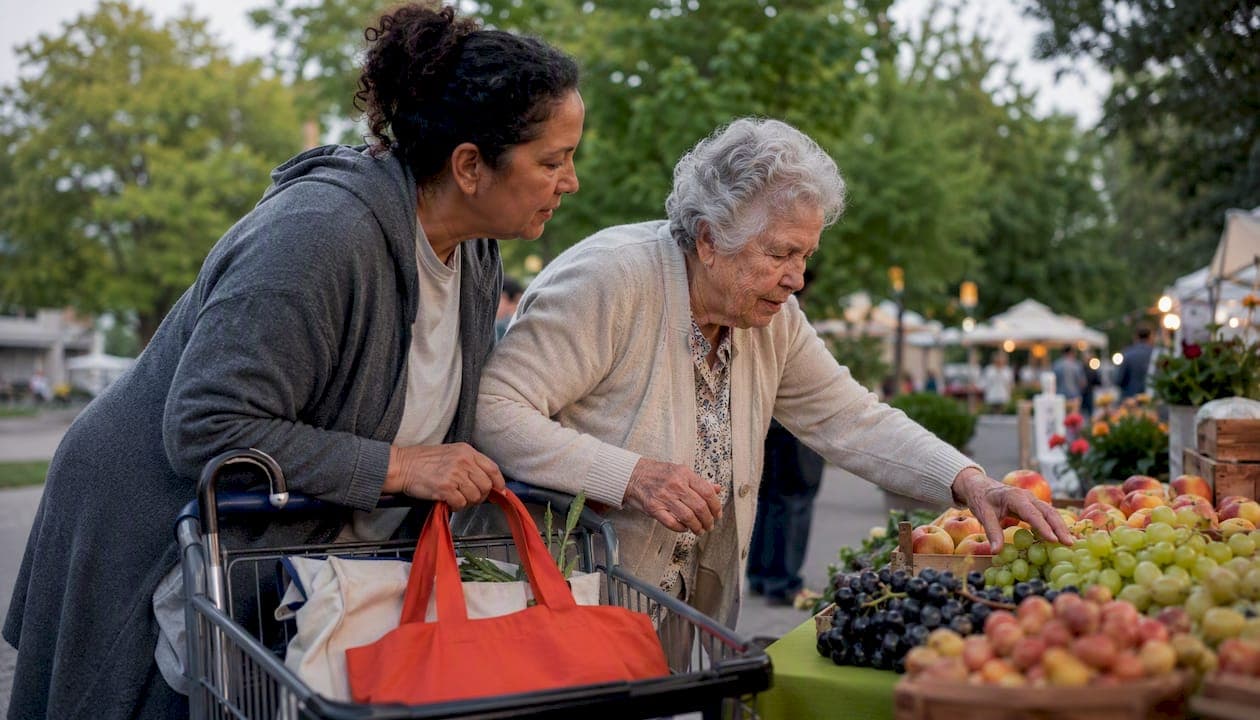
The fastest ways seniors get grocery help are: an in-home caregiver who shops with or for them, a volunteer or municipal shopping program, and government food-assistance benefits that reduce grocery costs directly.
- In-home caregiver shopping fits seniors who need hands-on help, companionship, or have mobility limits that make any trip difficult.
- Volunteer or municipal programs work well for seniors who can manage at home but need someone to handle the store run.
- Government benefits (SNAP, SFMNP, CSFP) suit anyone who can shop but struggles to afford groceries.
Many adults 60 and older who qualify for SNAP do not participate, according to NCOA. That gap is worth closing before spending a dollar on paid services.
Key Takeaways
The most direct path to grocery help for a senior is to call 211 first, check SNAP eligibility second, and then decide between a free community program and a paid in-home caregiver based on frequency, mobility, and social needs.
| Point | Details |
|---|---|
| Call 211 first | The fastest single step to find local grocery help, programs, and referrals by zip code. |
| SNAP under-enrollment is common | More than half of eligible seniors 60+ skip SNAP; a Benefits Enrollment Center can help apply. |
| Free vs. paid depends on frequency | Volunteer programs suit occasional needs; paid in-home care fits weekly or complex situations. |
| Verify credentials before agreeing | Ask about background checks, same-caregiver requests, and written service agreements. |
| Tucsonshs for continuity-based help | Tucsonshs matches mature caregivers to seniors for regular, companion-focused shopping visits in Tucson. |
Table of Contents
- What shopping assistance for seniors actually covers
- Programs that help pay for groceries or deliver food
- How to find grocery shopping help near you
- What to expect when you arrange assistance
- How Tucsonshs handles shopping as part of in-home care
- The part most guides get wrong about grocery help for seniors
- Trusted in-home shopping help from Tucsonshs
- Sources
What shopping assistance for seniors actually covers
"Shopping assistance" is a broad term. What a helper does on any given visit depends entirely on the service type.
In-home caregiver shopping means a caregiver accompanies the senior to the store or goes alone with a list. The caregiver handles the cart, reaches high shelves, reads labels, manages the checkout, carries bags inside, and puts groceries away. They do not typically pay for the groceries out of pocket; the senior or their family covers the cost.
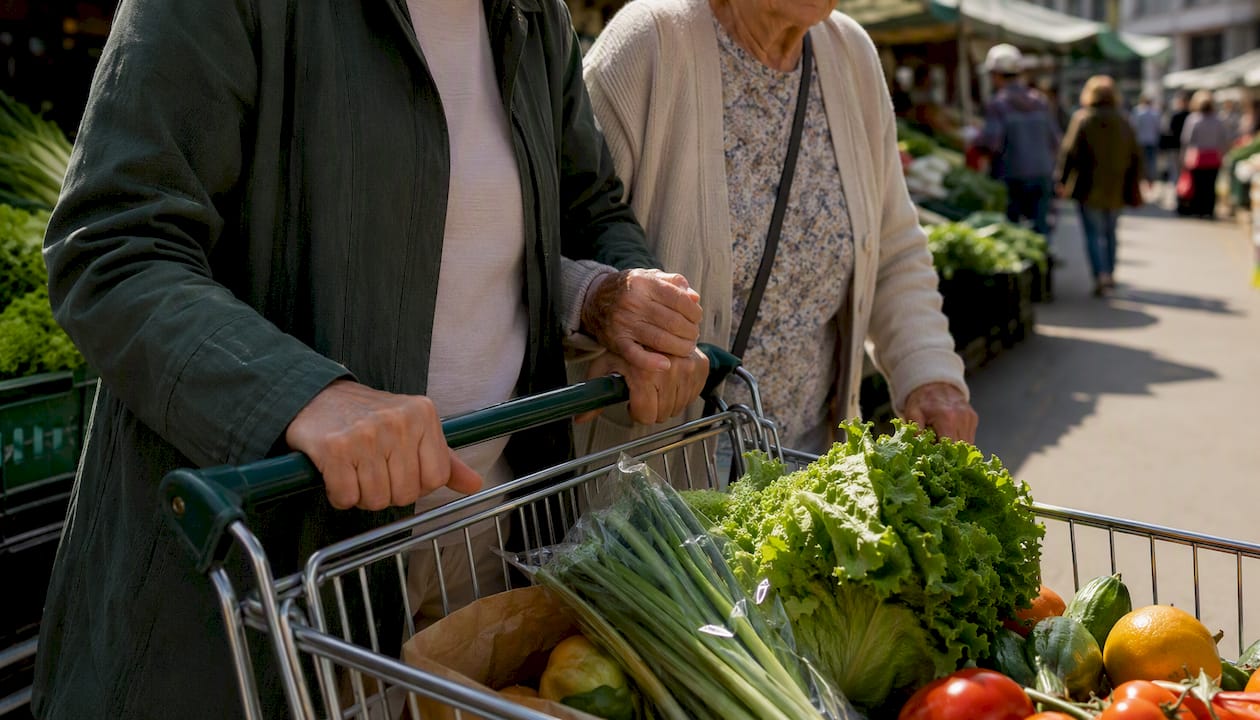
Volunteer escort services pair a senior with a trained volunteer who drives them to the store and stays with them throughout. The senior shops at their own pace with a steady companion nearby. Many Area Agencies on Aging coordinate these programs locally.
Grocery delivery services remove the trip entirely. A senior or caregiver places an order by phone or online through services like Instacart or a local grocery chain's delivery option, and the groceries arrive at the door. Some programs include a volunteer or staff member who helps place the order.
Curbside pickup assistance is a middle option: the order is placed online, then a caregiver or volunteer drives the senior to collect it. No walking the aisles required.
Pharmacy and prescription pickup is often bundled into shopping visits, especially through in-home care providers. A caregiver picks up prescriptions during the same trip as groceries.
The National Institute on Aging notes that social isolation poses real health risks for older adults. A shopping trip with a companion is not just a logistical solution; it is a point of social contact that matters for mental health.
Pro Tip: If the senior you are helping values conversation and connection, choose an escort or in-home caregiver model over delivery. If the priority is convenience and they are socially active otherwise, delivery or curbside pickup is faster and often cheaper.
Programs that help pay for groceries or deliver food
If you are 60 or older, you may qualify for several federal food-assistance programs, though availability and delivery options vary by state.
- SNAP (Supplemental Nutrition Assistance Program): Monthly electronic benefits loaded onto an EBT card, usable at most grocery stores. Eligibility is income-based; many states have simplified applications for seniors. NCOA's Benefits Enrollment Centers can help with the application.
- SFMNP (Senior Farmers' Market Nutrition Program): Provides coupons for fresh fruits, vegetables, honey, and herbs at participating farmers' markets and roadside stands. States run the program and set which markets qualify. Typical eligibility: age 60 or older with limited income as defined by federal poverty guidelines.
- CSFP (Commodity Supplemental Food Program): Delivers a monthly box of supplemental groceries through local agencies. Some agencies offer home delivery depending on local arrangements. Eligibility mirrors SFMNP income thresholds.
- Meals on Wheels / Citymeals: Home-delivered meals for homebound seniors, plus referrals to other food programs. Citymeals has also piloted shopping-credit programs to help enrolled recipients pay for groceries directly.
- Medicare Advantage flex cards: Some Medicare Advantage (Part C) plans include a grocery allowance or flex card as a supplemental benefit. This is not a federal entitlement; it varies by insurer and plan. Check with your plan directly, or review Medicare Advantage plan differences before assuming this benefit is included.
The SNAP under-enrollment problem is worth repeating: NCOA reports that the application process feels complicated to many older adults, which is the main reason eligible seniors skip it. Calling 211 or visiting a Benefits Enrollment Center cuts through that friction significantly.
How to find grocery shopping help near you
Start with the two fastest contacts, then work outward.
- Call 211. United Way's 211 helpline connects callers to local food, transportation, and care resources. Tell the operator your zip code, your age, and whether you need someone to shop with you or just help paying for groceries. They will match you to local programs.
- Contact your Area Agency on Aging (AAA). Every U.S. region has one. The AAA coordinates Older Americans Act nutrition programs, volunteer shopping services, and referrals to in-home care. Find yours at eldercare.acl.gov.
- Call your local senior center or council on aging. Many run their own grocery escort programs or maintain lists of vetted volunteers. The Pima Council on Aging, for example, expanded a free grocery shopping service for Tucson residents 60+, providing up to two monthly trips at no cost under city funding.
- Check local food banks and mobile pantries. Feeding America's network includes senior-specific programs and can point you toward delivery or pickup options in your area.
- Ask municipal social services. City and county social services departments sometimes fund shopping assistance pilots or can authorize emergency grocery help.
Pro Tip: Before you call, write down your zip code, a rough income range, the senior's age and any mobility or medical notes, and whether they have an EBT card already. Having this ready cuts a 20-minute intake call to five.
What to expect when you arrange assistance
The process from first call to first visit usually takes three to ten days for volunteer programs, and can be faster for paid in-home care.
Typical steps:
- Initial inquiry call: describe the need, location, and frequency.
- Eligibility or intake questions: age, income (for subsidized programs), address, emergency contact.
- Scheduling: confirm day, time, and whether the helper shops with the senior or alone.
- First visit: the helper reviews a shopping list or preferences, completes the trip, and confirms what was purchased.
Common documents or information requested:
- Full name, date of birth, address
- Income estimate or proof (for subsidized programs)
- Emergency contact name and phone number
- Any dietary restrictions or brand preferences
Questions to ask before agreeing to a service:
- Are caregivers or volunteers background-checked?
- Can you request the same person each visit?
- What happens if an item is out of stock?
- Will the helper bring groceries inside and put them away?
- What is the cancellation or rescheduling policy?
For paid in-home services, ask for a written service agreement that spells out hourly rates, billing cycles, and what is included in a shopping visit versus a separate trip charge.
How Tucsonshs handles shopping as part of in-home care
Tucsonshs (Seniors Helping Seniors® Tucson) takes a different approach than a volunteer program or a delivery app. Caregivers are mature adults, often seniors themselves, matched to clients based on shared life experiences and personality. That continuity matters on a shopping trip.
A typical Tucsonshs shopping visit works like this: the caregiver arrives, reviews the week's list with the senior (or their family), drives to the preferred store, handles the cart and checkout, brings everything inside, and puts it away. Prescription pickup can be added to the same trip. Preferences and brand choices are noted over time, so the list gets more accurate with each visit.
The model is billed hourly or by package, which means it costs more than a free volunteer program but offers something those programs rarely provide: a consistent, trusted face every week. For seniors who need help more than twice a month, or who have dementia or mobility challenges that require a skilled companion, the paid model often makes more practical sense.
Learn more about in-home shopping visits and care services at Tucsonshs.
The part most guides get wrong about grocery help for seniors
Most articles on this topic lead with delivery apps. That is the wrong starting point for the majority of seniors who need help.
Delivery solves one problem: getting groceries to the door. It does not solve the problem of a senior who cannot unpack bags, who forgets what they ordered, who needs someone to check expiration dates, or who is isolated enough that a weekly shopping trip is one of their few points of human contact. Recommending Instacart to an 80-year-old with early-stage dementia and no family nearby is not helpful advice.
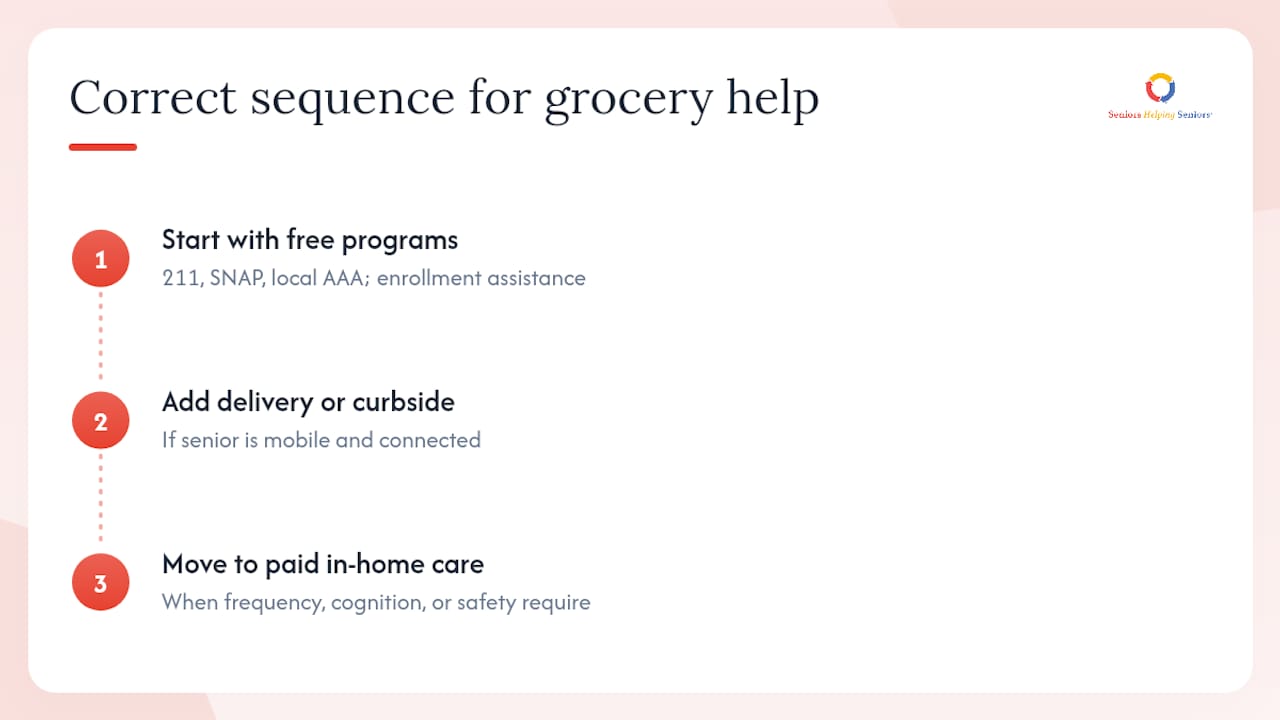
The better sequence is: start with what is free (211, SNAP, local AAA programs), layer in delivery or curbside if the senior is mobile and connected, and move to paid in-home care when frequency, cognitive needs, or safety concerns make a consistent caregiver the right answer. That last step is where most guides stop short, because it requires admitting that some situations need more than an app.
The other thing guides underplay is the application barrier. SNAP under-enrollment among seniors is not a mystery; the process is genuinely confusing, and many older adults grew up in a culture where asking for government help felt like a last resort. A Benefits Enrollment Center or a single call to 211 can change that. The benefit exists. The friction is the only thing standing between an eligible senior and real grocery relief.
Trusted in-home shopping help from Tucsonshs
For seniors in Tucson who need regular, reliable grocery help from someone they know and trust, Tucsonshs offers a paid in-home care model built around continuity. Unlike a rotating volunteer roster or a delivery service, Tucsonshs matches each client with a compatible mature caregiver who handles shopping visits as part of a broader care relationship.

On a first call, a care coordinator walks through the senior's needs, typical shopping frequency, any mobility or dietary considerations, and preferred stores. From there, a trial visit is scheduled, and pricing is explained clearly before any agreement is signed. Caregivers are background-checked, and same-caregiver continuity is a standard part of the model.
Contact Tucsonshs to schedule a first call and find out whether regular in-home shopping visits are the right fit for your situation.
This article is general information, not a substitute for advice from a qualified financial advisor. Consult a qualified financial professional about your own circumstances before acting on anything here.
Sources
State rules vary for every program listed below. Call the agency directly for local office details, current income thresholds, and application instructions.
- Food assistance programs for older adults | USAGov
- How Can Older Adults Get Help Paying for Food with SNAP? | NCOA
- Senior Farmers' Market Nutrition Program (SFMNP) overview | USDA FNS
- Commodity Supplemental Food Program (CSFP) | USDA FNS
- Shopping Assistance | Citymeals
- Pima Council on Aging Partners with City of Tucson to Provide Grocery Shopping Service to Older Adults - Pima Council on Aging