

Overnight care for seniors is professional in-home support during nighttime hours that keeps a loved one safe and gives family caregivers reliable sleep. It fits your situation if your parent has fallen at night, wanders with dementia, needs frequent bathroom help, or you're running on fumes after months of broken sleep. The next move is simple: request a needs assessment or book one to two trial nights before committing to a schedule.
A typical overnight shift covers three things above all else:
- Fall monitoring and help getting to the bathroom safely
- Medication reminders at scheduled night doses
- Calm reassurance for anyone confused or anxious after dark
Pro Tip: Ask upfront whether a "sleep-in" shift converts to a higher waking rate if the caregiver gets woken more than once or twice a night.
Key Takeaways
Overnight care for seniors works best when the level of supervision, awake or sleeping, matches the actual frequency and severity of nighttime needs.
| Point | Details |
|---|---|
| Match supervision to risk | Choose awake care for frequent falls or wandering; sleeping care for occasional needs. |
| Watch for warning signs | Falls, sundowning, missed medications, and caregiver exhaustion signal it's time to act. |
| Budget with real ranges | Costs shift by shift type, location, and agency versus private hire; ask about funding sources. |
| Get billing terms in writing | Confirm sleep-in conversion clauses, overtime, and cancellation policies before the first night. |
| Consider mature-caregiver matching | Tucsonshs pairs seniors with mature caregivers to build trust and calmer overnight outcomes. |
Table of Contents
- What Does Overnight Care for Seniors Actually Include?
- Awake Care or Sleeping Care: Which One Fits?
- What Signs Mean It's Time for Overnight Support?
- Why Overnight Care Helps Both the Senior and the Family
- What Does Overnight Care Cost, and How Do Families Pay for It?
- How Does Overnight Care Compare to Live-In or Assisted Living?
- How Do You Choose a Provider and Get Started?
- Why Caregiver Matching Changes Overnight Outcomes
- Balancing Safety and Dignity at Night
- If You're Ready: How Seniors Helping Seniors® Tucson Can Help
- Sources
What Does Overnight Care for Seniors Actually Include?
Overnight caregivers handle the tasks that make nighttime dangerous for an aging adult living alone or with a sole family caregiver. That means help with toileting and transfers, repositioning for anyone who can't shift their own weight in bed, medication reminders, and a fast response if something goes wrong. Cleveland Clinic notes that scheduled repositioning through the night is one of the most effective ways to prevent pressure injuries in bedbound patients, and it's a standard line item in most overnight care plans.
For someone with dementia, the job often looks different: less hands-on task work, more quiet supervision and redirection if they try to leave the bed or wander toward a door.
One thing worth being clear on: an overnight caregiver is not a nurse. Unless you've specifically hired licensed home health nursing, they provide personal care and supervision, not clinical treatment.
- Toileting assistance and safe transfers
- Repositioning and skin checks for bedbound clients
- Medication reminders (not administration of injections or IV care)
- Fall monitoring and emergency response
- Companionship and wandering prevention
Shifts typically run 8 to 12 hours, and most agencies will work around your family's actual schedule rather than forcing a fixed block.
Awake Care or Sleeping Care: Which One Fits?
The split between "awake" and "sleeping" overnight care is the single biggest decision families face, and it drives both safety and price.
Awake (waking) care means the caregiver stays alert all night. This fits frequent nighttime needs: someone who wanders, has advanced dementia, or has fallen more than once recently.
Sleeping (on-call) care means the caregiver sleeps but wakes for specific needs, like one bathroom trip. This works for a senior who's mostly settled but might need occasional help.
If nighttime needs grow beyond a single shift, live-in or 24-hour care (multiple caregivers rotating shifts) becomes the next step up.
- Frequent falls or wandering → awake care
- Occasional, predictable needs → sleeping care
- Needs spanning day and night → live-in or 24-hour care
Pro Tip: Ask any provider exactly how they bill when a "sleeping" caregiver gets woken repeatedly. Some agreements quietly convert to an overtime or waking rate after a set number of wake events, and you want that in writing before the first night, not after the invoice.
What Signs Mean It's Time for Overnight Support?
Certain patterns tend to show up right before families reach out for help. Watch for these:
- A fall or near-fall during the night, or trouble getting up from bed alone
- Frequent bathroom trips that require assistance to complete safely
- Sundowning: agitation, confusion, or disorientation that gets worse after dark
- Wandering, or attempts to leave the house at night
- Missed or incorrect nighttime medication doses
- A recent hospital discharge with reduced mobility
- You, the caregiver, are exhausted and can't reliably stay alert through the night
Any one of these alone might not mean much. Two or three together, especially paired with your own exhaustion, is usually the signal to stop waiting and start asking questions.
Why Overnight Care Helps Both the Senior and the Family
The benefits split cleanly into two categories, and both matter.
For the senior: fewer nighttime falls, timely help with medication, faster response if something happens, and regular repositioning that lowers pressure-injury risk for anyone with limited mobility. The National Institute on Aging points out that balance problems and fall risk climb with age, which is exactly why nighttime hours, when everyone is groggier and lighting is worse, carry outsized danger. The CDC identifies falls as a leading cause of injury among older adults overall.
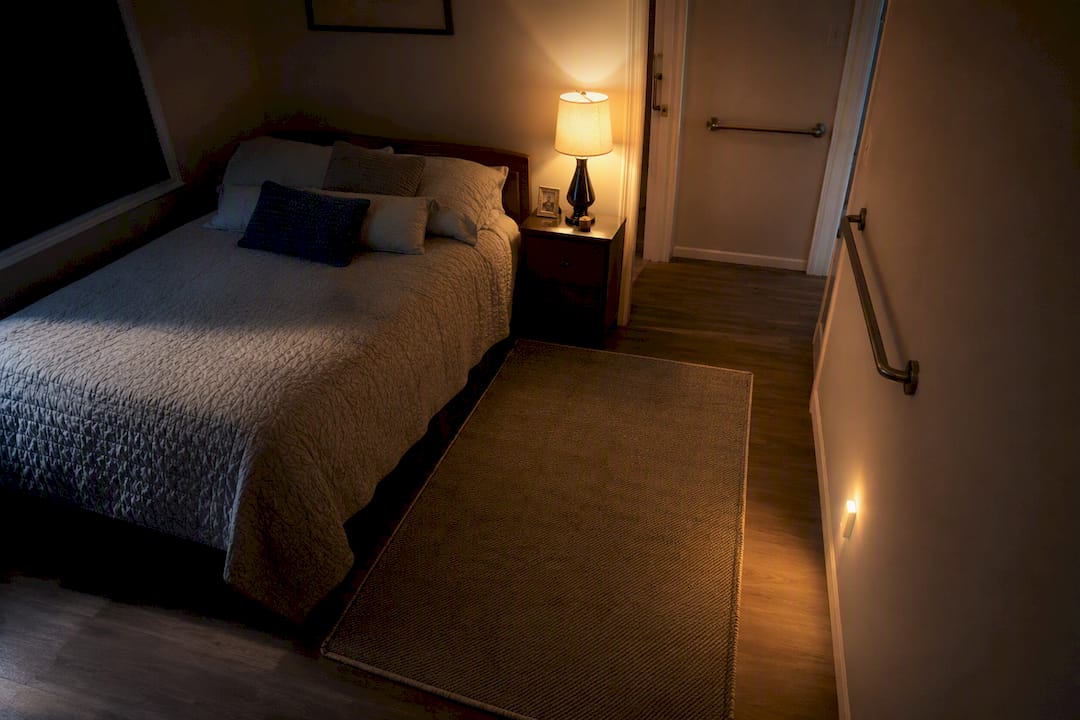
For the family: actual uninterrupted sleep, lower burnout, and often fewer emergency room visits. Research on caregiver burden links disrupted caregiver sleep to worse health outcomes for the caregiver themselves, not just stress. A daughter checking on her mother every two hours for six months isn't sustainable, and overnight care is often what delays a move to a facility rather than accelerating it.
What Does Overnight Care Cost, and How Do Families Pay for It?
Pricing shapes vary more than most families expect. Awake shifts cost more than sleeping shifts because you're paying for continuous alertness, not standby availability. Rates also shift with location, whether you go through an agency or hire privately, and how often you need coverage.
| Care type | Typical shape |
|---|---|
| Sleeping shift (8–12 hrs) | Lower nightly rate, standby availability |
| Waking shift (8–12 hrs) | Higher nightly rate, continuous supervision |
| continuous coverage | Multiple caregivers rotating; highest overall cost |
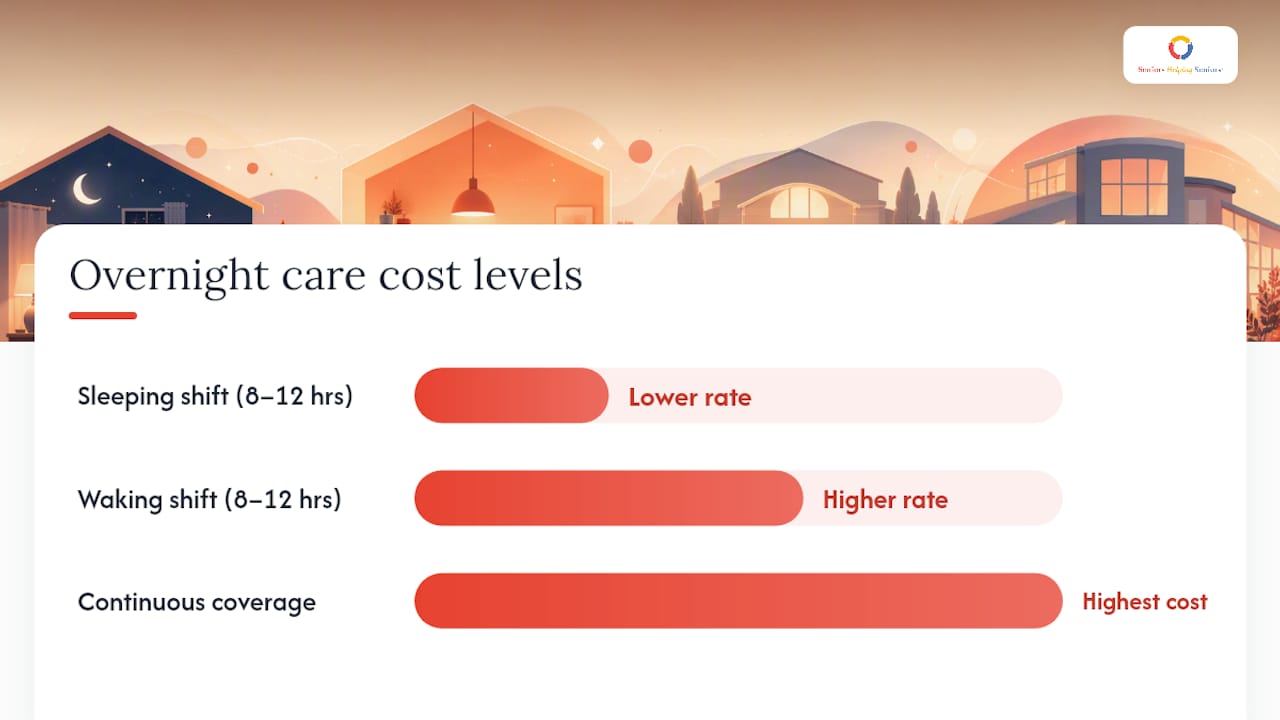
Five factors drive the price up or down: the level of supervision required, any clinical or medical needs, your location, whether you use an agency or a private hire, and how many nights per week you need.
On payment sources: most families pay out-of-pocket, but it's worth checking a few other doors first. Veterans may qualify for support through VA elderly benefits or the VA's homemaker and home health aide program. Some long-term care insurance policies cover in-home overnight support. Medicaid coverage for non-medical overnight care varies significantly by state, so check your state's aging services office directly. Medicare, notably, almost never covers non-medical overnight care.
- Ask for a written fee policy covering conversions, overtime, cancellations, and substitute coverage before signing anything.
Pro Tip: Get the sleep-in conversion policy in writing, not just verbally confirmed. It's the single most common source of billing disputes families run into after the first month.
How Does Overnight Care Compare to Live-In or Assisted Living?
Overnight-only care keeps your loved one at home and usually costs less than round-the-clock options, but it only covers the hours you book.
Live-in care puts a caregiver in the home continuously, which fits heavy daytime needs on top of nighttime ones. Shifted 24-hour care uses multiple caregivers rotating through the day and night, continuous but considerably more expensive. Assisted living or memory care moves the person into a facility setting, which can actually be more cost-effective than round-the-clock in-home care once needs become high-intensity or clinically complex.
- Overnight only: focused coverage, lowest relative cost, preserves home setting
- Live-in: continuous day and night, one caregiver residing in the home
- 24-hour shifted: continuous coverage, multiple caregivers, highest cost
- Assisted living/memory care: institutional setting, often more efficient at high-intensity needs
How Do You Choose a Provider and Get Started?
Start with an honest needs assessment: how often does nighttime help happen, and does it require awake supervision or just on-call availability? From there, work through a short checklist before you sign anything.
Ask providers directly: What's your availability? Do caregivers have dementia-specific training? How do you handle medication reminders? Are caregivers insured and bonded? What happens if my regular caregiver is sick?
Before hiring, verify: background checks on file, documented training records, proof of insurance, a written contract, and a billing policy that spells out overtime and cancellation terms in plain language.
The first night matters more than families expect. A good provider will walk through an orientation covering the medication list, emergency contacts, home layout and safety features, and how they'll communicate with you, whether that's a shared logbook, a text update, or a morning phone call.
- Assess needs and pick awake vs. sleeping care
- Interview at least two providers with the same question list
- Verify background checks, training, and insurance
- Request a written care plan and emergency protocol
- Confirm the communication method for nightly updates
Pro Tip: Run a one to three night trial before locking in a recurring schedule, and keep a simple log of any wake events or incidents. That log is what tells you, objectively, whether you actually need awake care instead of sleeping care.
Why Caregiver Matching Changes Overnight Outcomes
Matching a senior with a caregiver closer to their own generation isn't a gimmick. Shared life experience tends to build faster trust, which matters most at 2 a.m. when someone is confused and needs to feel safe fast. Seniors Helping Seniors® Tucson builds its in-home care model around this idea.
Three outcomes show up consistently with better matching: seniors settle faster and resist care less, nights run calmer with fewer agitation episodes, and caregivers notice subtle changes in condition sooner because the relationship isn't purely transactional.
Balancing Safety and Dignity at Night
Overnight care is a safety intervention, but it's also a dignity choice. The goal isn't just preventing falls. It's letting your loved one keep their routines, their bed, and their independence while reducing real risk.
If You're Ready: How Seniors Helping Seniors® Tucson Can Help
Tucsonshs is the practical alternative to a sleepless family member trying to cover every night alone. Their overnight services include both sleeping and waking shifts, respite coverage so a family caregiver can actually rest, dementia-aware caregivers trained to handle sundowning and wandering, and support for veteran families navigating VA benefits.

Every arrangement starts with a needs assessment, either by phone or through the online request form, where you'll walk through your loved one's routine, current risks, and whether awake or sleeping coverage fits best. Because caregivers are matched by shared life experience and are often seniors themselves, the relationship tends to feel less clinical and more like company that happens to also keep watch.
- Call to schedule a needs assessment
- Request an assessment through the Tucsonshs contact page
- Ask about trial nights before committing to a recurring schedule
If a fall, a wandering episode, or your own exhaustion has you searching for help tonight, start with a simple assessment call. It costs you nothing to find out what a realistic plan would look like.
Sources
- Older adults and balance problems — National Institute on Aging
- Older adult falls: data and research — Centers for Disease Control and Prevention (CDC)
- Caregiver burden research — PMC (article)
- Bedsores (pressure injuries) — Cleveland Clinic
This article is general information, not a substitute for advice from a qualified doctor. Consult a qualified healthcare professional about your own circumstances before acting on anything here.