

Music therapy genuinely helps people with dementia, and the evidence is strong enough to act on. A 2022 meta-analysis of 19 RCTs involving 1,024 participants found statistically significant improvements in general cognitive function, executive function, and episodic memory after music-based interventions. The American Music Therapy Association (AMTA) recognizes it as a clinical, evidence-based practice delivered by board-certified therapists in geriatric settings across the country.
Here is what that means for you right now:
- Music therapy most reliably reduces agitation, anxiety, and depressive symptoms in people with dementia.
- It can improve mood, communication, and engagement even in moderate-to-late stages.
- Effects on cognition are real but mixed depending on the person, stage, and intervention type.
- You can start with a personalized playlist at home today while pursuing a formal referral.
Key Takeaways
Music therapy produces real, evidence-backed benefits for people with dementia, particularly for mood, agitation, and behavioral symptoms, and caregivers can begin with a personalized playlist at home while pursuing a formal MT-BC referral.
| Point | Details |
|---|---|
| Strong evidence for mood and behavior | Meta-analyses and RCTs consistently show reduced agitation, depression, and anxiety; cognitive gains are real but mixed. |
| Personalized playlists work at home | A personalized playlist timed to difficult routines can reduce resistance and improve engagement without a therapist present. |
| MT-BC credential matters | Look for the MT-BC credential and use the AMTA therapist locator to find a qualified provider near you. |
| Safety requires screening | Wrong music, high volume, or songs with negative associations can increase distress; observe and document every response. |
| Tucsonshs supports daily music care | Tucsonshs in-home caregivers in Tucson implement music strategies consistently and coordinate with families and clinicians. |
Table of Contents
- What does the research say about music therapy and dementia?
- How music likely affects the brain and behavior in dementia
- What types of music interventions work for dementia?
- Who should deliver music therapy and how do you find someone qualified?
- Where and when is music therapy most useful?
- How family caregivers can use music safely at home
- What does a formal music therapy session look like?
- Limitations, safety considerations, and common misconceptions
- How in-home caregivers can support music-based care
- What music can do that a checklist cannot
- Consistent, music-supported in-home care in Tucson
- Sources
What does the research say about music therapy and dementia?
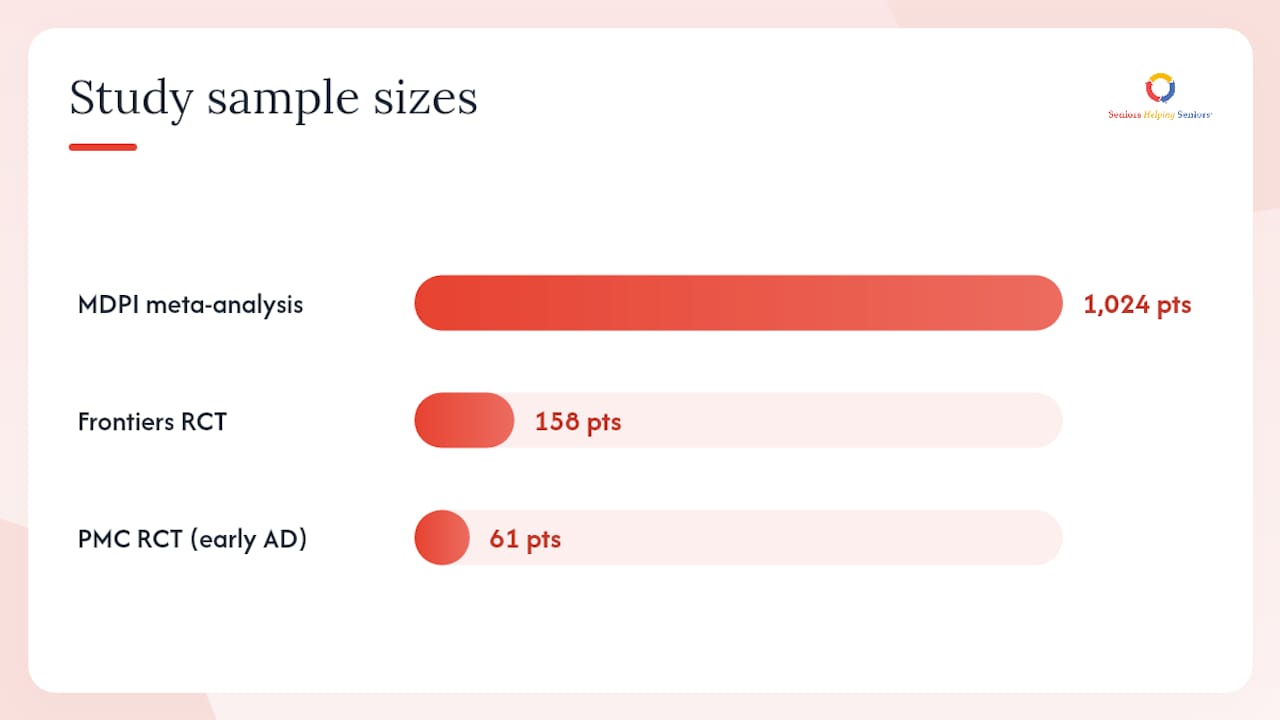
The evidence base is larger and more consistent than most caregivers realize. The 2022 MDPI meta-analysis cited above drew from 1,024 participants with a mean age range of older adults and found improvements across MMSE scores, executive function tasks, and episodic memory. Those are not trivial domains.
A prospective randomized study of 61 participants with mild cognitive impairment or early Alzheimer's disease reported significant improvements in cognition (MMSE), neuropsychiatric symptoms (NPI), and activities of daily living (ADL) at both 3 and 6 months compared with a control group. Plasma biomarkers showed no significant changes, which suggests functional and behavioral benefits can appear before any measurable biological shift.
A BMC Geriatrics systematic review covering multiple studies published over a decade reported consistent improvements across cognition, behavioral and psychological symptoms, quality of life, and depression and anxiety. The authors still call for more rigorous, uniform methods before making definitive claims about disease biomarkers.
| Study | N | Intervention Type | Main Outcomes |
|---|---|---|---|
| MDPI meta-analysis, 2022 | 1,024 | Mixed music-based interventions (RCTs) | Improved general cognition, executive function, episodic memory |
| PMC RCT (early AD), 2024 | 61 | Structured music therapy sessions | Improved MMSE, NPI, ADL at 3 and 6 months |
| Frontiers RCT (nursing home), 2024 | 158 | Individual music therapy vs. music listening vs. usual care | Reduced hyperactive and restless behaviors in both intervention groups |
| BMC Geriatrics review, 2025 | 42 studies | Multiple music therapy modalities | Consistent gains in mood, behavior, QoL; mixed cognition results |
The NCCIH summarizes the picture accurately: music-based interventions probably reduce depressive symptoms and may improve behavioral challenges, but effects on cognition are mixed depending on intervention type and population. The 2018 Cochrane review by van der Steen et al. reached a similar conclusion, noting heterogeneity across studies.
Key limitations to keep in mind:
- Studies vary widely in session length, frequency, music type, and therapist training.
- Many trials have small samples and short follow-up periods.
- Cultural and individual differences in music preference are rarely controlled for.
- Most evidence comes from mild-to-moderate dementia; late-stage data is thinner.
How music likely affects the brain and behavior in dementia
Music accesses preserved memory and emotional systems that dementia tends to damage last. The regions most responsible for musical memory, including the medial prefrontal cortex and the limbic system, show relative preservation even in moderate Alzheimer's disease. That is why a person who cannot recall a family member's name can still sing every word of a song from their twenties.
Rhythm adds another layer. The motor and timing systems in the brain respond to a steady beat through a process called entrainment, where movement and attention synchronize to an external pulse. For someone with dementia, a familiar rhythm can reduce restlessness, prompt purposeful movement, and create a brief window of calm that caregivers can use for transitions like bathing or dressing.
The social dimension matters just as much as the neuroscience. A trained music therapist is not simply pressing play on a playlist. The AMTA emphasizes that the therapeutic relationship itself is central to the clinical process. Shared music-making, even humming together, can reduce isolation and create moments of genuine connection that other interventions rarely produce.
Pro Tip: Watch for nonverbal cues during music: relaxed shoulders, eye contact, foot tapping, or spontaneous vocalization signal positive engagement. Furrowed brows, turning away, or increased agitation mean stop and try something different.
What types of music interventions work for dementia?
Interventions generally split into two categories, and the distinction matters when you are deciding what to try at home versus what to request from a professional.
Active interventions involve the person doing something: singing familiar songs, playing a simple percussion instrument, or moving to music. These tend to produce stronger engagement and are typically led by a board-certified music therapist (MT-BC).
Receptive interventions involve structured listening, including personalized playlists, background music during meals, or guided relaxation with music. A 2024 Frontiers RCT comparing individual music therapy and individualized music listening in 158 nursing home residents found both approaches reduced hyperactive and restless behaviors, with no clear superiority of one over the other. That finding matters: it means a well-constructed playlist can be genuinely therapeutic, not just pleasant background noise.
| Format | Typical Use Case | Pros | Considerations |
|---|---|---|---|
| Active (singing, instruments) | Agitation, apathy, social engagement | Strong engagement, emotional expression | Requires trained therapist for best results |
| Receptive (playlist, guided listening) | Mealtime, transitions, sleep, anxiety | Easy to implement at home, low cost | Needs personalization; wrong music can backfire |
| Live music | Acute distress, special events, hospice | Immediate emotional impact | Requires scheduling; not always accessible |
| Recorded music | Daily routines, home care | Consistent, repeatable, caregiver-friendly | Device setup and volume management needed |
| Group sessions | Social isolation, adult day centers | Peer connection, shared experience | Individual needs can get lost in group format |
| Individual sessions | Complex behavioral symptoms, early-stage | Tailored goals, closer monitoring | Higher cost; requires MT-BC |
For caregivers at home, receptive interventions with a personalized playlist are the most practical starting point. Pair music with shared activities like simple movement or reminiscence to deepen engagement.
Who should deliver music therapy and how do you find someone qualified?
The credential to look for is MT-BC, which stands for Music Therapist-Board Certified. It is issued by the Certification Board for Music Therapists (CBMT) and requires a bachelor's degree or higher in music therapy, a supervised clinical internship, and a national board exam. The AMTA maintains a national directory and sets professional standards.
MT-BCs work across a range of settings relevant to dementia care:
- Adult day centers — group and individual sessions during daytime programming
- Assisted living and memory care communities — embedded or contracted services
- Skilled nursing facilities — often part of a rehabilitation or palliative care team
- Geriatric psychiatric units — for acute behavioral symptoms
- In-home care — growing availability; some MT-BCs offer private home visits
- Hospice — comfort-focused, end-of-life music sessions
Questions to ask before hiring an MT-BC:
- Are you board-certified (MT-BC)? Can I verify your credential with CBMT?
- Have you worked specifically with dementia or Alzheimer's disease?
- How do you conduct your initial assessment, and how do you identify preferred music?
- What goals will you set, and how will you measure progress?
- Do you document sessions and share notes with the care team or family?
- Does insurance, Medicare, or Medicaid cover your services in this setting?
The AMTA's website (musictherapy.org) has a therapist locator you can search by zip code. Some hospice and home health agencies employ MT-BCs directly, so ask your physician or care coordinator for a referral.
Where and when is music therapy most useful?
Setting shapes what is possible. In a nursing home or memory care community, an MT-BC may visit two or three times a week and coordinate with nursing staff to carry musical care plans into daily routines. At home, the caregiver typically implements music strategies between professional sessions.
Use music therapy when you see:
- Sundowning agitation in the late afternoon or evening
- Resistance to personal care tasks like bathing or dressing
- Apathy, withdrawal, or flat affect during the day
- Anxiety before medical appointments or unfamiliar transitions
- Mealtime refusal or distraction
- End-of-life distress or restlessness
Clinical guidelines increasingly position music therapy as a non-pharmacological first-line option for behavioral and psychological symptoms of dementia (BPSD) before reaching for medication adjustments. A realist evaluation of the MELODIC intervention, which embedded a music therapist 15 hours per week in NHS dementia wards, found reduced distress behaviors and improved staff and family confidence when music was woven into the care environment rather than delivered as an isolated add-on.
Music therapy works best when it is consistent, not occasional. A single session during a crisis is less effective than a regular rhythm of musical engagement built into the day.
How family caregivers can use music safely at home
You do not need a therapist in the room to get real benefit. What you need is a plan.
- Gather music history. Ask family members, look through old photos, and note the person's age during their teens and twenties. Music from ages 15–25 tends to carry the strongest emotional memory.
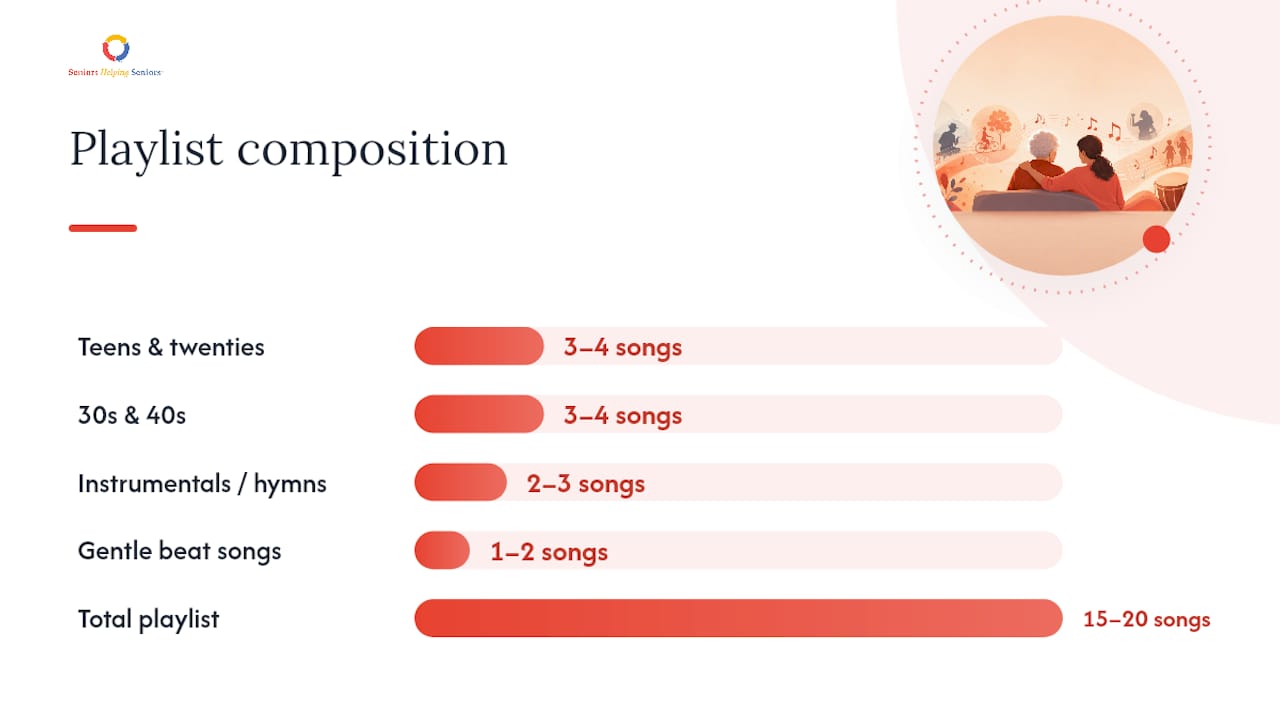
- Build a personalized playlist. Aim for 15–20 songs. Mix familiar favorites with a few calming instrumentals. Keep tempo moderate unless the goal is movement.
- Set the environment. Turn off the TV. Reduce background noise. Use a simple speaker at a comfortable volume, roughly conversational level.
- Time it deliberately. Try music 20–30 minutes before a known difficult period (pre-meal, pre-bath, late afternoon). Consistency matters more than duration.
- Introduce it gently. Start with one or two songs you are confident about. Watch the person's face and body language before adding more.
- Observe and document. Note what worked, what did not, and any emotional reactions. Share observations with the physician or MT-BC.
- Adapt as needed. Preferences can shift as dementia progresses. Revisit the playlist every few months.
Simple playlist template:
- 3–4 songs from the person's teens and twenties (high familiarity)
- 3–4 songs from their thirties and forties (life milestones)
- 2–3 calming instrumentals or hymns if relevant to their background
- 1–2 songs with a gentle, steady beat if movement is a goal
- Total runtime: 20–30 minutes
Avoid songs associated with grief, loss, or difficult life events unless you know the person responds positively. If a song causes visible distress, stop it immediately, switch to something neutral, and note the trigger.
Pro Tip: Pair music with a routine task rather than treating it as a separate activity. Playing a favorite song during handwashing or hair brushing can reduce resistance and make the task feel familiar rather than threatening.
For ideas on pairing music with conversation and reminiscence, companion visit topics can help caregivers weave music naturally into daily interaction.
What does a formal music therapy session look like?
A clinical session with an MT-BC follows a structured arc, though the content is always individualized.
Typical session flow:
- Assessment (first 1–2 sessions): The therapist gathers music history, identifies preferences, screens for negative associations, and sets measurable goals with the family and care team.
- Warm-up (5–10 minutes): A familiar, low-demand song to orient the person and establish safety.
- Core activity (15–25 minutes): Singing, instrument play, movement to music, or structured listening, depending on goals.
- Closure (5 minutes): A consistent closing song or ritual that signals the session is ending and helps with transition.
Sessions typically run 30–45 minutes. Frequency varies by setting and acuity, but two to three sessions per week is common in clinical trials and nursing home programs. The Cleveland Clinic describes music therapy as a complementary intervention that works best as part of a broader care plan, not as a standalone treatment.
Common short-term goals an MT-BC might set:
- Reduce frequency or intensity of agitation episodes
- Increase verbal or nonverbal communication during sessions
- Improve participation in daily care tasks
- Support caregiver training in music-based strategies
Progress is tracked using behavioral observation scales, functional goal ratings, and caregiver reports. A good MT-BC shares session notes with the broader care team and adjusts goals as the person's condition changes.
Limitations, safety considerations, and common misconceptions
Music therapy is not a cure, and caregivers who go in expecting dramatic cognitive reversal will be disappointed. Here is what the evidence actually supports.
Myth vs. fact:
- Myth: Music therapy restores lost memories permanently. Fact: It can prompt recall in the moment, but effects are typically temporary and session-dependent.
- Myth: Any music is therapeutic. Fact: Poorly chosen music, wrong volume, or songs with negative associations can increase agitation.
- Myth: Music therapy replaces medication. Fact: It is a complement to medical care, not a substitute. Always coordinate with the prescribing physician.
- Myth: Results are immediate and universal. Fact: Benefits vary by person, stage, and intervention type. Some people respond strongly; others show minimal change.
Safety considerations:
- Keep volume at a comfortable conversational level. Loud music can increase agitation rather than reduce it.
- Screen for songs tied to grief, trauma, or difficult relationships before adding them to a playlist.
- Watch for overstimulation: restlessness, covering ears, or increased confusion are signals to stop.
- In late-stage dementia, passive listening at low volume is safer than active participation.
Evidence gaps remain real. Most trials are short, use heterogeneous populations, and do not follow participants long enough to assess whether benefits persist after the intervention ends. The research community agrees that more rigorous, uniform methods are needed before making definitive claims about long-term cognitive outcomes.
How in-home caregivers can support music-based care
In-home caregivers are often the people best positioned to make music therapy work day to day, because they are present for the routines where music has the most impact.
Implementation checklist for in-home caregivers:
- Ask the family or MT-BC for the person's preferred music list before the first visit.
- Keep a simple speaker or tablet with playlists ready and charged.
- Use music at consistent times tied to known difficult transitions.
- Note any songs that prompt positive reactions and share them with the family.
- Report changes in response to music to the supervising clinician or MT-BC.
- Never force music on someone who is resisting; offer it gently and respect the response.
When an MT-BC is involved, in-home caregivers play a critical role in therapeutic carryover, applying the strategies the therapist has designed between formal sessions. A realist evaluation of embedded music therapy programs found that training staff and families to implement musical care plans significantly increased the sustained use of personalized music in everyday care.
Tucsonshs caregivers are matched with clients based on shared life experiences and personal compatibility, which makes it easier to identify meaningful music from a person's past. That kind of relationship-first approach is exactly what music-based care requires: someone who knows whether the person grew up listening to country music or big band, and who notices when a song lands differently than it did last week. Tucsonshs's in-home dementia support services are built around that level of personal attention.
What music can do that a checklist cannot
The research is clear, but it does not fully capture what happens when a person with moderate dementia suddenly sits up straighter and starts mouthing the words to a song they have not heard in decades. That moment is not a statistical outcome. It is a person, briefly more themselves.
What I find caregivers underestimate is how much the consistency of music matters more than the quality of the playlist. A modest, familiar song played at the same time every day before a difficult routine does more than a perfectly curated playlist used once a week. The brain responds to pattern. Dementia disrupts pattern. Music restores a small, reliable one.
The other thing worth saying plainly: music therapy is not a last resort. Too many families wait until behavioral symptoms are severe before trying it. The evidence from early Alzheimer's trials suggests starting earlier, when the person can still participate actively, produces the most durable gains. A personalized playlist costs nothing. A referral to an MT-BC costs a phone call. Neither requires waiting.
Consistent, music-supported in-home care in Tucson
Putting music strategies into practice every single day is harder than it sounds when you are also managing medications, meals, appointments, and your own exhaustion. That is where a trained, compatible companion makes a real difference.

Tucsonshs provides in-home dementia and memory support through caregivers who are mature adults themselves, matched to clients by shared background and life experience. That match is not incidental: knowing a person's era, their tastes, and their history is what makes a music-based routine feel natural rather than clinical. Tucsonshs caregivers can implement personalized music strategies consistently, coordinate with your family and any MT-BC already involved, and document what they observe so nothing falls through the cracks. Contact Tucsonshs to schedule an initial assessment and see whether in-home care is the right next step for your family.
Sources
The following sources were used in preparing this guide and are worth reading directly for deeper information:
- The Effect of Music-Based Intervention on General Cognitive and Executive Functions, and Episodic Memory in People with Mild Cognitive Impairment and Dementia: A Systematic Review and Meta-Analysis of Recent Randomized Controlled Trials
- Efficacy and Safety of Music Therapy for Early Alzheimer's Disease: a Prospective, Randomized Study
- Music and health: What you need to know (NCCIH)