
The activities that consistently work for people with dementia fall into six categories: music, reminiscence, gentle movement, sensory play, arts and crafts, and simple purposeful tasks like folding laundry. The rule that determines whether any of them succeed is this: personalize it to the person's real history, simplify it down to two or three steps, and time it to their best hour of the day. Get that sequence wrong and even a perfect activity flops.
Start smaller than you think you need to. Pick one:
- Play a favorite song from their 20s and just sit with them for five minutes.
- Hand them a folded stack of towels and ask for help "sorting" them.
- Pull out three old photographs and ask what they remember.
That's it. That's today's activity. Build from there.
Key Takeaways
Personalized activities matched to a person's history, ability, and best time of day reduce agitation and cut health-related crises far more than generic activity programs.
| Point | Details |
|---|---|
| Personalize first | Match activities to past hobbies and current ability rather than running generic programs. |
| Evidence backs it | The TAP trial showed a 48.8% drop in health-related events for personalized activity plans. |
| Simplify every task | Strip activities to two or three steps and pre-position materials before starting. |
| Track and adjust | Log responses weekly and drop anything that fails twice in a row. |
| Consistent companionship helps | Tucsonshs matches clients with mature caregivers on shared life experience to support daily engagement. |
Table of Contents
- What Counts as Memory Care Activities, and Why the Term Matters
- Why Structured Activities Change Daily Life, Not Just Mood
- Activity Ideas That Work, Organized by Type
- A Simple Four-Step Way to Pick and Adapt Any Activity
- A Day and Week You Can Copy Today
- Getting an Activity Started When Initiation Is the Real Barrier
- Safety Checks and Signs It's Time to Stop
- How In-Home Care Puts This Personalization Into Practice
- What the Research Actually Tells Caregivers to Prioritize
- Let Tucsonshs Handle the Day-to-Day Personalization
- Sources
What Counts as Memory Care Activities, and Why the Term Matters
"Memory care activities" is the shorthand caregivers search for, but the clinical field calls this cognitive stimulation and person-centered activity programming, and the distinction matters. Generic busywork (word searches handed to someone who can no longer read, group bingo for someone overstimulated by noise) technically counts as an "activity" but does nothing for engagement. Real cognitive stimulation for seniors means matching a task to a specific person's remaining abilities, not running a one-size-fits-all program. Every recommendation below follows that logic, and it's the same logic behind reminiscence therapy, structured social activities for seniors, and the broader category of memory enhancement exercises you'll see referenced in dementia care literature.
Why Structured Activities Change Daily Life, Not Just Mood
The clearest evidence comes from the Tailored Activity Program randomized controlled trial, which assigned individualized activity prescriptions based on each person's prior interests and remaining skills. The result: a nearly 50% reduction in health related events at six months, 15 events in the TAP group versus 28 in the control group. That's not a mood survey. That's fewer crises, fewer ER visits, fewer bad days serious enough to count as medical events.
When an activity is actually matched to what a person used to do and can still do, caregivers report needing to step in less often. Less hands-on assistance means less exhaustion for the caregiver and more dignity for the person receiving care.
The National Institute on Aging backs this with a simpler warning: don't run one-size-fits-all activities. Adapt to past interests and current ability, every time. A broader review of non-pharmacological interventions found music therapy and cognitive rehabilitation deliver real short-term improvements in function and well-being, though long-term effects vary by person and consistency of practice. The takeaway for you at home: activities aren't a nice extra. They're a lever that changes how many hard days you both have.
Activity Ideas That Work, Organized by Type
You don't need an activity director's degree to run any of these. You need fifteen minutes, a little prep, and a willingness to adjust on the fly.
Physical movement
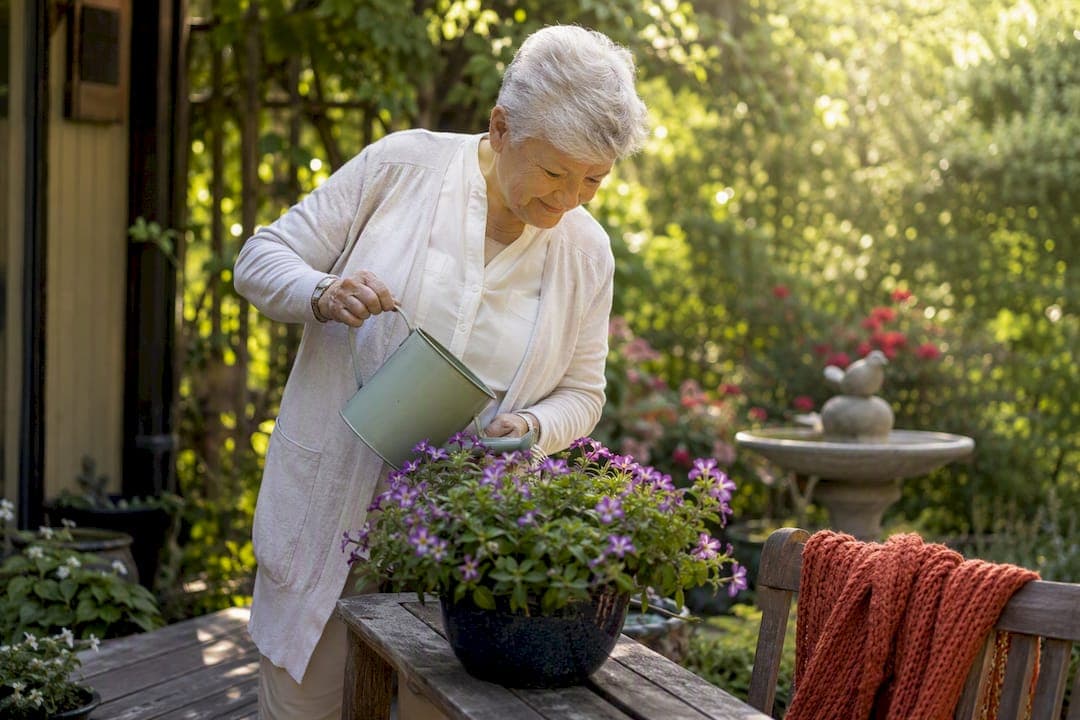
Gentle movement keeps joints loose and mood steadier, and it doesn't require a gym. A short walk around the yard or down a hallway works for early-stage dementia. For someone with more limited mobility, seated versions of Tai Chi hit the same benefit without the fall risk. Harvard Health has reported that Tai chi and similar gentle movement practices show measurable improvement in cognitive function and balance in older adults, which makes it one of the better physical options for someone still finding their footing after a diagnosis. Gardening tasks, watering a single potted plant, pulling a few weeds while seated, give the same sensory payoff without demanding stamina.

Music
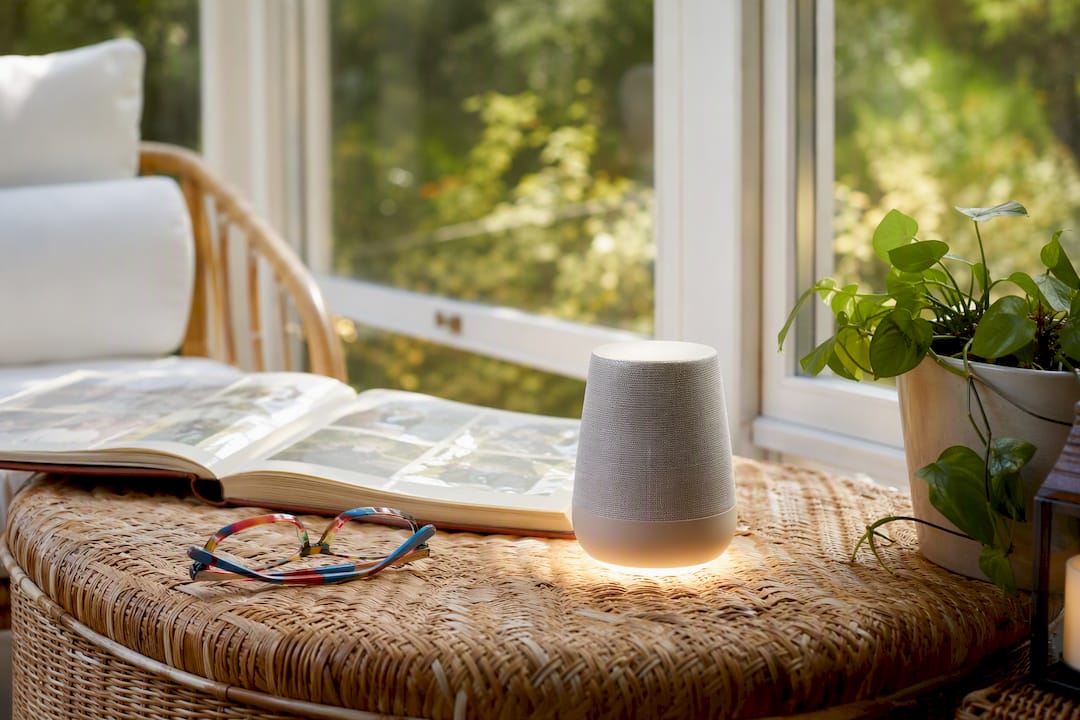
Play music from their teens and twenties. That's the single highest-yield tip in this entire list, because music memory tends to survive even in advanced dementia when almost nothing else does. A review of music interventions found consistent short-term benefits for mood and engagement, and you'll see it yourself: someone who hasn't spoken in an hour will hum along to a song they haven't heard in decades. Build a playlist of eight to ten songs, keep it on a tablet or a simple speaker, and use it as a reset button on hard afternoons. If they played an instrument, keeping a harmonica or a small keyboard nearby for them to pick up, no lessons required, can spark the same recall.
Reminiscence and life story work
Reminiscence activities for seniors don't need to be elaborate. A memory box filled with a handful of objects, a pocket watch, a recipe card, a concert ticket stub, gives you something concrete to hold and talk about. Photo scrapbooks work the same way. Ask open questions ("Tell me about this place") instead of quiz questions ("Do you remember where this was?"). The second kind creates anxiety. The first kind creates conversation.
Creative and art activities
Coloring books designed for adults, simple painting with a big brush and washable paint, and basic crafts like stringing large beads all work well. Keep clean-up minimal so the activity doesn't end in frustration over spills. The goal isn't a finished product worth framing. It's the process of moving hands and making choices.
Sensory activities
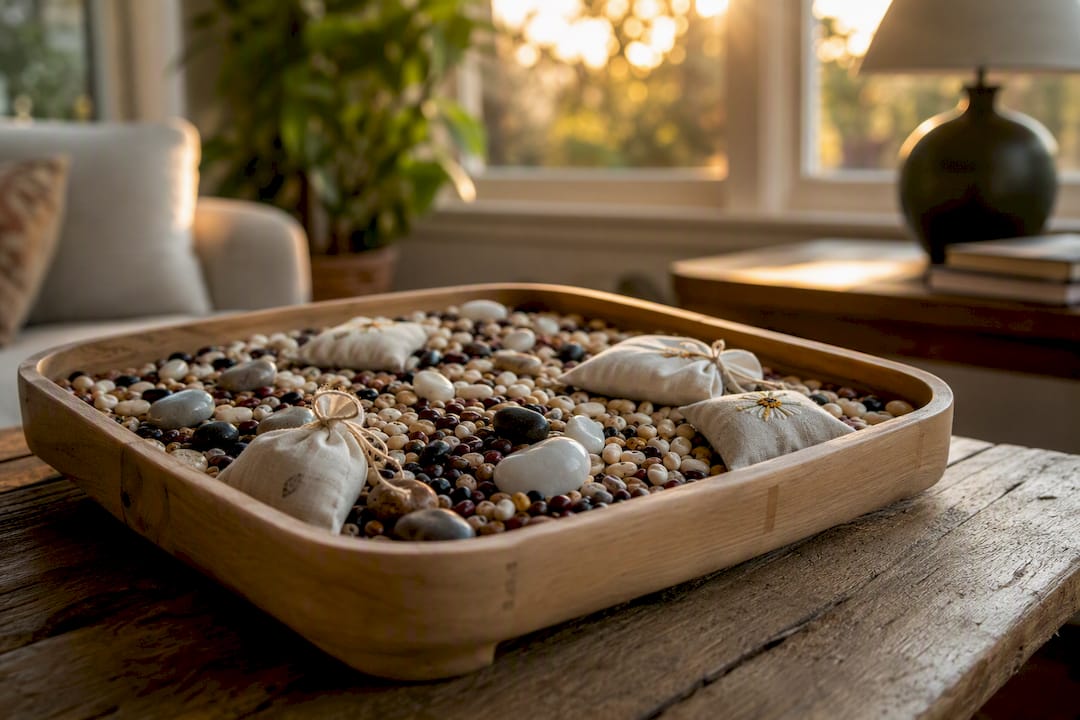
Scented sachets (lavender, cinnamon, coffee grounds in a jar) and textured sensory bins (rice, dried beans, smooth stones) provide tactile stimulation that doesn't require language or memory at all. Cooking smells work particularly well: standing near someone baking bread or simmering soup often triggers more genuine engagement than a structured task ever will.
Meaningful daily tasks
This is the most underused category, and it shouldn't be. Folding towels, sorting a jar of mixed coins, matching socks, assembling simple kits like a set of screws into a container: these give a real sense of usefulness. Dementia care literature specifically flags repetitive low-skill tasks as valuable late into the disease, precisely because they don't demand new learning. Keep expectations on the process, not a perfect result.
Calming activities
Hand massage with lotion, slow guided breathing, or folding tasks done at half speed all work as de-escalation tools when agitation starts creeping in, not just as scheduled activities.
Pro Tip: Keep a small "go bag" of your three best activities (one music, one sensory, one task) ready by the door. On hard days you won't have the energy to improvise, and having a pre-packed option removes that decision entirely.
A Simple Four-Step Way to Pick and Adapt Any Activity
Run every activity idea through these four steps in order, and you'll waste far less time on things that don't land.
- Assess. Write down what they did for work, what hobbies they had, and what time of day they're sharpest. Most people with dementia have a "good window," often mid-morning, and scheduling demanding activities outside it sets you up to fail.
- Simplify. Strip the activity to two or three steps max. Pre-measure ingredients, pre-open packaging, lay out only the materials needed for the current step, not the whole project.
- Cue. Set up an obvious starting point, model the first move yourself, and use hand-over-hand guidance if they hesitate. A verbal instruction alone often isn't enough, showing beats telling.
- Repeat and log. Jot a one-line note after each attempt: did it work, for how long, any signs of frustration. The NIA recommends this kind of simple tracking, and it's exactly the principle behind the TAP trial's success: activities get better over time because someone paid attention to what worked.
Pro Tip: Review your log every Sunday for five minutes. Drop anything that failed twice in a row and double down on whatever got the longest engagement, even if it seems too simple to count as "real" activity.
A Day and Week You Can Copy Today
Here's one full day, timed for someone in early to mid-stage dementia:
- 9:00 AM — Music listening with breakfast, 15 minutes.
- 10:30 AM — Main activity of the day (highest energy window): folding laundry or a memory box conversation, 20 to 30 minutes.
- 1:00 PM — Rest or quiet time after lunch.
- 3:00 PM — Sensory activity or short walk, 15 minutes.
- 6:30 PM — Calming hand massage or slow music before dinner wind-down.
For the week, rotate the 10:30 AM slot: reminiscence on Monday and Thursday, gentle movement on Tuesday and Friday, arts and crafts on Wednesday, a longer social visit on Saturday, and a lighter, low-energy day on Sunday with just music and rest. Solo caregivers should plan for one demanding activity per day, max. If another family member or a paid companion is involved, you can safely run two.
Getting an Activity Started When Initiation Is the Real Barrier
Half the battle with memory care activities isn't finding the right one. It's getting started at all. Initiation is often an executive function problem, not a motivation problem, so treat it that way instead of assuming reluctance means "doesn't want to."
- Pre-open packages and set materials directly within reach before you even mention the activity.
- Break the task into one visible step at a time rather than describing the whole project up front.
- Model the first action yourself, then hand it over. Use hand-over-hand guidance if hesitation continues.
- Skip correction and skip quizzing. If they fold a towel wrong, let it go.
- If resistance shows up, offer an easier version or simply pause and try again in twenty minutes.
Pro Tip: If someone stalls at the very first step three days running, the activity is too complex, not the person unwilling. Cut it down further before giving up on it.
Safety Checks and Signs It's Time to Stop
Run a quick safety scan before any activity: clear the floor of trip hazards, keep small objects away from anyone with a swallowing risk, and check the room temperature if the activity involves movement.
Watch for behavioral warning signs too:
- Rising volume, repeated refusals, or pushing materials away signal overstimulation, not defiance.
- Sudden confusion or agitation that wasn't present minutes earlier means it's time to stop, not push through.
- Calm the moment first (lower your voice, remove the activity, offer water) before deciding whether to try again later.
Caregivers frequently overschedule the day, and balanced days with real rest between activities reduce agitation more reliably than a packed calendar does. If distress, aggression, or confusion appears suddenly and doesn't resolve within a few minutes of calming, that's worth a call to their physician, not just a note in your log.
How In-Home Care Puts This Personalization Into Practice
The four-step framework above works best when someone can execute it consistently, and that consistency is exactly what breaks down when one family caregiver is stretched across a full day of other responsibilities. Tucsonshs built its model around mature, often senior, caregivers matched with clients based on shared life experience, precisely because someone who remembers the same music, the same historical moments, and the same kind of work life brings instant rapport to reminiscence and life story activities.
Shared generational experience isn't a soft benefit. It's the difference between a caregiver guessing at what might resonate and a caregiver who already knows the reference points.
That match, paired with the same personalization principles behind the TAP trial, is what Tucsonshs applies to daily in-home activity planning for clients across the Tucson area.
What the Research Actually Tells Caregivers to Prioritize
Most articles on memory care activities read like activity catalogs: a long list of things to try with no guidance on sequence. That's backwards. The TAP trial didn't succeed because researchers found magic activities. It succeeded because they assessed the person first and adapted constantly. If you take one thing from all of this, take the assessment step, not the activity list.
The conventional advice oversells novelty, new puzzles, new games, new gadgets, when the actual evidence favors familiar, well-worn activities stripped down to fewer steps. A 70-year-old former seamstress doesn't need a new craft kit. She needs fabric and a task that resembles what her hands already know.
Prioritize consistency over cleverness. A mediocre activity done at the same time every day beats a brilliant one attempted once and abandoned. That routine is what actually reduces agitation, not the sophistication of the activity itself.
— Cameron
Let Tucsonshs Handle the Day-to-Day Personalization
Building and running a personalized activity plan seven days a week is a second job most families didn't sign up for, on top of everything else caregiving already demands. Tucsonshs solves that by pairing your loved one with a mature, often senior, caregiver matched specifically on shared background and interests, so reminiscence conversations, music choices, and daily tasks land naturally instead of feeling forced.
That match is what separates Tucsonshs from a rotating cast of unfamiliar aides: consistency of companionship, not just coverage of hours. If your family is trying to keep a loved one engaged in Tucson, Sierra Vista, Corona de Tucson, Tucson Estates, or Green Valley, reach out to Tucsonshs to talk through a care plan built around the activities your loved one actually responds to.
Sources
- Tailored Activity Program RCT — Jefferson Digital Commons
- Adapting activities for people with Alzheimer’s disease — NIA
- Non-pharmacological interventions for people living with dementia — NCBI Bookshelf
This article is general information, not a substitute for advice from a qualified doctor. Consult a qualified healthcare professional about your own circumstances before acting on anything here.