
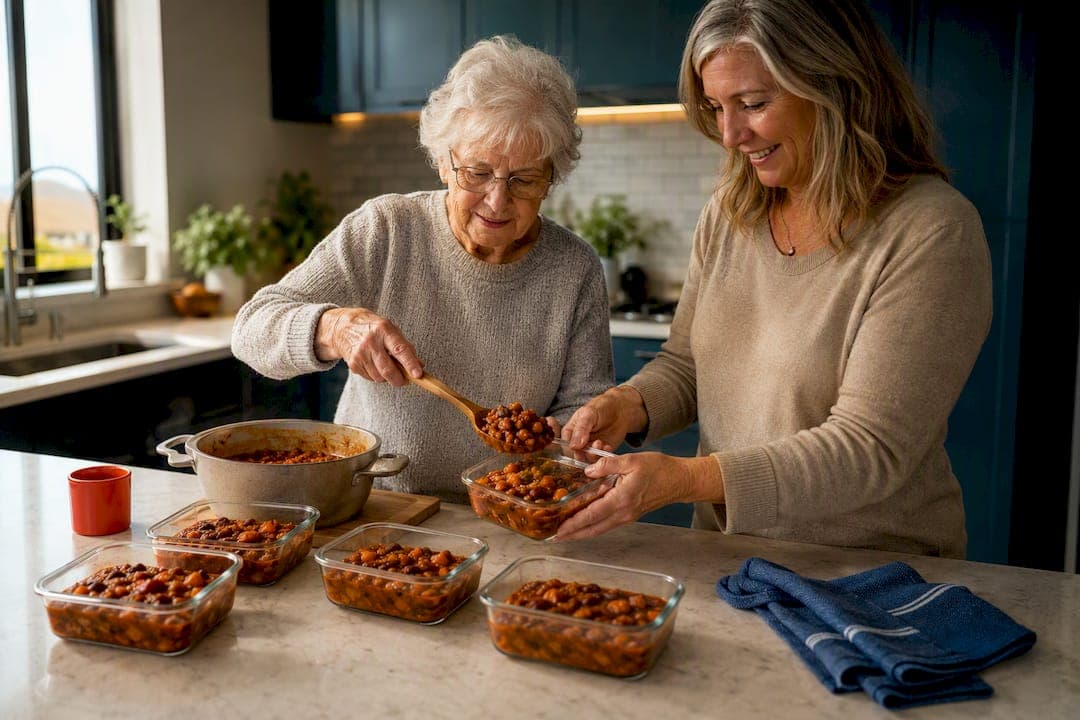
The simplest effective approach to meal prep for seniors skips complicated cooking altogether: build meals from ready-made staples, run one or two batch-cooking sessions a month, and serve small, frequent portions built around protein and fluids. Prioritize protein, hydration, and easy reheating over recipe complexity. Scan the quick meal ideas below, then move to the freezer recipes when you're ready to stock up.
TL;DR:
- Batch-cooking a soup or stew in six to eight portions simplifies weekly meal prep and minimizes standing time during busy days.
- Prioritize spreading protein intake across meals with eggs for breakfast, canned fish for lunch, and poultry for dinner to support muscle health.
- Keep frozen and canned vegetables on hand to complement meals, and use a "use-first" fridge shelf to prevent meal waste.
- Reheat leftovers thoroughly and label containers with content and date; discard anything stored beyond recommended safety periods.
- Incorporate social routines such as shared meals or caregiver visits to boost appetite and ensure consistent food intake in older adults.
Table of Contents
- Quick Meal Ideas for Seniors That Take Minutes, Not Hours
- What Should Older Adults Prioritize When Prepping Meals?
- How Do You Batch-Cook and Portion Meals Without Overdoing It?
- Simple Recipes and Freezer Meals Seniors Can Make Ahead
- How Long Can Prepped Meals Safely Stay in the Fridge or Freezer?
- Building a Simple, Budget-Friendly Pantry
- How Caregiver Routines Make Meals More Appealing
- Trusted Resources for Nutrition Guidance and Meal Programs
- Why Most Meal-Prep Advice for Seniors Misses the Point
- A Simpler Way to Handle Meals and Daily Support
- Sources
Quick Meal Ideas for Seniors That Take Minutes, Not Hours
Most days don't need a recipe. They need a formula. The fastest way to eat well is to stop thinking of every meal as something you cook and start thinking of half of them as something you assemble, a shift registered dietitians point to when they discuss better nutrition for people cooking for one. Here are options that require little more than a can opener, a microwave, or a fridge.
- Greek yogurt with berries and walnuts (assembly, protein and fiber, no prep beyond opening containers)
- Scrambled eggs with pre-shredded cheese (5-minute cook, protein-rich, soft texture for easy chewing)
- Overnight oats in mason jars (batch four at once. Freezer not needed, grab-and-eat for four mornings)
- Cottage cheese with canned peaches (assembly, high protein, no cooking or chewing effort)
- Rotisserie chicken over microwaved rice and frozen peas (assembly, reheats in under 3 minutes)
- Tuna pouch salad with crackers or on soft bread (no can opener needed, protein-dense, no cooking)
- Bean and cheese quesadilla, cut into small wedges (5-minute stovetop or microwave, fiber and protein)
- Lentil soup, batch-cooked and frozen in single portions (freezer-friendly, naturally soft texture)
- Egg salad on soft bread or crackers (make once, eat over two days refrigerated)
- Baked sweet potato with black beans and a dollop of sour cream (microwave the potato, top and go)
- Turkey and cheese roll-ups, no bread needed (zero prep, good protein for a quick lunch)
- Chili made in bulk and frozen in 1-cup portions (batch-cook once, freezer-friendly, soft enough for most diets)
- Smoothie with milk, banana, and peanut butter (blend and drink, good for low appetite days)
- Cheese and whole-grain crackers with grapes cut in half (zero cook, easy snack with calcium)
- Hard-boiled eggs, boiled six at a time (batch once, grab one anytime for four to five days)
- Applesauce cups with a spoonful of cottage cheese stirred in (soft texture, quick protein boost)
Every one of these leans on the same principle: protein first, minimal standing time, and something you can reheat or grab without a second thought.
What Should Older Adults Prioritize When Prepping Meals?
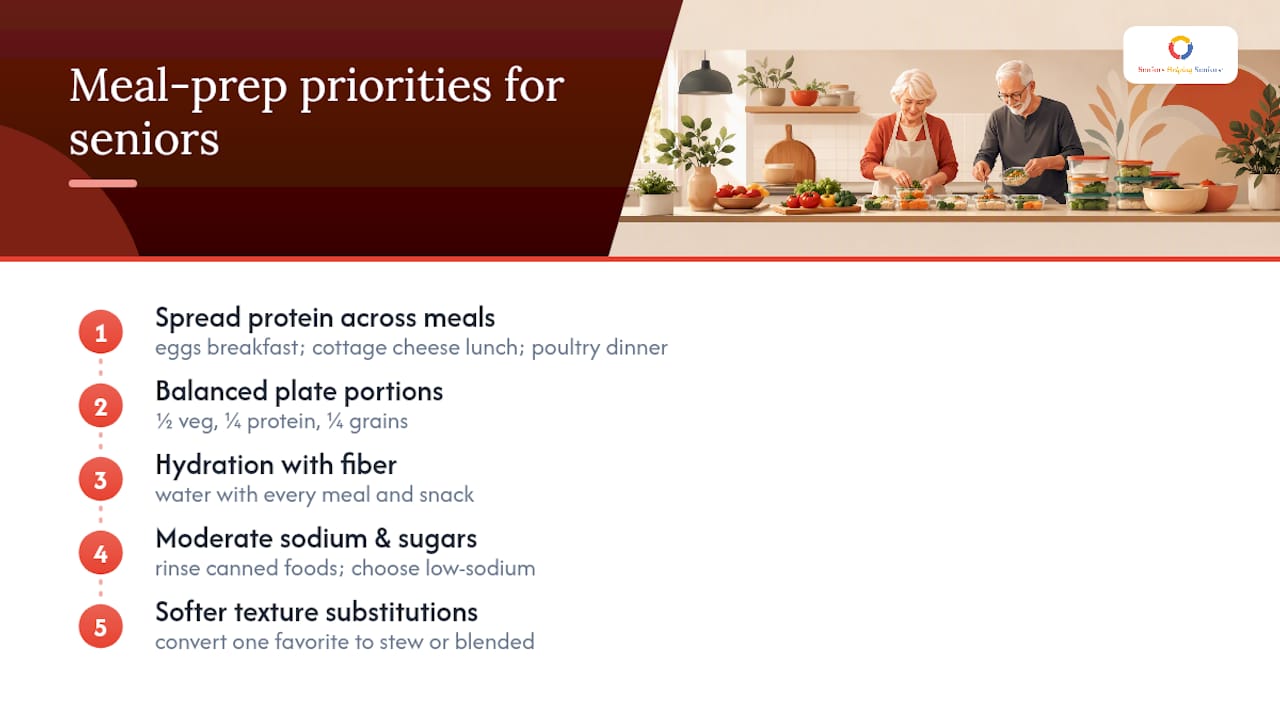
Protein needs don't shrink with age, even though appetite often does. Clinical research on aging and muscle health shows that spreading protein across meals, rather than loading it into one big dinner, does more to preserve strength and function than a single large serving ever could, according to a review on protein intake and aging. That means eggs at breakfast, cottage cheese or canned fish at lunch, and beans or poultry at dinner beats saving all your protein for one meal.
MyPlate's guidance for older adults offers a simple visual: fill half the plate with vegetables, a quarter with protein, and a quarter with grains. When fresh produce feels like too much chopping, frozen or canned vegetables count. Fortified cereals or a calcium supplement can fill gaps when dairy intake drops.
Hydration is the piece most meal plans miss. Thirst signals weaken with age, so seniors can be dehydrated well before they feel thirsty. Fiber intake often gets pushed at the same time, through bran cereals or added vegetables, but fiber without enough fluid can cause constipation instead of relieving it. Public health guidance recommends increasing fluids right alongside any fiber increase, per practical meal guidance for older adults living alone. A glass of water with every meal and snack is a low-effort habit that solves both problems at once.
Sodium and added sugar deserve moderation, not elimination. Canned soups, deli meats, and frozen dinners often carry heavy sodium loads, so rinsing canned beans or choosing "low sodium" labels makes a real difference without changing the meal itself. If weight loss, appetite changes, or a chronic condition like diabetes complicate calorie needs, that's a conversation for a doctor or registered dietitian, not a guessing game.
Chewing and swallowing difficulties call for smart substitutions rather than a full menu overhaul. Instead of modifying every dish, convert one favorite meal a week into a softer version, like a stew simmered longer or a casserole blended slightly, according to National Institute on Aging guidance.
How Do You Batch-Cook and Portion Meals Without Overdoing It?
Meal prep for seniors works best as a mix of two methods: assembly and batch-cooking. Assembly means combining premade or minimally prepared items, a rotisserie chicken, a bag of frozen vegetables, a tuna pouch, with almost no cooking involved. Batch-cooking means preparing a larger dish once and portioning it for multiple days. AARP's caregiving resources point to exactly this combination, recommending premade staples specifically because they cut down on standing, chopping, and cleanup.
A workable batch-cooking session follows five steps:
- Build a short shopping list around one or two proteins, a starch, and two vegetables that freeze well.
- Cook once, ideally a soup, casserole, or stew that scales easily to 6 to 8 portions.
- Portion immediately into single-serving containers while the dish is still warm but not hot.
- Label every container with the dish name and the date it was made, using a marker and masking tape or a large-print label if handwriting or reading small print is difficult.
- Store half in the fridge for the next 3 to 4 days and freeze the rest for later weeks.
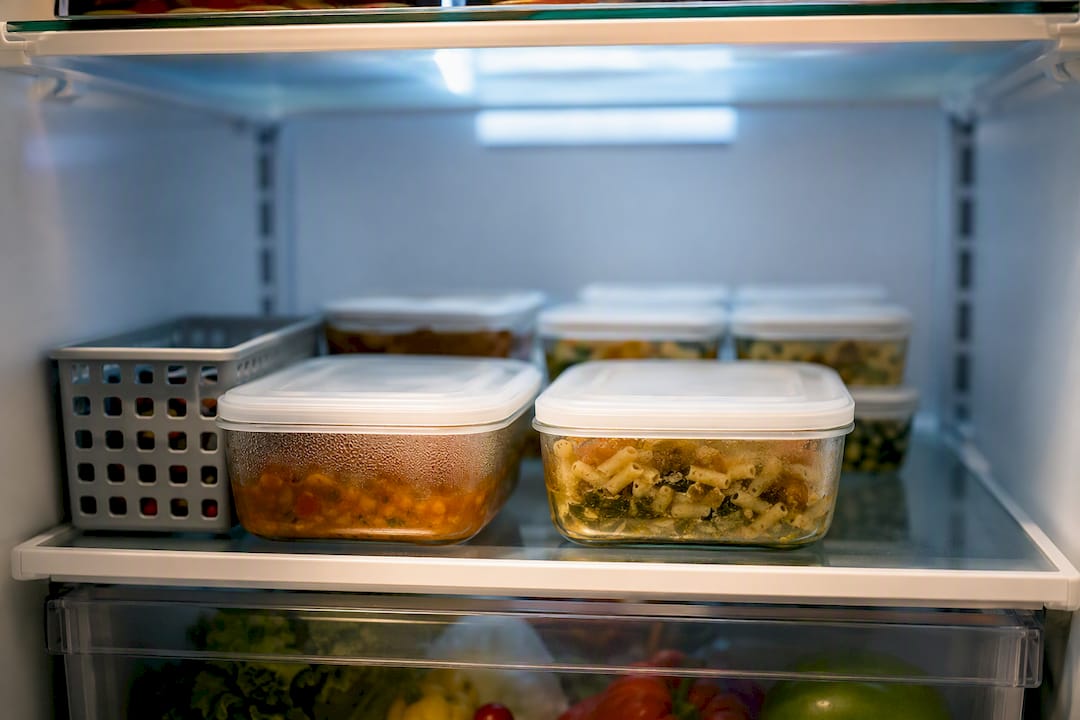
Shallow, rectangular containers often reheat more evenly than deep round ones, and glass containers allow visibility inside without opening every lid. For those with balance concerns, microwaves with clear, large buttons can be easier to use than a stovetop, as they reduce standing and stirring needs.
Pro Tip: Set up a "use-first" shelf at eye level in the fridge, front and center, so older meals get eaten before new ones. This small habit prevents the most common source of meal waste: forgetting what's already made.
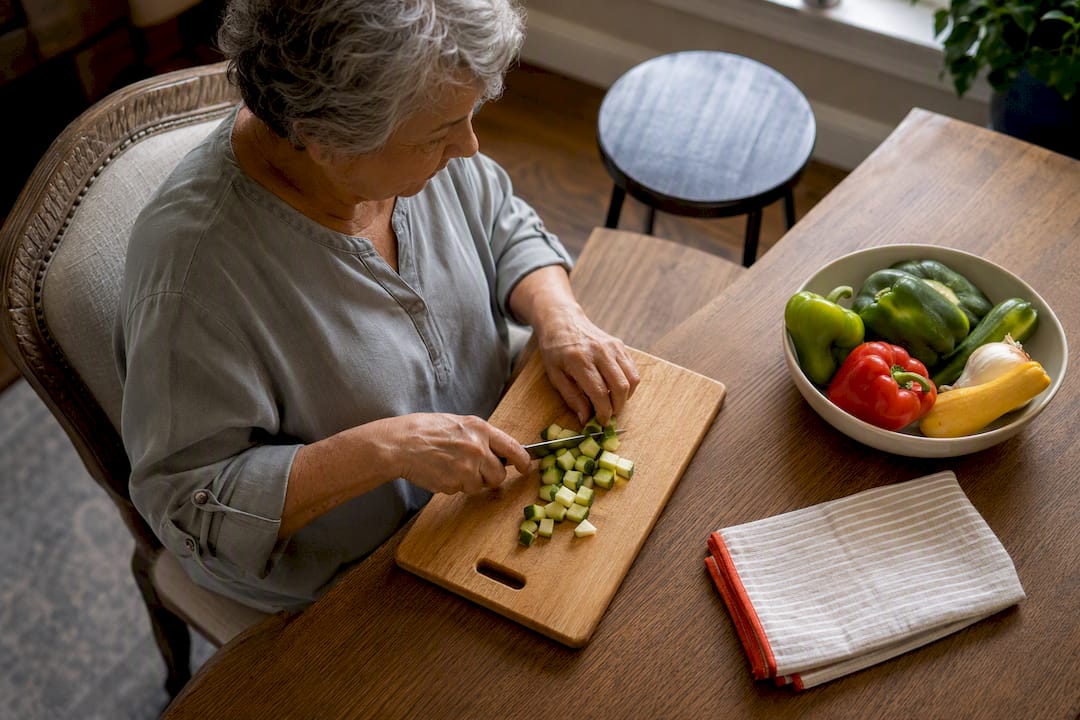
For anyone who struggles with prolonged standing, do all the chopping seated at the kitchen table with a cutting board and a stool, then carry ingredients to the stove only for the final cooking step.
Simple Recipes and Freezer Meals Seniors Can Make Ahead
A handful of go-to recipes removes the daily "what should I eat" decision entirely.
- Breakfast: Baked oatmeal cups. Mix oats, milk, eggs, and cinnamon, bake in a muffin tin, and freeze individually. Reheat one cup for 30 seconds. High in protein when made with milk and eggs instead of water.
- Lunch: Chicken and white bean soup. Shredded rotisserie chicken, canned white beans, frozen carrots, and low-sodium broth simmered for 20 minutes. Freezes well in 1.5-cup portions for up to 3 months.
- Lunch: Egg salad lettuce wraps. Hard-boiled eggs mashed with a little mayonnaise and mustard, served in soft lettuce or on crackers. Best eaten fresh within 3 days, not frozen.
- Dinner: Turkey and vegetable chili. Ground turkey, canned tomatoes, kidney beans, and frozen corn, simmered once and portioned into 8 containers. Naturally soft texture works for reduced-chewing diets.
- Dinner: Baked salmon with mashed sweet potato. Frozen salmon fillets baked from frozen, paired with microwaved sweet potato mashed with a little butter. High in protein and omega-3s, no batch cooking needed.
- Snack: Peanut butter and banana on whole-grain toast. Quick assembly, good potassium and protein combination for an afternoon dip in energy.
- Snack: Cheese cubes with soft pear slices. Calcium and easy chewing in under a minute of prep.
For a true freezer batch recipe, turkey and vegetable chili is worth making in a double batch. Cook 2 pounds of ground turkey with two cans of low-sodium diced tomatoes, one can of kidney beans, one cup of frozen corn, and chili seasoning. Simmer 25 minutes, cool for 20 minutes, then divide into 10 single-serving containers. Label each with "Turkey Chili" and the date, freeze eight, and refrigerate two for the next two days. To reheat from frozen, microwave 3 to 4 minutes, stirring halfway through, until steaming throughout.
For a low-sodium version, skip the seasoning packet and use fresh garlic, cumin, and a splash of lime juice instead. For diabetic-friendly portions, pair each cup of chili with a smaller starch side, like half a cup of rice instead of a full cup. For softer texture needs, simmer an extra 10 minutes and mash the beans slightly with a fork before freezing.
How Long Can Prepped Meals Safely Stay in the Fridge or Freezer?
Cooked leftovers can generally be kept in the refrigerator for several days and in the freezer for a few months without a meaningful drop in quality. Every container needs a label with the dish name and the date it was made, not just the date it goes in the freezer. Practitioners who work with home-delivered meal programs recommend a dedicated "use-first" area in the fridge for exactly this reason: it prevents older meals from getting buried behind new ones, and it keeps deliveries from community programs separate from homemade batches so nothing gets forgotten, per guidance on coordinating meal benefits.
Reheated food should be steaming hot all the way through, not just warm on the outside. In a microwave, stir halfway through the reheating time to eliminate cold spots, especially in soups and casseroles. If a power outage lasts more than four hours, treat anything in the freezer that has started to soften as unsafe, and discard refrigerated food that's been above room temperature for more than two hours. When in doubt about smell, texture, or how long something sat out, throw it out. For anyone with limited mobility, keep a small step stool near the fridge and store frequently used containers on lower shelves to avoid reaching or bending.
Building a Simple, Budget-Friendly Pantry
A senior kitchen doesn't need much to run well. A week's worth of staples looks like canned beans, canned tuna or salmon, frozen vegetables, eggs, milk or a shelf-stable alternative, rotisserie chicken, rice or pasta, oats, and a couple of soft fruits like bananas or canned peaches. Rotate the pantry every few weeks, using older cans first, and check expiration dates when restocking.
Budget swaps matter more than brand names. Frozen vegetables cost less than fresh and last far longer without spoiling before they get used. Canned fish is often cheaper per serving than fresh fillets and needs no cooking at all.
A few tools make a real physical difference: an electric can opener, a lightweight microwave-safe steamer, a jar opener with grip padding, and a slow cooker that needs only occasional stirring. For anyone on a tight budget, local food banks and senior nutrition programs can stretch a grocery budget further, and they're worth asking about at a local senior center or through shopping assistance services designed to help with exactly this kind of errand.
How Caregiver Routines Make Meals More Appealing
Meals taste better and get eaten more consistently when they come with company. Social contact acts as a cue to eat, whether that's a shared meal, a phone call during dinner, or simply someone else present at the table, an effect researchers have observed directly in studies on nutrition for people eating alone. Even a video call propped up at the kitchen table can nudge someone to finish a plate they'd otherwise push aside.
At Seniors Helping Seniors® Tucson, caregiver visits often build around this idea directly. A visit might include help with grocery shopping, assembling that day's lunch together, or setting the table with a cloth napkin and background music before a meal, small rituals that the National Institute on Aging links to better appetite in older adults. Some caregivers lead 10 to 15 minutes of gentle chair exercises before mealtime, since light movement beforehand can improve both appetite and the physical ease of handling utensils, a connection supported by NIH research on strength training and aging. Companion visits built around food, more broadly, show up in research on how social contact improves appetite in seniors as one of the more reliable ways to counter the isolation that often drives appetite loss in the first place.
Not every appetite dip is solved by better company or easier recipes. Unexplained weight loss, frequent coughing while eating or drinking, or a sudden aversion to entire food groups are signals to bring in a doctor or registered dietitian rather than adjusting the menu at home. Seniors Helping Seniors® Tucson caregivers are trained to notice these changes during routine visits and flag them early, which is often the difference between a minor adjustment and a hospital visit. More detail on how these visits work day to day is available through Tucson senior care services.
Trusted Resources for Nutrition Guidance and Meal Programs
For recipes built specifically with older adults in mind, MyPlate Kitchen offers single-serve and batch-friendly options backed by USDA guidance. The National Institute on Aging covers appetite loss and nutrition science in plain language. For coordinating home-delivered meals, understanding how Medicare Advantage meal benefits compare to community programs like Meals on Wheels helps avoid duplicate deliveries and wasted food.
Why Most Meal-Prep Advice for Seniors Misses the Point
Most guides aimed at older adults treat meal prep like a scaled-down version of meal prep for busy professionals: same containers, same Sunday-cooking marathon, just smaller portions. That framing gets the physical reality backwards. A three-hour cooking session isn't a minor inconvenience for someone managing arthritis or balance issues; it's often the single biggest barrier to eating well at all.
The research here points somewhere more useful: treat assembly as equal to cooking, not a lesser substitute for it. A tuna pouch and a bag of pre-washed spinach is a legitimate lunch, not a fallback. That mental shift matters more than any recipe in this piece.
Where conventional advice really falls short is on the social piece. Nutrition guides fixate on nutrients and skip the fact that isolation itself suppresses appetite, regardless of how well-balanced the plate is. A perfectly portioned, protein-rich meal eaten alone in silence often goes half-finished. The same meal eaten with company tends to get finished. If you're prioritizing one thing this week, make it that: get someone in the room at mealtime before you worry about the recipe.
— Cameron
A Simpler Way to Handle Meals and Daily Support
Reading a guide like this is one thing. Having someone actually shop, assemble, and sit down for the meal with you is another. Caregiver services that pair older adults with mature, active caregivers can handle grocery runs, portioning, and provide company that makes a meal worth finishing. Instead of juggling grocery delivery apps, a separate meal-delivery service, and hoping a neighbor checks in, one caregiver relationship covers shopping, meal prep, and the conversation that goes with it.

What makes this different from a meal-delivery box or a solo batch-cooking session is the person across the table. Caregivers can be matched to clients to help visits feel more like time with a friend rather than just a scheduled task. That matters on the days when appetite is low and company is the only thing that gets a plate finished. Explore Seniors Helping Seniors' Southern Arizona services to see how meal preparation and companionship fit into a visit, or visit Tucsonshs to ask about scheduling an in-home visit in Tucson, Sierra Vista, Corona de Tucson, Tucson Estates, or Green Valley.
This article is general information, not a substitute for advice from a qualified doctor. Consult a qualified healthcare professional about your own circumstances before acting on anything here.
Sources
- Better nutrition when cooking for one - Harvard Health
- Healthy meal planning tips for older adults - National Institute on Aging
- MyPlate: Older adults
- Meal planning for caregivers - AARP