
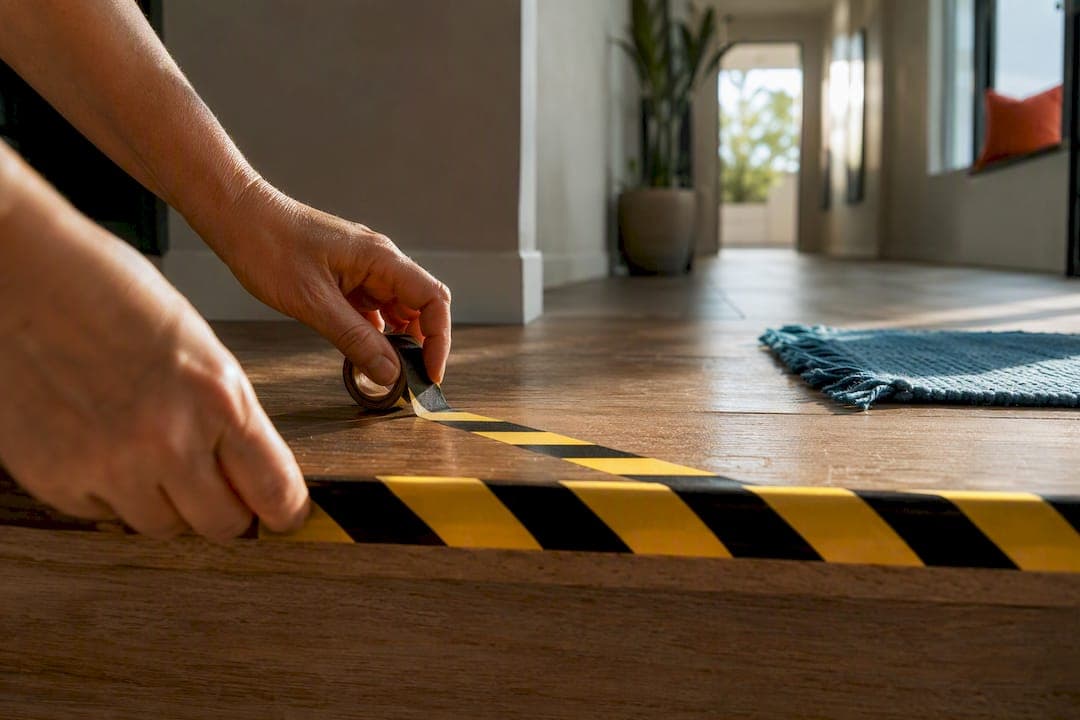
If someone in your care has macular degeneration, start with focused task lighting, glare control, high-contrast markers on stairs and switches, a simple handheld magnifier, and a referral to a vision rehabilitation service. These changes are inexpensive and immediate, and they cut fall risk while preserving independence. The rest of this guide walks through each step, along with daily routines, nutrition, and where to find professional support.
TL;DR:
- Improving lighting with focused task lamps and increasing illumination can significantly enhance safety and independence for someone with macular degeneration.
- Contrast enhancements, such as contrasting stair edges and matte surfaces, reduce fall risk more effectively and at lower cost than expensive equipment.
- Early referral to vision rehabilitation services helps preserve function and prevent caregiver burnout by promoting ongoing independence.
- Using simple, low-cost aids like contrast tape, labeled medication containers, and consistent routines supports daily safety and reduces confusion.
- A home environment centered on predictability and contrast, combined with professional assessment, has the greatest impact on maintaining independence.
Table of Contents
- Quick, immediate steps caregivers can do at home
- Home safety and navigation adaptations to reduce falls and confusion
- Low-vision aids and helpful technology for everyday tasks
- Daily caregiving routines and workflows that protect independence
- Emotional support and where to find rehabilitation and community resources
- Publisher perspective: how this article reflects hands-on in-home care practice
- Nutrition and diet recommendations specifically beneficial for macular degeneration
- Eye exercises or visual therapy techniques that can be done at home
- How to monitor vision changes at home and when to seek professional help
- What actually moves the needle for caregivers
- How to get local in-home help
- Trusted resources and directories
- Sources
- FAQ
Quick, immediate steps caregivers can do at home
Lighting is the fastest win. A gooseneck lamp positioned over a reading chair or kitchen counter lets you aim light exactly where it's needed instead of relying on overhead fixtures that cast shadows. Choose bulbs with higher lumens and a warm or neutral color temperature, since older eyes often need far more light than they used to for the same task, according to BrightFocus Foundation, which notes older adults may require significantly more illumination for reading than they did at age 20.
Glare is the next target: swap glossy countertops and tabletops for matte finishes, add anti-glare film to windows, and angle lamps away from reflective surfaces like mirrors or polished floors.
- Serve food on white plates set against dark placemats so the plate edge is visible.
- Apply bright-colored tape to the edge of each stair tread.
- Wrap black tape around light switches to make them stand out from the wall.
- Mark pill bottles with large colored labels or rubber bands, one color per medication.
- Set a labeled pillbox with an alarm, and keep a simple checklist by the phone for bills and appointments.
Pro Tip: Test any new lighting or contrast change at the time of day it will actually be used, since morning glare and evening shadows behave differently in the same room.
Home safety and navigation adaptations to reduce falls and confusion
A home that's easy to navigate depends less on layout changes and more on consistency. Keep furniture in the same place, clear a straight path between rooms, and avoid rearranging décor, since a person with reduced central vision relies on memory and peripheral cues more than direct sight.
Stairs deserve particular attention. The American Academy of Ophthalmology recommends pairing better lighting with contrast and magnification as core low-vision strategies, and stairs are where that combination matters most.
- Apply contrasting, non-slip strips to the front edge of every step, top and bottom landings included.
- Remove loose throw rugs entirely, or secure them with double-sided tape and non-slip backing.
- Tape down or reroute cords so they never cross a walking path.
- Install grab bars near the toilet and tub, and add high-contrast tape or paint around light switches and faucet handles in the bathroom and kitchen.
- Choose matte, non-slip flooring where possible, since shiny floors can look wet or uneven to someone with low vision.
Simple, low-cost changes like contrasting stair edges and matte surfaces often do more for safety than expensive equipment, according to BrightFocus Foundation. If falls or near-misses are becoming frequent, ask the person's doctor for an occupational therapy home safety assessment. Medicare Part B can cover outpatient occupational therapy when a clinician orders it, and a therapist can spot hazards a family member might miss. For a broader walkthrough of fall prevention, see our caregiver fall-prevention plan.
Low-vision aids and helpful technology for everyday tasks
Assistive devices range widely in cost and complexity, and the right one depends on the task, not the price tag.
- Handheld and stand magnifiers work well for short reading tasks like mail or medication labels.
- Spectacle magnifiers free up both hands for tasks like sewing or cooking.
- Video magnifiers, desktop or portable, enlarge text and adjust contrast on a screen, useful for longer reading sessions.
- OCR apps and phone camera magnifiers can read text aloud or zoom in using a smartphone already in the house.
- E-readers with adjustable text size let someone keep reading books independently.
- Voice assistants can control lighting, set medication reminders, or call for help without requiring fine vision.
For medication management, weigh a simple alarmed pillbox against an automated dispenser: the pillbox is cheaper and easier to refill, while a dispenser adds a layer of automation for someone who forgets doses even with reminders. Some specialized low-vision tools cost in the lower hundreds of dollars, and state Assistive Technology programs can help with funding or loaner equipment before you buy anything outright. Whatever device you choose, pair it with a short training session from a low-vision specialist. A handheld magnifier used correctly beats a high-end video magnifier used poorly.
Daily caregiving routines and workflows that protect independence
Predictability does more for someone with macular degeneration than any single gadget. Build routines around fixed locations and consistent lighting checks.
- Keep glasses, medications, and the phone in the same labeled spot every morning and every night.
- Set up one dedicated reading station with a task lamp, magnifier, and large-print materials within arm's reach.
- Request large-print versions of bills and important mail when the sender offers them, and use a checklist to track what's been paid or answered.
- Prepare shopping lists in advance, use grocery delivery when possible, and offer an arm rather than a hand when escorting someone outside the home.
- Bring a printed record of any changes noticed on an Amsler grid to every eye appointment.
Combine alarms with a quick daily check-in call or visit for medications and appointments rather than relying on either one alone. Encourage hobbies in adapted forms, large-print books, audiobooks, or crafts with high-contrast materials, so the person stays engaged instead of withdrawing from activities they used to enjoy. Our guide on maintaining independence at home covers more low-friction ways to build these habits.
Emotional support and where to find rehabilitation and community resources
The instinct to do everything for someone with vision loss often backfires. Encouraging participation, even when it's slower, protects confidence and skill. Ask what the person wants to try themselves before stepping in.
Vision rehabilitation services, which can include device training, eccentric viewing techniques, occupational therapy, and orientation and mobility training, help patients regain daily living skills. Vision rehabilitation reduces the burden on family caregivers by increasing the patient's independence, and pairing rehab with behavior activation helps prevent depression and social withdrawal, according to research on caregiver burden and vision rehabilitation. Earlier referral tends to preserve more function.
- Ask the eye doctor for a referral to a vision rehabilitation program rather than waiting for vision to decline further.
- Look into local caregiver support groups or counseling, since caregiving itself carries a documented toll.
- Contact your state's Assistive Technology program for device loans and funding guidance.
- Check the National Eye Institute for condition information and referral resources.
Pro Tip: Frame help as backup, not replacement: "I'm here if you need me" preserves more dignity than taking over a task outright.
Publisher perspective: how this article reflects hands-on in-home care practice
The tips in this guide mirror what happens during an actual in-home care visit. Caregivers assist with tasks such as transportation to eye appointments, medication reminders built around labeled pillboxes and alarms, help adapting hobbies like large-print reading or audio books, and respite care so a family caregiver can rest without guilt. Matching caregivers to clients by shared life experience helps foster understanding, so the person assisting with an Amsler grid check or a grocery run has insight into vision loss beyond just procedural knowledge. That kind of practical, repeated support is what turns a one-time home safety checklist into a lasting routine.
Nutrition and diet recommendations specifically beneficial for macular degeneration
Diet plays a supporting role alongside home adaptations and medical care. The AREDS2 formulation, a specific combination of vitamins and minerals studied for people at risk of late-stage disease, may help slow progression, but it uses doses far higher than a typical multivitamin and isn't a cure, according to the National Eye Institute. Formulations vary, and some ingredients, like beta-carotene, are not appropriate for people who smoke, so any supplement decision should be made through the person's eye care professional rather than an over-the-counter guess.
Beyond supplements, encourage meals built around leafy greens, colorful vegetables, and fish, foods commonly associated with eye health in general nutrition guidance. As a caregiver, your practical role is logistics: keep supplement bottles labeled with the same high-contrast system used for other medications, set a reminder alongside other daily pill routines, and bring the current supplement list to every eye appointment so the clinician can check for interactions. Meal prep also benefits from the same lighting and contrast fixes covered earlier, since a well-lit, high-contrast kitchen makes it easier for someone with low vision to stay involved in cooking rather than stepping back from it entirely.

Eye exercises or visual therapy techniques that can be done at home
There's no exercise that reverses damage from macular degeneration, but certain techniques taught in vision rehabilitation can help someone make better use of the vision they have. Eccentric viewing training teaches a person to use a healthier area of peripheral vision instead of a damaged central spot, often practiced with simple tasks like tracking a moving object or reading short lines of text at an angle. This is typically introduced by a vision rehabilitation specialist rather than self-taught, since the technique needs to match the specific pattern of vision loss.
At home, caregivers can support this practice with short, low-pressure sessions: reading a few lines of large-print text together, practicing locating an object on a table using peripheral vision, or scanning a room methodically rather than relying on straight-ahead sight. Keep sessions brief and consistent rather than long and irregular, since fatigue reduces the benefit. Pairing this kind of practice with a magnifier or video magnifier, and with training from a low-vision specialist, tends to produce better results than either alone. If a formal program is available locally, ask the eye doctor for a referral rather than relying solely on home practice.
How to monitor vision changes at home and when to seek professional help
An Amsler grid, a simple checkerboard-style pattern with a dot in the center, is the standard home tool for catching sudden changes between eye appointments. Check one eye at a time, daily or a few times a week, looking for wavy, blurry, or missing areas in the lines. Keep a dated log or take a photo of what's noticed, and bring it to the next eye appointment.

Contact the eye doctor promptly if the person reports sudden distortion, a new blind spot, or a rapid drop in vision, since these can signal changes that benefit from quick evaluation. Routine changes, like text needing more light or slightly more magnification than before, are worth mentioning at the next scheduled visit rather than requiring an emergency call. When in doubt, a call to the clinic to describe the specific symptom is the safest route.
What actually moves the needle for caregivers
Most advice on this topic treats gadgets as the solution and environment as an afterthought. In practice, it's the reverse. A $15 roll of contrasting tape on stair edges, a repositioned lamp, and a consistent daily routine prevent more falls and frustration than an expensive video magnifier used without training. The conventional wisdom oversells technology and undersells lighting, contrast, and repetition.
The bigger blind spot is timing. Families often wait for a crisis, a fall or a missed medication, before calling a vision rehabilitation service, when earlier referral preserves more independence and prevents the caregiver burnout that comes from doing everything manually. If you take one thing from this guide, make it this: fix the environment first, get a professional vision rehab assessment early, and treat any device as something that needs training, not something that solves the problem on its own.
— Cameron
How to get local in-home help
Implementing everything in this guide, lighting changes, contrast fixes, medication systems, rehab referrals, takes time most family caregivers don't have alongside work and their own households. In-home care providers can fill that gap with caregivers matched to clients based on shared life experience and scheduled flexibly around family needs rather than fixed contracts.

Services that map directly to the tips above include:
- Companion Care for regular check-ins and encouragement to stay active.
- Personal Care for daily living assistance that respects independence.
- Medication Reminders built around the labeling and alarm systems described earlier.
- Transportation & Errands for eye appointments, grocery runs, and pharmacy pickups.
- Respite & Overnight Care so the primary family caregiver can rest.
If someone in your care is recovering from a recent hospital or clinic visit, Return Home Transitional Care is built specifically for that transition. Visit our full list of in-home services to request a home assessment and get matched with a compatible caregiver.
Trusted resources and directories
For further guidance, the National Eye Institute covers condition basics, the American Academy of Ophthalmology lists low-vision devices, BrightFocus Foundation offers home safety guidance, the ACL Assistive Technology program connects to device loans and funding, and Medicare explains OT coverage. Bring printed Amsler grid results to eye appointments and ask about device loans and OT home assessments.
Sources
- Macular Degeneration: home and personal safety | BrightFocus Foundation
- Assistive Technology | Administration for Community Living (ACL)
- Caregiver burden and vision rehabilitation (PMC article)
- Simple adjustments around the home can help those with low vision | American Academy of Ophthalmology
FAQ
Can you live alone with AMD?
Many people with macular degeneration live independently, especially with home adaptations like better lighting, contrast markers, and magnifiers in place. The right level of independence depends on how much central vision remains and whether safety supports, such as an occupational therapy home assessment, have been put in place.
What is the best treatment for macular degeneration?
Treatment depends on the type and stage of the disease, and AREDS2 supplements may help slow progression in people at risk of late-stage AMD, according to the National Eye Institute. An eye care professional should guide any supplement or treatment decision, since formulations and appropriateness vary by individual.
What not to do with macular degeneration?
Avoid waiting until a fall or crisis to request a vision rehabilitation referral or home safety assessment, since earlier support preserves more independence. It also helps to avoid taking over every task the person could still do themselves with the right lighting, contrast, or magnifier in place.