
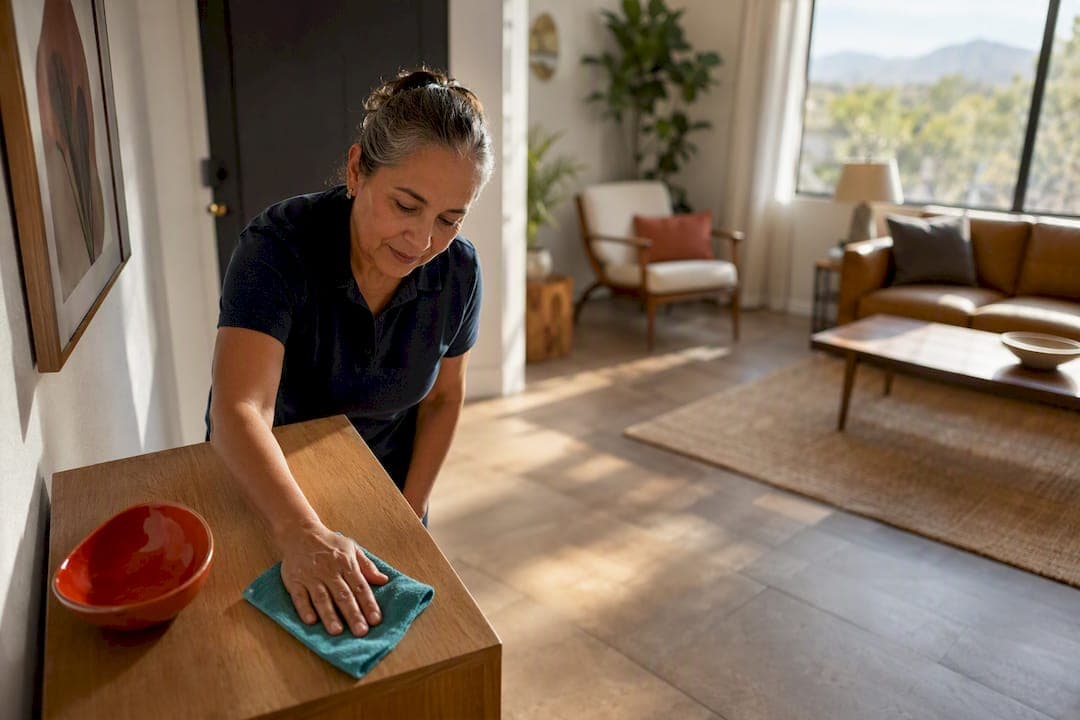
Light housekeeping for seniors means routine, non-medical help with the everyday tasks that keep a home clean, safe, and functional: wiping counters, doing dishes, light laundry, changing sheets. It suits older adults who have lost some mobility, stamina, or focus but don't need clinical care. Most helpers cover the basics you'd expect, though Medicare generally treats these chores as custodial rather than medical, so coverage works differently than people assume.
TL;DR:
- Most light housekeeping visits last 30 to 60 minutes and focus on high-priority areas like the entryway, kitchen, bathroom, bedroom, and living room.
- Tasks are limited to surface cleaning, laundry, trash removal, and clutter tidying, excluding heavy lifting, biohazards, or medical duties.
- Regular visits help reduce fall risks by removing trip hazards, improving lighting, and securing loose rugs, especially when combined with simple safety modifications.
- Medicare does not cover routine chores or housekeeping, so costs vary widely and require direct provider inquiry; government programs may offer subsidized support.
- Personalizing a housekeeping plan involves ranking room priorities, creating checklists, and continuously reassessing needs as mobility or health changes.
Table of Contents
- What Does Light Housekeeping Mean in Elder Care?
- What Tasks Does Light Housekeeping Typically Cover?
- Which Rooms Need the Most Attention Each Visit?
- How Does Housekeeping Reduce Fall Risk?
- How Do You Hire or Arrange Light Housekeeping Help?
- How Do You Personalize a Housekeeping Plan?
- Our Approach to Light Housekeeping and Companion Care
- Getting Started With Seniors Helping Seniors® Tucson
- Sources
- FAQ
What Does Light Housekeeping Mean in Elder Care?
Light housekeeping is the routine upkeep that keeps a home livable: surfaces wiped down, dishes washed, floors kept clear of clutter and spills. The goal isn't a spotless house. It's safety, comfort, and letting someone stay independent in the home they know.
That's different from deep cleaning (scrubbing grout, washing windows, moving furniture) and different again from skilled home health care. A helper doing light housekeeping won't change a wound dressing, manage an IV line, or administer medication beyond a reminder. If your family member needs wound care, injections, or skilled nursing oversight, that's a home health referral, not a housekeeping visit. The line matters because it determines who shows up at the door and what your insurance, if anything, will pay for.

What Tasks Does Light Housekeeping Typically Cover?
Most light housekeeping visits stick to a predictable set of tasks. Providers vary slightly, but the core list tends to look like this:
- Wiping kitchen and bathroom surfaces, including counters and stovetops
- Washing, drying, and putting away dishes
- Light laundry: washing, folding, and putting away clothes and towels
- Changing bed linens
- Spot vacuuming or sweeping high-traffic areas
- Taking out trash and recycling
- Tidying clutter that blocks walkways
Some providers offer optional extras like organizing closets, watering plants, or basic meal prep, often billed as add-ons rather than baked into the base rate. What's consistently off the table: handling biohazards or sharps, heavy lifting (moving furniture, hauling boxes up stairs), and anything medical. A caregiving guide from AARP notes that cleaners often ask a family member or caregiver to be present when the client has dementia, and many will decline heavy laundry cycles or tasks involving bodily fluids outright.
Which Rooms Need the Most Attention Each Visit?
A typical light-housekeeping visit runs 30 to 60 minutes, which means prioritizing the rooms that carry the most fall risk and daily use. Here's a workable order:
- Entryway. Clear shoes, mail, and bags from the path. Check that a mat isn't curling at the edges.
- Kitchen. Wipe counters and the stovetop, wash dishes, empty the trash, and sweep the floor where crumbs and spills accumulate.
- Bathroom. Wipe the sink and toilet, mop up any water on the floor immediately, and check that a bath mat has a non-slip backing.
- Bedroom. Change linens, clear the floor of shoes or cords, and make sure a lamp or light switch is within easy reach of the bed.
- Living area. Spot vacuum, straighten cushions and throws, and clear side tables of anything that could tip.
Daily attention goes to spills, dishes, and anything on the floor. Weekly visits can handle linens, vacuuming, and trash. Save closet organizing, baseboard wiping, and appliance cleaning for a monthly deeper tidy, ideally scheduled as its own longer visit rather than squeezed into a routine one.
How Does Housekeeping Reduce Fall Risk?
This is where light housekeeping stops being a nice-to-have and becomes a genuine safety intervention. The Agency for Healthcare Research and Quality identifies removing trip hazards, improving lighting, and securing loose rugs as effective fall-prevention steps. CDC's STEADI program lists the same basics, plus installing grab bars and keeping frequently used items within reach.
Pair these fixes with regular housekeeping visits:
- Remove throw rugs or secure them with non-slip backing.
- Add night lights or motion-sensor lights along hallways and near the bathroom.
- Coil or tape down loose cords so they don't cross walking paths.
- Move everyday items (mugs, medications, phone chargers) to waist height instead of high shelves or low cabinets, following recommendations on the best bathroom safety equipment for seniors in Vancouver.
- Wipe up spills the moment they happen rather than leaving them for the next scheduled visit.
Occupational therapists specifically recommend the waist-height rule because reaching up or bending down is when older adults lose balance most often, according to University of Rochester Medical Center's home safety guidance. If a home still feels risky after these fixes, whether that's stairs, a shower with no grab bars, or a layout that just doesn't work anymore, it's worth asking a doctor for an occupational therapy referral or checking a local home-modification program.
Pro Tip: Do a two-minute walkthrough before every housekeeping visit ends. Ask the helper to check that pathways are clear, lights work, and nothing is blocking the route from bedroom to bathroom. It costs nothing and catches problems before they cause a fall.

How Do You Hire or Arrange Light Housekeeping Help?
Before you hire anyone, ask a few direct questions: Are helpers insured and bonded? Is a background check standard? Do they bring their own cleaning supplies, or do you need to stock them? What's explicitly out of scope, and will they say no to a task on the spot rather than attempt it?
Scheduling depends on the goal. If the aim is maintaining independence, two shorter visits a week covering high-use rooms usually works better than one long visit that leaves the house in disarray for days. If you're catching up after a hospital stay or a health decline, start with a more intensive schedule and taper down.
On cost: rates vary widely by region and provider, and a straight answer depends on your local market, so ask providers directly for current rates rather than relying on a national average. What's worth knowing upfront is that Medicare generally does not cover housekeeping, chores, or laundry, because these fall under custodial care rather than skilled medical need. For families looking for subsidized or volunteer-based help, the Eldercare Locator connects callers to local Area Agencies on Aging, which sometimes run chore programs or can point you toward home-modification assistance.
How Do You Personalize a Housekeeping Plan?
Every home has different pressure points. Start by ranking rooms as high, medium, or low priority based on how often they're used and how much fall risk they carry. Kitchens and bathrooms are almost always high priority. A rarely used guest bedroom can wait.
From there:
- Write a short checklist for each visit (the recurring basics) and a separate monthly list for deeper tasks like baseboards or closet organizing.
- Build in a quick safety check every visit, and set up a simple way for the helper to flag anything concerning, whether that's a text, a note on the counter, or a call to a family member.
- Reassess the plan every few months, since needs shift as mobility or memory changes.
- If the visit includes a companion-care component, let the helper combine a social check-in with the cleaning, so you get both a tidy kitchen and a read on how your family member is actually doing that day.
Our Approach to Light Housekeeping and Companion Care
At Seniors Helping Seniors® Tucson, our caregivers are mature adults, often seniors themselves, matched with clients based on shared life experience. That matters for housekeeping visits specifically: a caregiver who understands aging firsthand tends to notice safety issues faster and respects a client's home and habits instead of imposing a stranger's routine. Every visit gets coordinated with the family around what actually needs attention that week.
— Cameron
Getting Started With Seniors Helping Seniors® Tucson
If you've read this far, you already know light housekeeping works best when it's consistent and personalized, not a one-size-fits-all cleaning checklist. That's the gap Seniors Helping Seniors® Tucson is built to close: caregivers who are mature adults themselves, matched with clients for compatibility, handling light housekeeping alongside companion care, meal prep, and errands in the same visit.

A first consultation typically covers what tasks matter most in your loved one's home, how often visits should happen, and which caregiver fits best based on personality and experience. There's no long-term contract or minimum commitment required to start. If safety around the house is part of what you're solving for, pairing housekeeping with a broader companion care visit often catches more than a cleaning-only service would.
Explore the full range of services, including light housekeeping, companion care, and errands, and reach out to schedule an in-home consultation this week.
Sources
- Medicare — Home health services coverage
- Administration for Community Living — Finding local services
- AHRQ — Reducing falls: a safety checklist for the home
- CDC STEADI — What you can do to prevent falls
FAQ
Does Medicare Cover House Cleaning for Seniors?
No. Medicare covers skilled home health services for homebound patients who need intermittent medical care, but it explicitly excludes routine housekeeping, chores, and laundry as custodial care. Some Medicare Advantage plans offer limited supplemental benefits, so it's worth checking a specific plan's coverage.
What Should a 70-Year-Old Be Doing Every Day at Home to Stay Safe?
Daily habits that matter most are clearing walkways of clutter and cords, wiping up spills right away, and keeping frequently used items within easy reach instead of on high shelves. Combining these small habits with light housekeeping visits, as recommended by CDC's STEADI program, directly lowers fall risk.
How Much Should I Pay a Cleaner per Hour?
Rates vary significantly by region, provider type, and whether you're hiring an independent cleaner or a coordinated care service. Current pricing for Tucsonshs services is available directly through the services page, since rates depend on the specific care plan.
How Much Does a Caregiver Charge per Day?
Daily caregiver rates depend on hours needed, the level of care involved, and whether housekeeping is bundled with companion care or personal care. Contact a provider directly for a quote based on your specific schedule and needs, since flat national rates rarely reflect local pricing.
Where Can I Find Low-Cost or Subsidized Housekeeping Help?
Start with the Eldercare Locator, which connects callers to local Area Agencies on Aging that sometimes run volunteer-based chore programs or point to Medicaid home and community-based waivers. Availability and eligibility vary by state and county.