
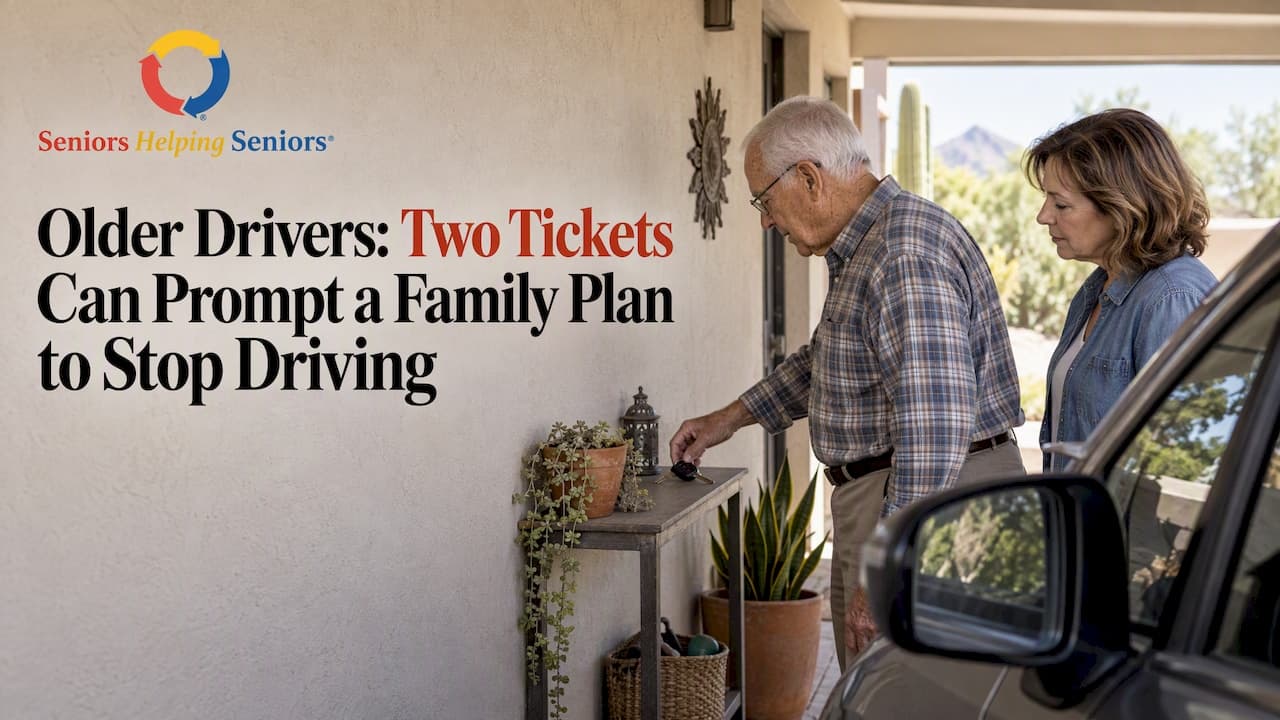
There is no single age to stop driving, so watch for function instead: cognitive lapses, repeated tickets or near-misses, and getting lost on familiar routes. Those patterns, described by the CDC and the National Institute on Aging, mean it is time to act. Call the driver's physician or book a formal driving evaluation now, and use the Eldercare Locator to find rides.
TL;DR:
- Two or more tickets or warnings within two years signal possible impairment; several warning signs together call for immediate action, not continued monitoring.
- Record dated incidents, agree on measurable triggers, and involve the physician; review the written driving plan every few months and name replacement rides.
- A driver rehabilitation specialist can assess on and off road, suggest adaptive equipment or training, and give an objective recommendation about driving safety.
- Trial alternative rides before driving stops, and contact the local Area Agency on Aging or Eldercare Locator; Medicare mostly covers ambulance transport, not routine rides.
Table of Contents
- What are the warning signs it may be time to stop driving?
- How do you start the conversation and build a driving action plan?
- What does a formal driving evaluation involve?
- Which transportation options can replace driving?
- How do you keep independence after cutting back on driving?
- Why planning early keeps dignity intact
- How we can help with the transition
- FAQ
- Sources
- Authoritative resources for assessment and local help
What are the warning signs it may be time to stop driving?
Start with patterns, not single events. One scraped mirror proves little. A run of incidents tells a different story. A pattern of two or more traffic tickets or warnings within two years is a significant indicator of possible impairment. Research also suggests that declining cognitive test results predict driving retirement more strongly than dementia biomarkers, which is why functional change deserves your attention.
Watch for these signs:
- Getting lost on routes the driver has used for years
- Near-misses or new dents and scrapes on the car or garage
- Confusing the gas and brake pedals
- Sudden lane changes or drifting between lanes
- Responding poorly at intersections, such as stopping at the wrong moment
- Road rage or unusual emotional outbursts behind the wheel
- Feeling anxious, or being told by friends that they would rather not ride along
For a quick self-check, ask: Do other drivers honk at me often? Do I miss signs or signals? Am I avoiding night driving because I cannot see well? Try a self-check at home using NHTSA's driving guidance and the NIA's guidance. When several signs show up together, NHTSA says immediate action is required.
How do you start the conversation and build a driving action plan?
Lead with safety and independence, never blame. Giving up the keys often feels like losing independence, so frame the talk around staying mobile by other means. A calm opener: "I want you to keep getting where you need to go safely. Can we plan for that together?" Our guide to talking with aging parents offers more scripts, and our post on when Dad should stop driving walks through a real family conversation.
Then put the plan in writing:
- Gather specific observations from family members, with dates and details.
- Agree on measurable triggers, such as a new ticket, a near-miss or getting lost.
- Invite the physician to the discussion or ask for written advice.
- Write a driving action plan that names the triggers, who decides and which rides replace the car.
- Review it every few months and adjust.
A physician's letter often lands better than a child's request, because it moves the decision away from family members, a point AARP's caregiver guidance also makes.
Pro Tip: Hold the first talk before any crisis, and let the older driver help write the triggers. People keep promises they helped make.
What does a formal driving evaluation involve?
Your physician is the first stop. A medical review can catch vision problems and medications that raise crash risk, and the doctor can refer you to a specialist or recommend a licensing review. The NIA recommends checking medications with a pharmacist and keeping up with eye and hearing exams.
For an objective answer, ask about a driver rehabilitation specialist, often an occupational therapist. NHTSA describes their role like this:
- On-road and off-road assessments of real driving skills
- Recommendations for adaptive equipment that may keep some drivers safe
- Training to improve specific weak spots
- A clear opinion on whether driving is safe or should stop
Families can use the results in two ways: to guide the action plan, or to support a licensing decision with the state. To arrange an evaluation, ask the physician for a referral and call providers about scheduling and fees. A professional assessment can help families discuss whether driving is safe.
Which transportation options can replace driving?
Start with your local Area Agency on Aging. The NIA calls these agencies the primary hub for coordinating local, often subsidized, transportation for older adults, and the Eldercare Locator (800-677-1116) will connect you to the right one. Transportation services can include:
- Neighbor or volunteer drivers
- Programs from state and local agencies and nonprofits
- Senior housing shuttles
- Discounted public transit
- Paratransit for people who qualify
- Taxis and ride-share services
Some are free and some charge fees. Our local guide to senior transportation in Tucson covers options near us, and this caregiver's guide to senior transportation explains the main service types.
Test options before the keys go away. Take a few trial rides, ask about paratransit eligibility, and ask about subsidized rides. On cost, Medicare mostly covers ambulance transport, while Medicaid may cover some nonemergency transportation for eligible people. Ask local agencies about subsidies and volunteer programs that may help with remaining trips.

How do you keep independence after cutting back on driving?
Replace each trip the car used to make. Build a routine so nothing falls through the cracks:
- Set up recurring rides for medical appointments and shopping
- Arrange grocery and pharmacy delivery, plus meal services
- Add in-home help for errands, companionship and medication reminders
- Keep up vision and hearing checks and review medications regularly
- Stay physically active, and ask about occupational therapy if mobility is slipping
- Keep social plans on the calendar so isolation does not creep in
The CDC's MyMobility Plan is a useful template for mapping how someone will get around as they age. Our post on daily habits for emotional support covers the loneliness side of this transition, which is often the harder part.
Pro Tip: Put upcoming rides on a shared calendar before the last drive. An empty calendar is when people feel most trapped.
Why planning early keeps dignity intact
Stopping driving is a loss, and pretending otherwise makes families push harder than they need to. What helps is reframing: the goal is independence, and the car is only one way to get there. The best transitions I have seen described are slow ones, with small trials of rides and delivery services while the older adult still holds the keys. A single crisis conversation may go worse than a series of gentle ones. Our own caregivers, many of them seniors too, understand that people may accept change more readily from someone who understands it.
— Cameron
How we can help with the transition
Our team supports families through exactly this change. We offer Transportation & Errands, Companion Care and Medication Reminders, and when a hospital stay or setback changes things quickly, Return Home Transitional Care. Families use us for scheduled rides, errands, appointment support and company that keeps isolation away. Contact us to ask about availability, scheduling and service packages.

FAQ
What is the best age to stop driving?
There is no set age. CDC guidance says the decision should rest on individual health, vision, cognition and reflexes. Watch for patterns such as tickets, near-misses and getting lost.
How do you convince a parent to stop driving?
Lead with empathy and offer concrete alternatives, not just a restriction. Involving the physician and writing a shared plan usually works better than confrontation. A doctor's letter can make the decision feel less personal.
What if an older driver with dementia refuses to stop?
The NIA says families may need to move from negotiation to environmental changes, such as hiding keys or disabling the vehicle. Make sure reliable alternative transportation is in place first.
Where can I find rides for seniors who no longer drive?
Call your local Area Agency on Aging or the Eldercare Locator. They can point you to paratransit, volunteer drivers and subsidized rides in your area.
Sources
Authoritative resources for assessment and local help
- CDC: older driver safety facts and the MyMobility Plan
- National Institute on Aging: warning signs and transportation guidance
- NHTSA: tools for older drivers and families
- Eldercare Locator and your local Area Agency on Aging: local rides and services
- American Occupational Therapy Association: find an occupational therapist or driving specialist