

You can get concrete help right now. Call 211 or your Area Agency on Aging today, ask about respite care this week, and check Medicaid or VA eligibility before the month is out. Medicare will not pay you directly for hands-on caregiving, but several state and federal programs can. Start with the phone calls below.
TL;DR:
- Family caregivers should contact local agencies like 211 or the Eldercare Locator to access both free support services and information on paid caregiving options in their state.
- Medicaid, not Medicare, is the primary source for paying family members as caregivers through state-specific waiver programs, which require documentation and formal employment procedures.
- Signs of caregiver burnout include sleep disturbances, frequent illnesses, irritability, neglect of personal health, and emotional numbness, requiring early intervention and respite planning.
- Paid in-home caregiving is ideal when safety concerns outweigh family capacity, scheduled hours are essential, or companionship needs are unmet, with services usually arranged through a quick assessment.
- Seniors Helping Seniors offers immediate, reliable respite and companionship care in Tucson, providing faster relief while families work through long-term funding and approval processes.
Table of Contents
- Who to Call First for Help for Family Caregivers
- Which Programs Actually Pay Family Caregivers?
- What Are the Signs of Caregiver Burnout?
- How Seniors Helping Seniors® Tucson Fits Into the Picture
- What This Guide Gets Right That Others Miss
- Get In-Home Respite and Companion Care Without the Waitlist
- Sources
- FAQ
Who to Call First for Help for Family Caregivers
The fastest help for family caregivers usually starts with a phone number, not a form. Skip the hours of searching and go straight to the organizations built to route you to local programs.
- Eldercare Locator or 211: Both connect you to your local Area Agency on Aging in one call, and both are free. Eldercare Locator and 211 also link families to state caregiver services directly.
- National Family Caregiver Support Program (NFCSP): Funded through the federal government, this program pushes money down to states for respite, counseling, and caregiver education. Every state runs its National Family Caregiver Support Program a little differently, so ask your AAA what your state actually offers.
- Caregiver Action Network and AARP: Useful for peer support, disease-specific guides, and navigating paperwork. AARP's caregiving hub also tracks out-of-pocket costs and financial strain that most families underestimate until they add up the receipts.
- Local support groups: Hospitals, faith communities, and Alzheimer's Association chapters run free groups. These matter more than people expect. Isolation compounds burnout faster than the physical work does.
- Respite care providers: In-home respite, adult day programs, and short-term stays at a care facility all buy you breathing room. Your AAA can usually name three options in your zip code within one call, and a practical guide to arranging in-home respite walks through what to ask before you book.
Pro Tip: Call your Area Agency on Aging even if you think your parent "doesn't qualify" for anything. Many programs use sliding-scale fees or serve middle-income families that assume they're ineligible.
Which Programs Actually Pay Family Caregivers?
Medicare will not pay you to provide custodial care to a parent or spouse. That surprises almost everyone the first time they hear it. Medicare's home health benefit only covers medically necessary, part-time skilled care ordered by a doctor and delivered through a Medicare-certified agency, and it requires the patient to be homebound. Bathing, meal prep, and supervision, the bulk of what family caregivers actually do, fall outside that coverage entirely.
Medicaid is where paid family caregiving usually happens. States use waiver and self-directed programs (often built on Section 1915(c) authority) to let a care recipient hire a relative as a paid caregiver. Paid family caregiving rules vary significantly by state, including which relatives can be paid and how much oversight is required. Our breakdown of Medicaid home care coverage covers what documentation to expect.
Veterans have two strong paths: the Program of Comprehensive Assistance for Family Caregivers (PCAFC), which can include a monthly stipend and health coverage for the caregiver, and Veteran-Directed Care, which hands the veteran a flexible budget to hire caregivers, family included. AARP outlines both VA routes along with private options like long-term care insurance payouts and paid family leave where employers offer it.
- Call your state Medicaid office or AAA and ask specifically about "consumer-directed" or "self-directed" care options.
- Gather medical records, income documentation, and a written care plan before applying.
- If the care recipient is a veteran, contact the VA caregiver support line to ask about PCAFC and Veteran-Directed Care eligibility.
- Expect a fiscal intermediary or state agency to manage payroll and require time logs once approved.
Pro Tip: Getting paid through Medicaid is a formal employment arrangement, not a stipend you apply for once. Expect training requirements, logged hours, and program caps on weekly pay.
What Are the Signs of Caregiver Burnout?
Burnout rarely announces itself. It shows up as chronic exhaustion, then irritability, then a quiet withdrawal from friends who used to check in.
Watch for these signs:
- Sleep that doesn't restore you, even after a full night
- Getting sick more often, or aches that won't resolve
- Snapping at the person you're caring for over small things
- Skipping your own doctor appointments repeatedly
- Feeling numb or resentful about tasks you used to manage fine
Untreated caregiver burnout measurably reduces care quality, according to clinical guidance from the Mayo Clinic. That's the real cost. A caregiver running on empty makes more mistakes, not fewer.
Act on early signs, not late ones. Schedule respite before you're desperate for it, delegate one task this week to a sibling or a paid aide, and keep your own medical appointments non-negotiable. If guilt is what's stopping you from booking respite, know that caregiver guilt often masks an unmet personal need rather than a real reason to refuse help. A short adult day program stay or a few hours of in-home respite this week is not abandonment. It's maintenance.
How Seniors Helping Seniors® Tucson Fits Into the Picture
Public programs cover a lot of ground, but they don't cover consistency of companionship, and they rarely address loneliness directly; a care app for families can help coordinate schedules and share care plans among loved ones. Seniors Helping Seniors® Tucson matches active, mature caregivers, often seniors themselves, with older adults who want help from someone who understands their stage of life. That shared context tends to build trust faster than a rotating roster of unfamiliar aides.
Paid in-home help makes the most sense when safety needs exceed what family members can consistently provide, when scheduled hours matter more than occasional visits, or when companionship itself is the gap...
What This Guide Gets Right That Others Miss
Most caregiving advice treats "find local resources" and "get paid for caregiving" as separate problems. They aren't. A family that calls their Area Agency on Aging first usually gets routed to both the free supports and the paid pathways in the same conversation, because AAAs sit at the center of both systems.
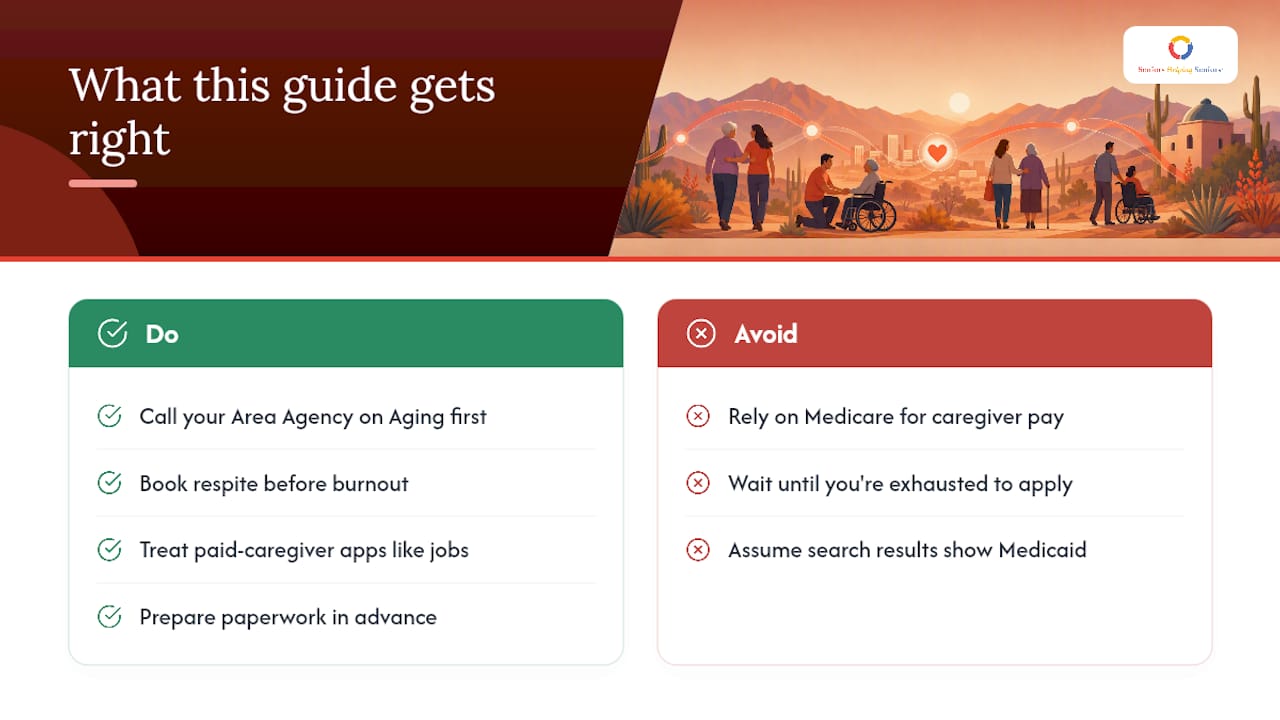
The conventional advice oversells Medicare and undersells Medicaid. Search results push Medicare because it's the most familiar name, but Medicare's home health coverage was never designed to compensate family caregiving, and pretending otherwise wastes weeks families don't have. Medicaid waivers, messy and state-specific as they are, remain the more realistic route to actual payment for most families.
If you take one thing from this guide, take this: book respite before burnout forces you to, and treat the paid-caregiver application process as a real job application, complete with documentation, not a quick form. Families who plan for the paperwork upfront get approved faster than those who wait until they're exhausted to start.
— Cameron
Get In-Home Respite and Companion Care Without the Waitlist
Public programs take time to process. When you need relief this week, not next quarter, Seniors Helping Seniors® Tucson offers a faster path: matched, mature caregivers who can step in for scheduled respite, companion care, or daily personal assistance while you sort out longer-term funding.

Call when safety concerns are mounting, when you've hit sustained burnout, or when you simply need reliable, recurring respite hours on the calendar. Services cover companionship, personal care assistance, and scheduled respite for families across various communities in the region. Visit the Tucson senior care services page to request an assessment and get a caregiver matched to your situation within days, not weeks.
Sources
- Medicare
- Caregiver stress: Tips for taking care of yourself — Mayo Clinic
- Acl
- Paid family caregiving programs by state — TheCareRatings
- How to get paid for taking care of a family member — AARP
FAQ
Can Caregivers Get Paid by Medicare?
No. Original Medicare does not pay family members for custodial caregiving; it only covers medically necessary, part-time skilled home health services delivered through a certified agency.
What Are Three Signs of Caregiver Stress?
Common signs include chronic sleep disturbance, unexplained physical aches, and increased irritability toward the person you're caring for, all flagged in Mayo Clinic's caregiver stress guidance.
What Are the Signs of Caregiver Guilt?
Caregiver guilt often shows up as refusing help you actually need, feeling responsible for a loved one's decline, or apologizing for taking breaks. Psychology Today explains it usually masks an unmet personal need rather than reflecting a real failure on your part.
How Much Does the Government Pay a Family Caregiver?
There's no single national rate. Pay depends entirely on which state Medicaid waiver or VA program approves you, since paid family caregiving rules and rates vary by state. Contact your state Medicaid office or the VA caregiver support line for your specific figure.
Where Should I Start Looking for Local Help?
Call 211 or the Eldercare Locator first. Both route you directly to your Area Agency on Aging, which coordinates the National Family Caregiver Support Program, respite referrals, and Medicaid waiver information in one place.