
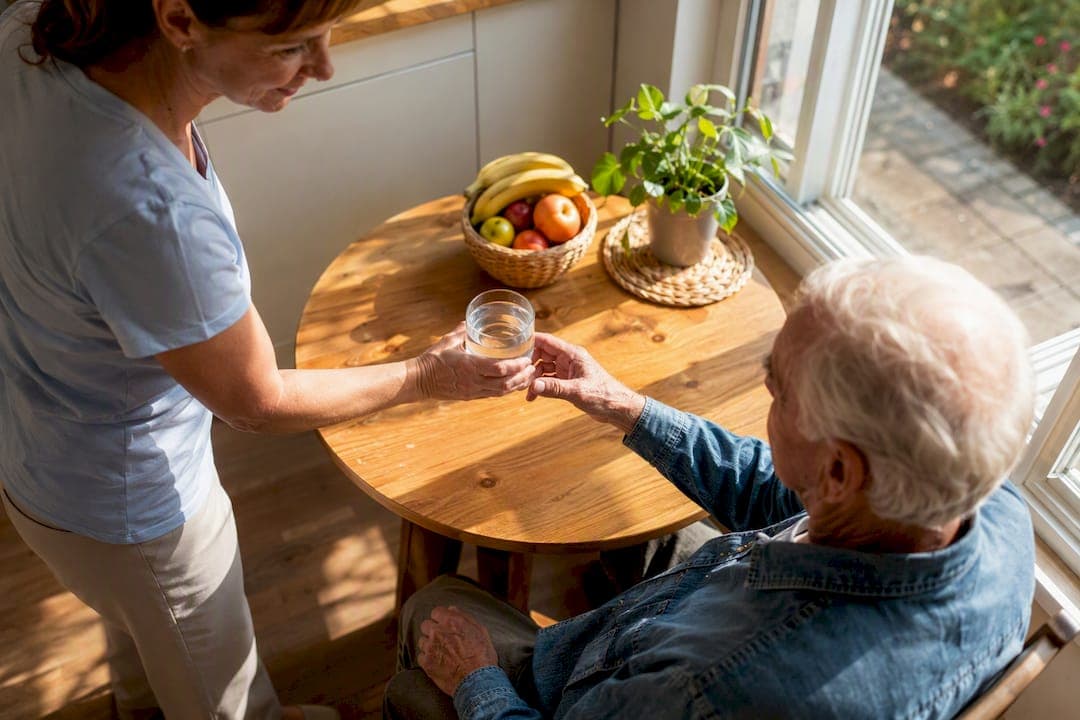
Yes, dehydration in seniors is common and can be serious. Studies of older adults find roughly one in four dehydrated, with even higher rates in hospitals and long-term care. Left unchecked, it drives confusion, falls, and hospital stays. If you're caring for an older adult right now, do this today:
- Offer a drink they actually like, in small amounts, regularly throughout the day.
- Watch urine output and color over the next several hours.
- Call a doctor or go to urgent care if you see confusion, fainting, or a sudden inability to keep fluids down.
Key Takeaways
Dehydration in seniors is largely preventable when caregivers combine ESPEN-aligned fluid targets with consistent, person-centered routines instead of relying on unreliable bedside checks alone.
| Point | Details |
|---|---|
| Prevalence is high | Roughly one in four older adults show signs of dehydration, with higher rates in care settings. |
| Thirst can't be trusted | Aging blunts the thirst response, so caregivers must offer drinks proactively, not wait to be asked. |
| Know the real targets | ESPEN guidance suggests about 2.0 L/day for older men and 1.6 L/day for older women, adjusted for health conditions. |
| Watch behavior, not just urine color | Sudden confusion, falls, or reduced urine output matter more than dry mouth alone. |
| Consistent support closes the gap | Tucsonshs caregivers build fluid offers and companionship into daily visits so hydration becomes routine, not an afterthought. |
Table of Contents
- Why Older Adults Face Higher Dehydration Risk
- What Are the Signs of Dehydration in Seniors?
- When Is Dehydration a Medical Emergency?
- How Much Water Should Seniors Drink Each Day?
- Practical Ways to Prevent Dehydration in Elderly Adults
- How Is Dehydration Actually Diagnosed?
- Special Situations That Change the Advice
- How In-Home Caregivers Help Prevent Dehydration
- What Actually Matters Most Here
- Get Steady Hydration Support at Home
- Frequently Asked Questions
- Sources
Why Older Adults Face Higher Dehydration Risk
Aging bodies hold less water to begin with, and the thirst signal that once made you reach for a glass gets weaker every decade. That combination means an older adult can be significantly low on fluids before ever feeling thirsty, a physiological shift well documented in research on age-related changes in thirst regulation.
Kidneys also lose some ability to concentrate urine with age, so more water gets flushed out even when intake is normal. Add common conditions like diabetes, chronic kidney disease, or heart failure, and the math gets worse fast.
Then there's the medication list. Diuretics, laxatives, and many psychotropic drugs all pull fluid from the body or blunt the urge to drink. Layer on mobility problems, poor eyesight, memory loss, or a fear of bathroom accidents, and you get an adult who's quietly avoiding fluids on purpose.
- Reduced body water and dulled thirst response
- Kidney changes plus diabetes, CKD, or heart disease
- Diuretics, laxatives, or psychotropic medications
- Limited mobility, vision loss, or cognitive decline
- Avoiding drinks out of fear of incontinence
In long-term care settings, inadequate fluid intake has been measured at 50% to 68% of residents in some studies, a number that points squarely at staffing and routine, not just biology.
What Are the Signs of Dehydration in Seniors?
Dry mouth and dark urine get taught as the classic dehydration signs, but they're often unreliable in older adults. Medications, mouth breathing, and chronic kidney changes can produce those same symptoms even when fluid levels are fine, which is exactly why common bedside checks fall short for this age group.
The signals worth trusting more are behavioral and functional. Watch for these, roughly in order of urgency:
- Sudden confusion or a noticeable change in alertness
- A fall or new unsteadiness on the feet
- Dizziness when standing up
- Noticeably less urine than usual, or urine that's gone dark and strong-smelling
- Fatigue or a sudden drop in appetite that seems out of character
Confusion is the one caregivers most often miss, because it gets written off as "just having a bad day" or an early dementia symptom. If a normally sharp parent or client suddenly seems foggy by afternoon, dehydration should be on your short list of suspects before anything else.
Pro Tip: Keep a simple daily log of drinks offered and drinks finished. A pattern of declining intake over two or three days is often a clearer warning sign than any single symptom you'll spot in the moment.
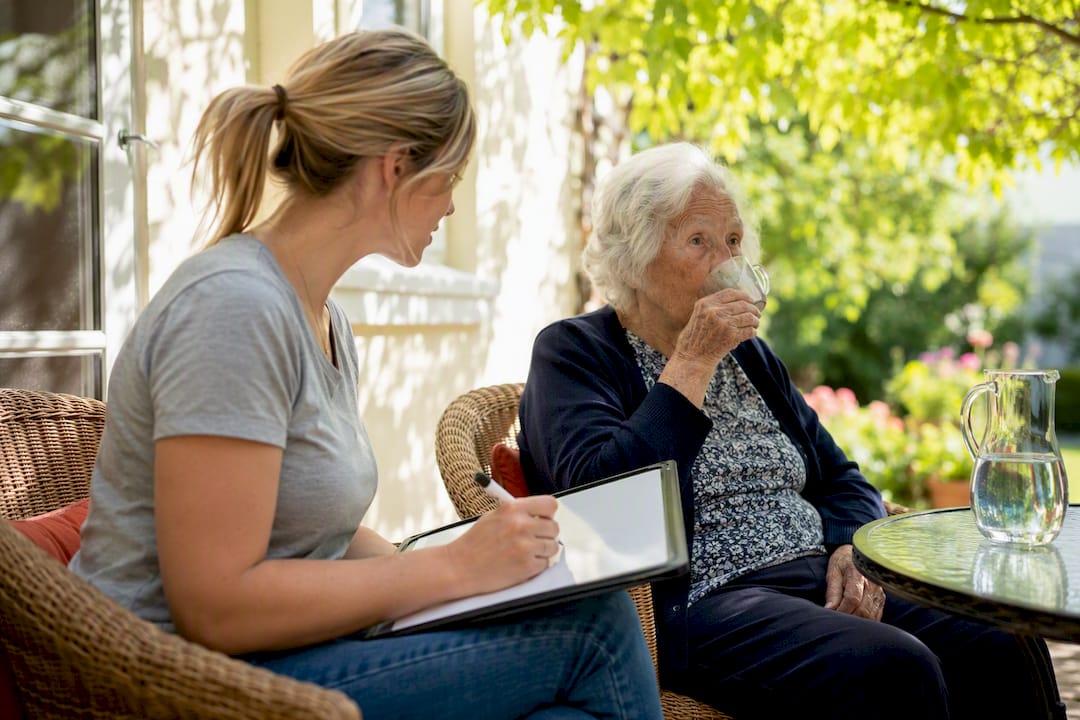
If the signs are mild and isolated, offer fluids and recheck in an hour. If two or more signs stack up together, especially confusion plus reduced urination, that's a call-your-doctor moment, not a wait-and-see one.
When Is Dehydration a Medical Emergency?
Some signs mean you stop monitoring and start acting. Get emergency help if you see any of the following:
- Fainting or near-fainting
- Very little or no urine output over 8 hours
- Severe or rapidly worsening confusion
- Persistent vomiting or diarrhea that prevents fluid intake
- A racing heartbeat or shallow, rapid breathing
While waiting for help, offer small sips of water or an oral electrolyte solution only if the person is alert and can swallow safely. Never force large amounts at once. In a clinical setting, treatment often means IV or subcutaneous fluids along with blood tests to check kidney function and electrolyte balance, since severe or prolonged low-intake dehydration is tied to longer hospital stays, more readmissions, and higher mortality.
How Much Water Should Seniors Drink Each Day?
Guesswork is the enemy here, but so is a rigid one-size-fits-all number. The ESPEN guideline on clinical nutrition and hydration in geriatrics recommends offering older men roughly 2.0 liters of fluid a day from drinks, and older women roughly 1.6 liters, unless a doctor has set a different target for a specific condition.
That target needs adjusting for real-world conditions:
- Hot weather or a heated indoor space in winter raises fluid needs.
- Fever, vomiting, or diarrhea increases losses and requires more replacement.
- Heart failure or kidney disease may mean a lower, doctor-set fluid limit instead.
Tracking doesn't need to be complicated. A marked measuring cup, a tally on a whiteboard, or simply pairing a drink with every medication dose keeps intake visible instead of assumed. Small structure beats good intentions every time.
Practical Ways to Prevent Dehydration in Elderly Adults
Prevention beats treatment, and it doesn't require anything fancy, just consistency. The most effective caregiver-tested strategies come down to routine, not willpower.
- Run fluid rounds every 60 to 90 minutes. Offer a drink at that interval rather than waiting for a request, and pair it with medication times and meals so it becomes automatic rather than a special event, an approach reviewed in hydration strategy research.
- Use the cup they actually like. A favorite mug, a straw, or a lidded cup that won't spill can make the difference between a full glass and an untouched one.
- Rotate variety, not just plain water. Herbal tea, milk, diluted juice, soup, smoothies, and frozen fruit ices all count toward daily totals and prevent "water fatigue."
- Plan around continence concerns directly. Timed toileting, easy bathroom access, and absorbent products discussed openly with a clinician remove the main reason many seniors quietly cut back on drinks.
- Make it social. Sitting down and drinking alongside the person, rather than just handing over a glass, measurably improves intake, an effect noted in research on social support and nutrition in older adults.
Pro Tip: Temperature matters more than people expect. Some seniors who reject ice water will happily drink the same liquid warm, or vice versa. Test both before assuming someone "just doesn't like drinking."
Involve family members in the routine when you can. A grandchild who drops by and asks, "Want to grab a glass of something together?" often gets more fluid into a resistant relative than any reminder chart ever will.
How Is Dehydration Actually Diagnosed?
Serum osmolality, measured from a blood draw, is the actual diagnostic standard for confirming dehydration. Everything else caregivers rely on day to day, skin turgor, urine color, dry lips, is a rough proxy at best, and in older adults those proxies are known to misfire because of skin changes, medications, and kidney function shifts that come with age.
That doesn't mean home monitoring is pointless. It means you're watching for patterns, not running a diagnosis. Track intake against output over a few days, note any sudden weight change, and flag cognitive or functional shifts immediately.
| What You Track | What It Tells You |
|---|---|
| Daily drinks offered vs. finished | Whether intake is trending down over several days |
| Urine frequency and color | A rough signal, best read as a trend, not a single data point |
| Sudden weight loss | Rapid drops often reflect fluid loss, not fat loss |
| New confusion or falls | A high-value red flag that should prompt a clinician visit |
When intake tracking or a functional change raises concern, that's the point to call for lab work rather than keep guessing at home.
Special Situations That Change the Advice
Standard hydration advice doesn't apply evenly to every senior, and treating it as one-size-fits-all can cause real harm.
- Dysphagia: Follow the speech-language pathologist's recommendations exactly. Thickened liquids or hydrating textures like smoothies and pureed fruit can meaningfully raise intake while protecting the airway, but the wrong consistency raises choking and aspiration risk.
- Heart failure or kidney disease: Some patients are on doctor-ordered fluid restrictions. More water is not automatically better here, confirm the individualized target before increasing intake.
- Diuretics and other medications: Review the full medication list with a prescriber periodically. A drug added for one condition can quietly worsen dehydration risk for another.
When in doubt, ask the prescribing clinician directly rather than defaulting to a general fluid target that may not fit this particular person.
How In-Home Caregivers Help Prevent Dehydration
A big part of hydration failure isn't lack of knowledge, it's lack of a consistent person in the room to offer the drink, notice the half-full glass, or sit down and share a cup of tea. That's the gap in-home care is built to close.
Tucsonshs pairs seniors with mature, active caregivers who build the kind of rapport that makes fluid rounds feel like companionship, not a chore. That includes:
- Regular drink offers built into the daily visit, not left to chance
- Meal prep and medication reminders that naturally pair with hydration
- Support with continence concerns so fear of accidents stops driving fluid avoidance
Shared life experience between caregiver and senior isn't a soft benefit, it's what makes someone actually accept the glass of water instead of waving it away.
If you're evaluating outside help, ask any prospective caregiver how they track daily fluid intake and what they do when someone refuses to drink.
What Actually Matters Most Here
Most hydration advice for seniors focuses on numbers, milliliters per day, cups per shift, and treats the problem as a math exercise. The research tells a different story. They happened because nobody was consistently in the room offering the drink.
That's the part conventional advice underweights: hydration is a behavioral and relational problem dressed up as a clinical one. A confused, mobility-limited senior with a full water glass on the nightstand isn't hydrated, they're just near water. The fix isn't a stricter chart. It's a person who shows up on schedule, knows which cup they'll actually use, and treats the offer as companionship rather than a task to check off.
If you take one thing from this guide, prioritize presence and routine over precision. Get the fluid rounds happening reliably first. The exact milliliter count matters far less than whether someone is there, every single day, to make the offer.
Get Steady Hydration Support at Home
Tucsonshs gives families a way to build reliable hydration routines into everyday care, without hiring a rotating cast of unfamiliar aides. Because caregivers are matched by shared life experience and stay consistent visit to visit, your loved one gets the same familiar face offering that afternoon cup of tea, which is exactly the kind of routine that keeps fluid intake steady over weeks and months, not just on a good day.

That consistency also means someone is watching for the early warning signs covered above, a skipped glass at lunch, a new bit of confusion, before they become a hospital visit. If you're weighing whether your family member needs extra support at home, reach out to Tucsonshs to talk through a care plan built around their routine, their preferences, and their health needs.
Frequently Asked Questions
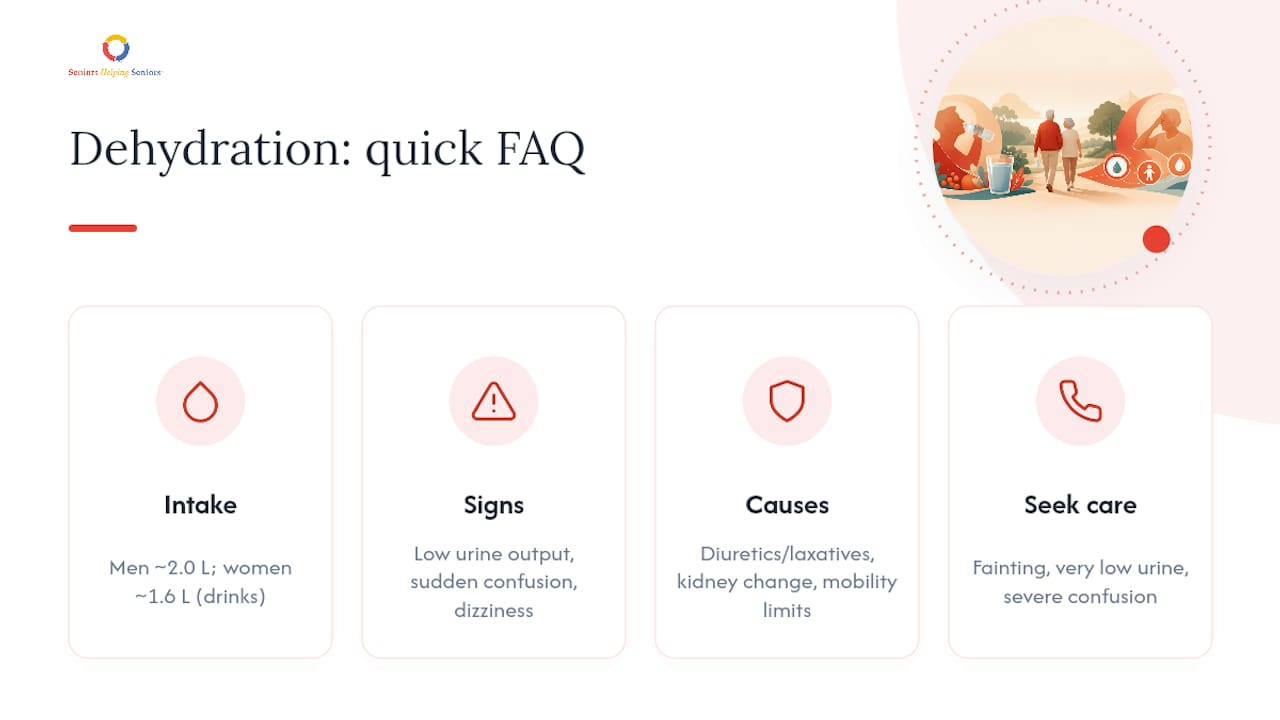
How much water should seniors drink each day? The ESPEN guideline suggests around 2.0 liters daily for older men and 1.6 liters for older women from drinks, unless a doctor has set a different target for a heart, kidney, or other condition.
What are the first signs of dehydration in elderly adults? Watch for reduced urine output, sudden confusion, dizziness, or unexplained fatigue. Dry mouth and thirst are less reliable in older adults than in younger people.
Can dehydration cause confusion in seniors? Yes. Sudden confusion or a noticeable drop in alertness is one of the more reliable warning signs in older adults and often shows up before classic symptoms like thirst.
What causes dehydration in older adults besides not drinking enough? Medications like diuretics and laxatives, kidney changes with age, mobility limits, and fear of incontinence all contribute, often stacking together rather than acting alone.
When should you seek medical care for dehydration in a senior? Seek urgent care for fainting, very low urine output, severe confusion, persistent vomiting or diarrhea, or a racing heartbeat. Milder signs can often be managed with fluids and close monitoring at home.
This article is general information, not a substitute for advice from a qualified doctor. Consult a qualified healthcare professional about your own circumstances before acting on anything here.
Sources
- Age-related changes in thirst and body water regulation (NCBI Bookshelf)
- Hydration Status in Older Adults: Current Knowledge and Future Challenges (PMC)
- Effective hydration care for older people living in care homes (University of East Anglia)