
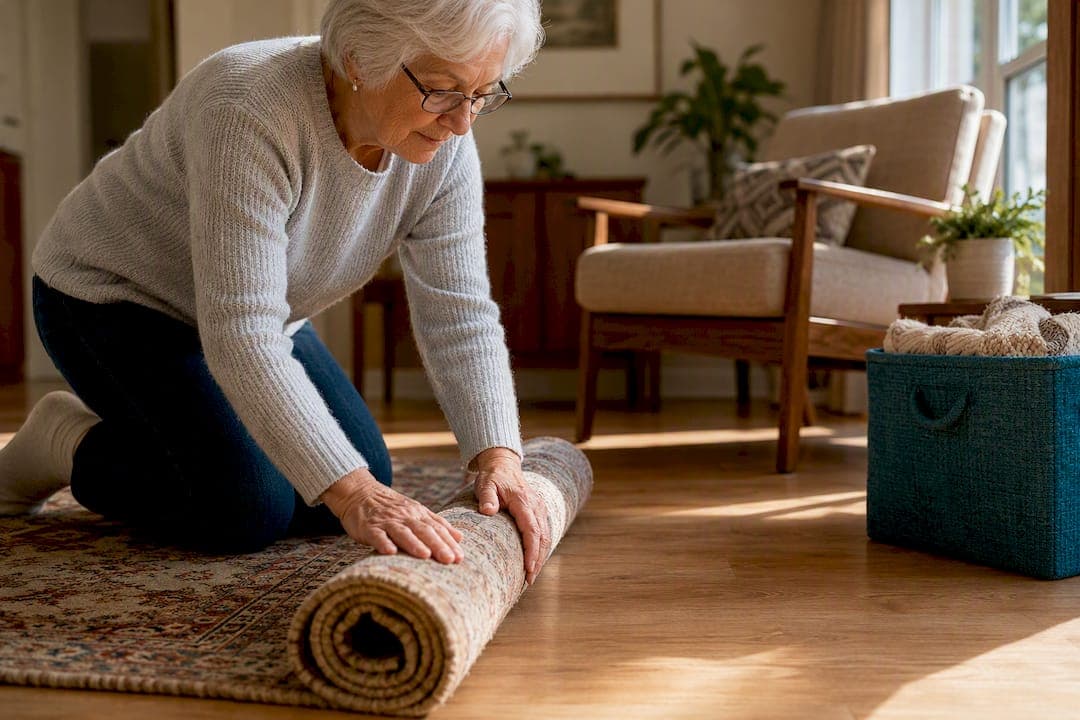
Decluttering for seniors makes homes measurably safer and helps preserve independence, and it does not require a weekend of exhausting work. Start small: clear one 3-foot walking path through your busiest room for 10 to 15 minutes today. That single action is often the first step toward a home that is easier and safer to move through.
TL;DR:
- Decluttering reduces fall risks by roughly 26 percent overall and up to 38 percent for seniors at higher fall risk when trip hazards are minimized.
- Focus first on clearing floors, securing rugs, bundling cords, and working in short sessions to create immediate safety improvements with minimal effort.
- Tackling each room individually, starting with entryways and kitchens, helps make the process manageable within one to two hours weekly, often over two to three months.
- Emotional challenges are normal, and using rules like the one-year usage guideline or photograph keeps sentimental items without overwhelming decision-making.
- Professional help from handymen, occupational therapists, or senior organizers enhances safety modifications and supports sustainable decluttering progress.
Table of Contents
- Why Decluttering Matters for Your Health and Safety
- What Is the Easiest Way to Start Decluttering?
- Room-By-Room: What to Tackle and How Long It Takes
- How Do You Handle the Emotional Side of Letting Go?
- When Should You Bring in Professional Help?
- How Long Does Decluttering for Seniors Actually Take?
- Where Can You Find More Help and Trusted Information?
- A Publisher's Perspective on Gentle Decluttering
- A Gentler Way to Get Decluttering Help at Home
- Sources
Why Decluttering Matters for Your Health and Safety
Clutter is not just a visual annoyance. It is a physical hazard sitting on the floor of your own home, and the research on this is more specific than most people expect.
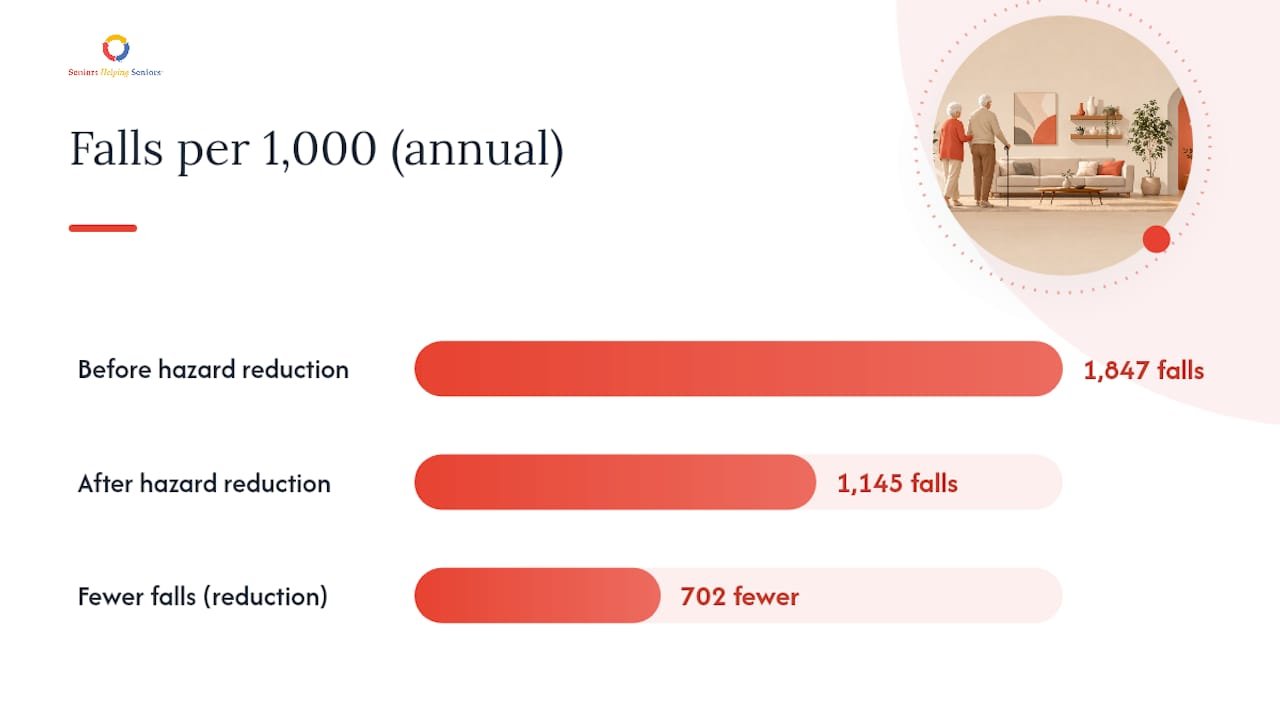
A Cochrane review on fall prevention found that reducing trip hazards, including decluttering, lowers the overall rate of falls among older adults by roughly 26%, and by up to 38% for people already at higher risk. Picture 1,000 people who have fallen before. Over the course of a year with hazard reduction in place, the number of falls among that group would drop from about 1,847 to 1,145. That is not a marginal improvement. It is the difference between a home that trips you and one that does not.
Falls are common, and the consequences are serious. The CDC's falls prevention data shows falls happen to roughly 1 in 4 older adults each year in the United States, contributing to millions of emergency room visits and thousands of deaths annually. Loose rugs, stacked boxes in hallways, and cords snaking across the living room floor are exactly the kind of hazards this data points to.
The connection between clutter and health goes beyond tripping. A study comparing older adults with hoarding disorder to age-matched peers found that those with hoarding disorder had significantly more medical conditions overall, and that hoarding severity predicted the total number of health problems a person had. Clutter does not just sit there. It correlates with worse outcomes across the board, from mobility to chronic disease management. Separate clinical research on tidying and the aging brain also links a decluttered environment to lower stress and a stronger sense of control over daily life.
There is a practical, non-medical benefit too. A simplified home is easier to clean, easier to navigate with a walker or cane, and easier for a caregiver to manage safely. If you have family or a caregiver helping with daily tasks, fewer obstacles means less physical strain on them and faster, safer help for you.
What Is the Easiest Way to Start Decluttering?
The easiest way to start is with the floors, not the closets. Most fall hazards live at ankle height: loose rugs, tangled cords, stacks of magazines, pet bowls in the walkway. Clearing those first gives you an immediate safety win before you touch a single drawer.
Here is a practical sequence that works whether you are doing this alone or with a helper.
- Clear main walkways first. Remove anything on the floor of hallways, doorways, and the path between your bed and the bathroom.
- Pull up loose rugs or secure them with non-slip tape. Rugs are one of the most common trip hazards in senior households.
- Bundle or clip loose cords along the wall instead of letting them cross open floor space.
- Work in short sessions. Fifteen to thirty minutes is plenty. Decluttering is not a sprint, and stopping before you are tired keeps the process from feeling like a chore you dread.
- Use four boxes: keep, donate, toss, and undecided. The undecided box is not a cop-out. It is permission to move faster without forcing every decision on the spot.
- Revisit the undecided box after two weeks. Most people find they no longer want half of what is inside it.
- Photograph sentimental items you are unsure about instead of keeping the physical object. A photo of your mother's china preserves the memory without taking up a cabinet.
- Sort medications into a labeled weekly organizer and get rid of anything expired or duplicated.
- Label storage bins clearly, in large print, so you are not guessing what is inside months later.
- Set up one-touch storage near the door, meaning a single hook or basket for keys, glasses, and mail so those items never end up scattered across counters.
- Schedule a donation pickup in advance. Having a truck coming on Thursday is a strong motivator to have bags ready by Wednesday.
- Reward yourself after each session. A finished shelf or a cleared hallway is a real accomplishment, not a small one.
Pro Tip: Keep a small notepad by your sorting area and jot down where sentimental items end up going, especially if they're given to a specific grandchild or friend. Six months from now, you'll be glad you didn't have to rely on memory.
Notice that none of this requires deciding your entire home's fate in one afternoon. It requires deciding what happens to one drawer, one shelf, or one pile at a time.
Room-By-Room: What to Tackle and How Long It Takes
Breaking the project into rooms turns "decluttering for seniors" from an abstract goal into a series of one- to two-hour tasks you can actually schedule on a calendar.
Entryway. Create a dedicated landing spot for shoes, bags, and mail so nothing collects on the floor near the door. A small bench with a basket underneath solves most entryway clutter in under an hour.
- Clear the path from the front door to the main living area completely.
- Add a hook at a comfortable reaching height for keys and a cane or walker strap.
Kitchen. This is usually the highest-traffic room in the house, so it deserves careful attention.
- Clear counters of anything not used daily; store rarely used appliances elsewhere.
- Check the pantry and refrigerator for expired food while you are at it.
- Move frequently used items to waist-height shelves or drawers so you are not reaching overhead or bending to the floor.
Bathroom. Small rooms with big fall risk.
- Remove floor rugs or replace them with rubber-backed, non-slip mats.
- Store medications in a locked or clearly labeled cabinet, away from the shower area.
- If balance is a concern, this is the room where a grab bar near the tub or toilet earns its cost many times over.
Bedroom. The goal here is a clear, obstacle-free path to the bed, especially for nighttime bathroom trips.
- Keep only what you use daily on the nightstand: glasses, a lamp, water, phone.
- Simplify closet storage by donating clothing you have not worn in a year, and keep frequently worn items at easy reaching height.
Living room. Furniture arrangement matters as much as the amount of stuff in the room.
- Arrange chairs and tables so there is a clear, wide walking path, not a maze.
- Secure or bundle lamp and electronics cords along the wall.
- Reduce floor stacks of newspapers, books, or blankets to a single labeled basket.
Storage areas and garage. These rooms tend to be lower priority for safety but higher priority for decision fatigue.
- Sort boxes by category and label them clearly for family members who may help later.
- Set aside a "family heirlooms" section separately from general storage to avoid mixing sentimental items with everyday clutter.
- Plan a donation or disposal date for anything that has not been touched in years.
How Do You Handle the Emotional Side of Letting Go?
Grief over letting go of belongings is normal, and pretending otherwise makes decluttering harder, not easier. A worn recliner or a box of old letters can carry decades of memory, and there is nothing irrational about needing to sit with that before deciding what happens to it.
A few decision rules make the emotional weight lighter without dismissing it:
- The one-year rule: if you have not used or worn something in a year, it is a strong candidate to donate.
- The one-box rule for keepsakes: pick a single box for the most meaningful sentimental items, and once it is full, anything new has to compete for a spot rather than simply piling on.
- Photograph before you let go. A picture of a quilt your grandmother made preserves the memory even if the object itself goes to someone who will use it.
- Take breaks mid-session. If a particular drawer brings up more emotion than expected, stop and come back to it another day.
Family involvement helps most when roles are clear ahead of time. Guidance from AARP on the emotional side of downsizing recommends starting with less emotional spaces, like the garage or pantry, before tackling bedrooms full of memory. If pressure from family becomes part of the problem rather than the solution, a neutral third party, such as a professional organizer or care manager, can defuse tension that relatives sometimes create unintentionally.
Pro Tip: If a session brings up more grief than progress, that's a sign to pause, not push through. Decluttering works better as a marathon than a sprint, and there's no prize for finishing fast.
If sorting through belongings triggers ongoing sadness, anxiety, or a sense of being stuck, that is worth mentioning to a doctor or counselor rather than pushing through alone.
When Should You Bring in Professional Help?
Some safety fixes matter as much as the decluttering itself, and they work best done together rather than one after the other.
- Remove or replace loose rugs with non-slip alternatives.
- Add brighter lighting, especially in hallways, stairwells, and bathrooms.
- Install grab bars near the toilet and shower.
- Add handrails on both sides of any stairway, not just one.
These specific fixes come from evidence-based home modification research on fall prevention, and they pair directly with the Cochrane review's findings that hazard reduction lowers overall fall rates by about 26%, rising to nearly 38% for people already at elevated risk.
Bring in a professional when the project outgrows what feels manageable solo. An occupational therapist can assess your specific home for fall risks tied to your mobility and prescribe targeted fixes. A professional organizer or senior move manager, the kind of specialist recommended by organizations like NAPO, can manage the physical sorting when a home has decades of accumulation. In-home caregivers occupy a different role entirely: they assist with the physical labor, keep you safe on ladders or in awkward reaching positions, and provide company during a task that can otherwise feel lonely, but the decisions about what stays and what goes should always remain yours.
How Long Does Decluttering for Seniors Actually Take?
Realistic pacing beats rushed pacing every time. Most people do well with:
- 15 to 30 minutes daily for general tidying and small decisions.
- 1 to 2 hours per room, once a week, for deeper sorting.
- A full home decluttering project spread across two to three months, not two to three days.
Costs vary depending on how much help you bring in. Donation pickups are often free through local charities. Bulk disposal or junk removal services typically charge by volume or truckload. Professional organizers commonly charge an hourly rate, though a family member or in-home caregiver can absorb much of that same work at a lower cost. Track progress by room, not by the whole house, so a finished kitchen feels like the win it actually is.
Where Can You Find More Help and Trusted Information?
Reliable outside information matters, especially when a decision involves safety.
- Read the CDC's guidance on fall prevention for a full breakdown of home hazards and screening tools.
- Review the Cochrane summary on hazard reduction and falls if you want the underlying research behind the safety numbers.
- Consider professional closet and storage systems if built-in organization would help maintain a decluttered space long term.
- Contact local charities or municipal bulk pickup services to schedule donation or disposal ahead of a big sorting day.
- If a loved one is resistant to help getting started, this guide on easing an elderly parent into accepting assistance offers a gentler entry point than pushing the issue directly.
A Publisher's Perspective on Gentle Decluttering
Seniors Helping Seniors® Tucson caregivers spend a lot of time in homes that have quietly become harder to live in, not because anyone let things go, but because life adds up. What we have learned firsthand is that decluttering succeeds when it respects the person's pace, not when it follows a productivity checklist borrowed from a different life stage entirely. Our caregivers, many of whom are seniors themselves, understand the difference between clearing a hallway and clearing a memory, and they know which one deserves more time. If a hands-on partner would make this process feel less lonely and more manageable, that is worth considering, on your own terms and timeline.
— Cameron
A Gentler Way to Get Decluttering Help at Home
You can get something a one-time organizer or a rushed family weekend cannot: a familiar, steady presence who returns week after week, matched by shared life experience rather than assigned at random. Caregivers help with the physical parts of decluttering, sorting boxes, clearing walkways, tackling that closet you've been avoiding, while also handling light housekeeping and safety checks that keep the momentum going after the big push is over.

An initial call or visit starts with a conversation about your home, your pace, and what kind of support actually feels helpful rather than intrusive. There is no pressure to commit to a full overhaul. Many families start with a few hours a week focused on one room and expand from there as trust builds. If you want to see what that looks like for your household, visit our senior home care services page or explore in-home care options in Tucson to schedule that first conversation.
This article is general information, not a substitute for advice from a qualified doctor. Consult a qualified healthcare professional about your own circumstances before acting on anything here.
Sources
- Cochrane review shows reducing trip hazards and decluttering can prevent falls among older people
- Preventing falls: older adult falls | CDC
- Hoarding disorder and health outcomes in older adults (PMC)